Sign in
Create Your Account
Create My Account
Sign In
Create Your Account
Choose perfect custom hat patches—embroidery, leather, PVC. Learn size, design & pricing for fitted hats, trucker caps & brand merchandise.
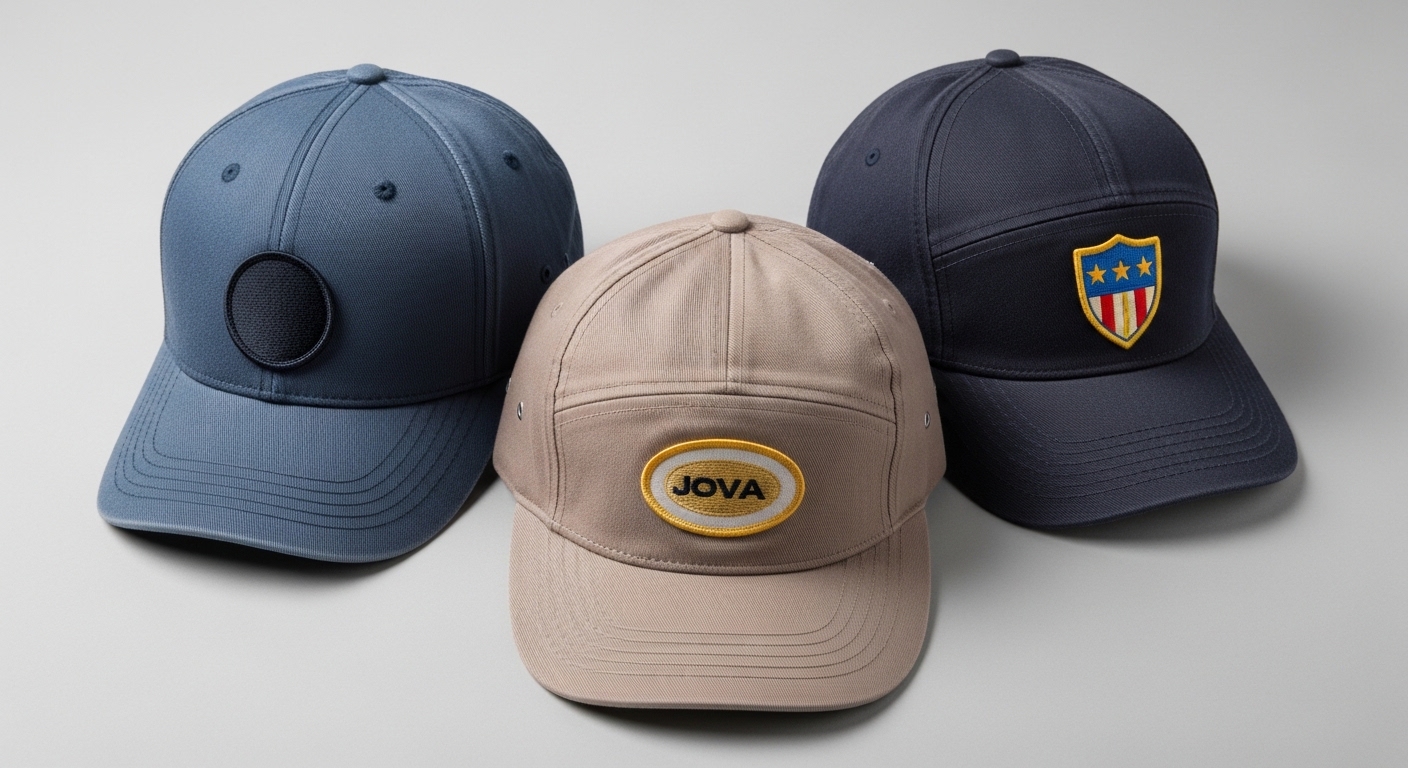
How to Choose the Perfect Custom Logo Patches for Fitted Hats & Gear A hat is more than an accessory; it's a mobile billboard for your brand, a signature piece of team identity, and a canvas for personal expression. In 2024, the trend of custom made patches for hats has moved beyond mere branding into the realm of essential fashion and culture. A well-chosen patch transforms a standard cap into a unique statement piece, conveying values, affiliation, or artistry at a glance.
Whether you're a brewery launching a new line of merchandise, a corporation outfitting a sales team, or a creator building a streetwear brand, the right custom logo patches for hats can dramatically elevate your product's perceived value. At Maxemblem, with 20 years of experience as a premier manufacturer, we understand this power. We provide end-to-end solutions, from intricate custom embroidery patches for hats to luxurious, high-definition leather patches. This guide is crafted to equip you with the knowledge to navigate the customization process like a pro, ensuring your vision translates perfectly onto the curved canvas of a hat.
The 4 Essentials of Hat Patch Customization: Your Pre-Order Checklist
Diving into custom patches without understanding these core pillars is the fastest way to disappointment. Let's break down the four non-negotiable elements you must consider to ensure your custom patches for hats project is a resounding success.
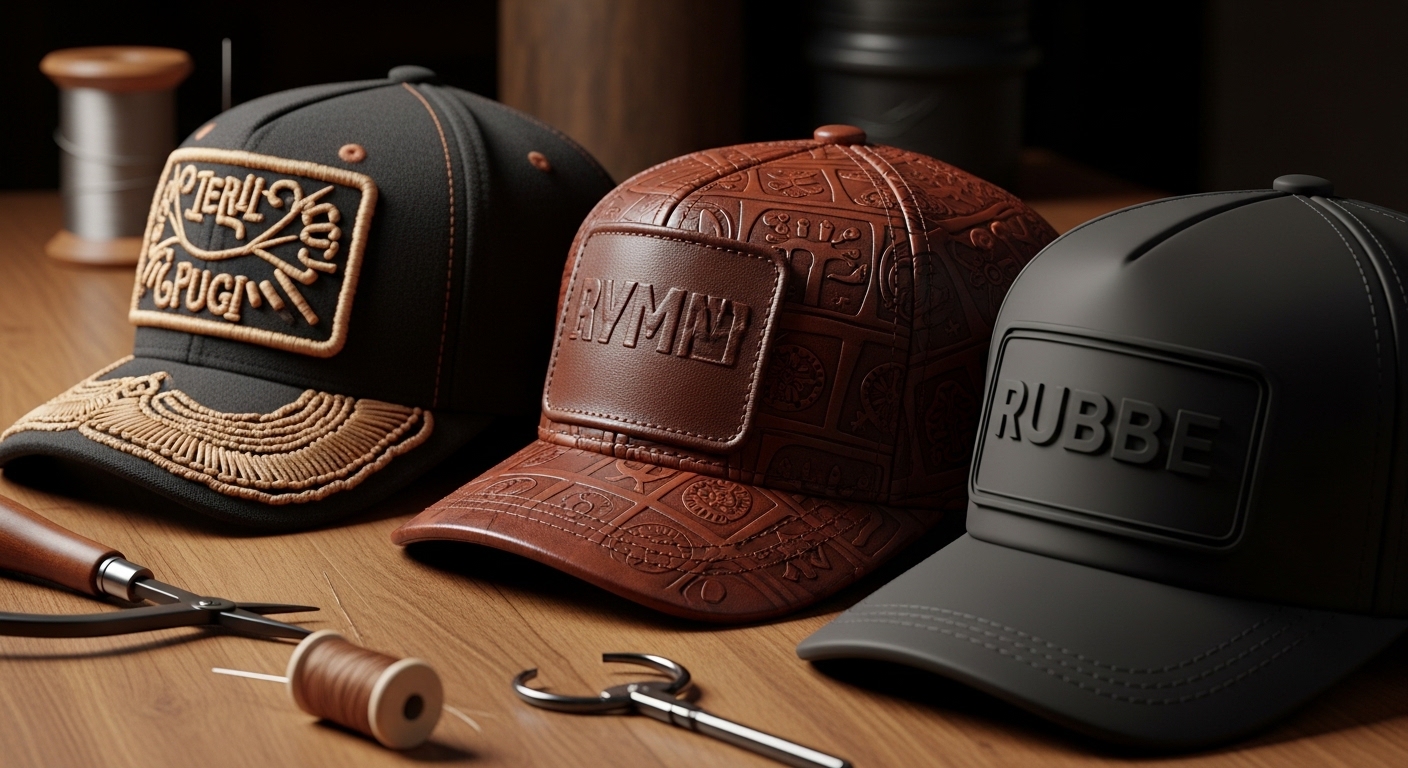
1. Craftsmanship: Choosing Between Embroidery, Leather & PVC
The material and production technique define the aesthetic, feel, and durability of your patch. Each has its superpower. The key is matching that superpower to your brand's personality and the hat's intended use.
Type |
Best For |
Look & Feel |
Considerations for Hats |
|---|---|---|---|
Embroidered Patches |
Classic brand logos, team insignias, bold graphics. The industry standard for fitted hats with custom patches. |
Textured, dimensional, and rugged. Offers excellent color depth with a traditional, sporty vibe. |
Can add noticeable thickness. Ensure design isn't too dense for the hat's curved front panel. |
Leather Patches |
Premium, heritage, or outdoor brands. Perfect for laser engraved leather patches for hats with fine detail. |
Luxurious, authentic, and ages beautifully. Embossed for 3D texture, laser engraved for precision. |
Superior durability. Weight is a factor—lighter leathers are better for structured caps. Avoid on floppy beanies. |
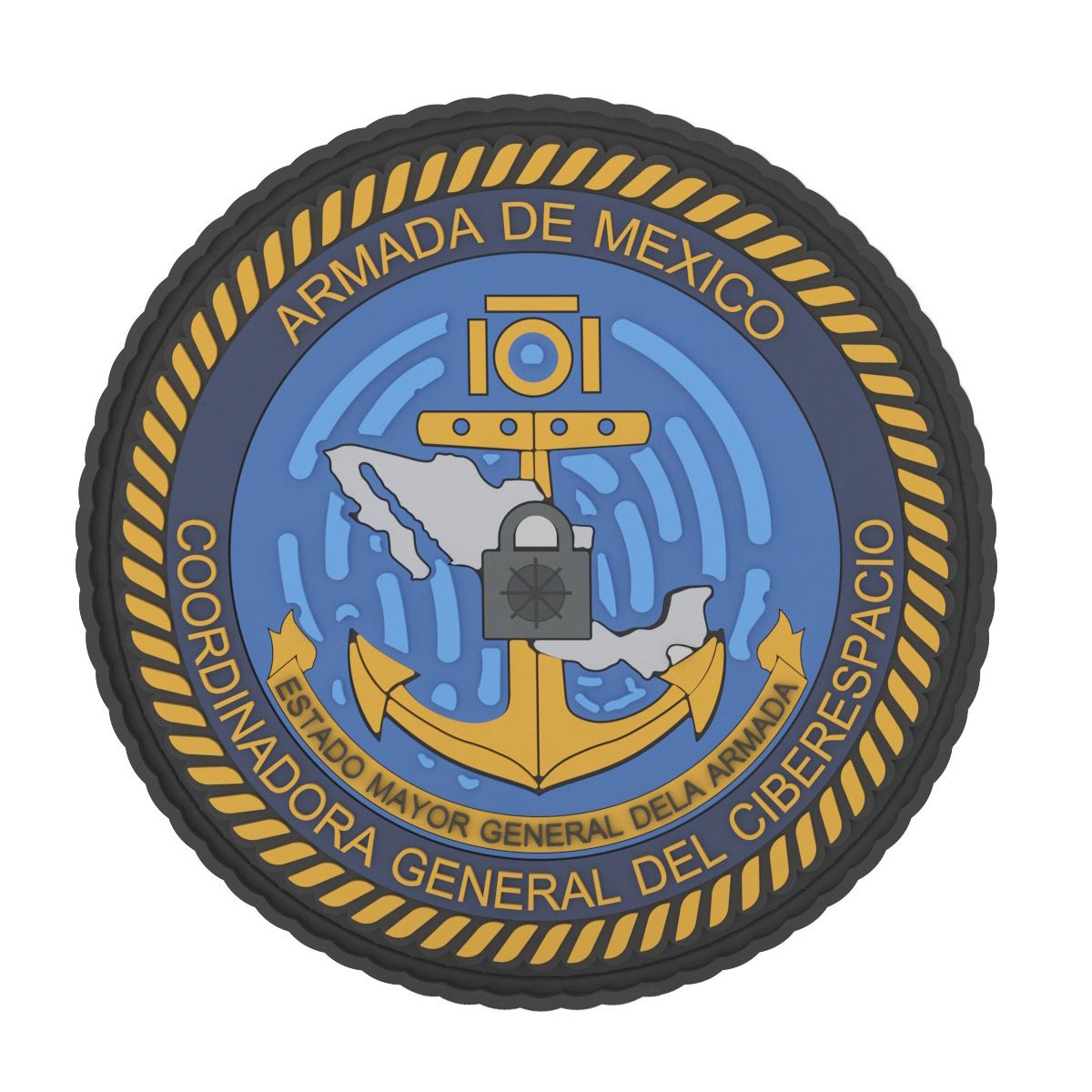
PVC / Rubber Patches |
Modern, sleek logos, gradient colors, and photorealistic designs. Great for tech or lifestyle brands. |
Smooth, flat, and vibrant. Can be made flexible to perfectly conform to any cap curve. |
Extremely weather and fade-resistant. Lays very flat, making it ideal for low-profile designs on trucker hats. |
2. Size Control: Finding the "Goldilocks Zone" for Your Cap
Too big, and it overwhelms the hat and obstructs ventilation grommets. Too small, and it gets lost. The perfect size respects the hat's architecture.
How to Measure for the Perfect Fit:
3. Design Complexity: From Vector to Thread (or Leather)
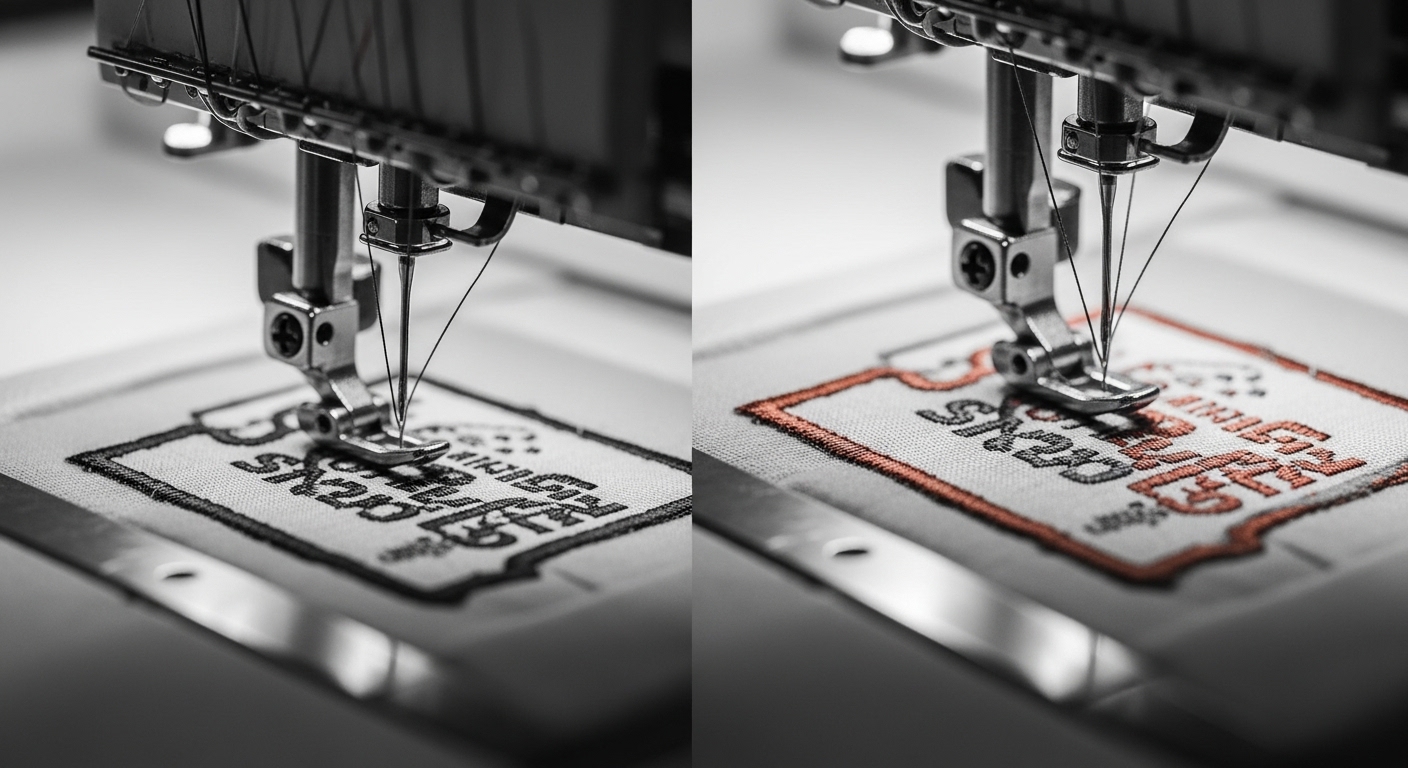
Your stunning digital logo may need simplification to excel as a physical patch. Here’s why:
4. Transparent Pricing: Understanding Setup Costs vs. Unit Costs
Custom manufacturing isn't like buying off a shelf. There's an upfront investment in turning your idea into a producible item.
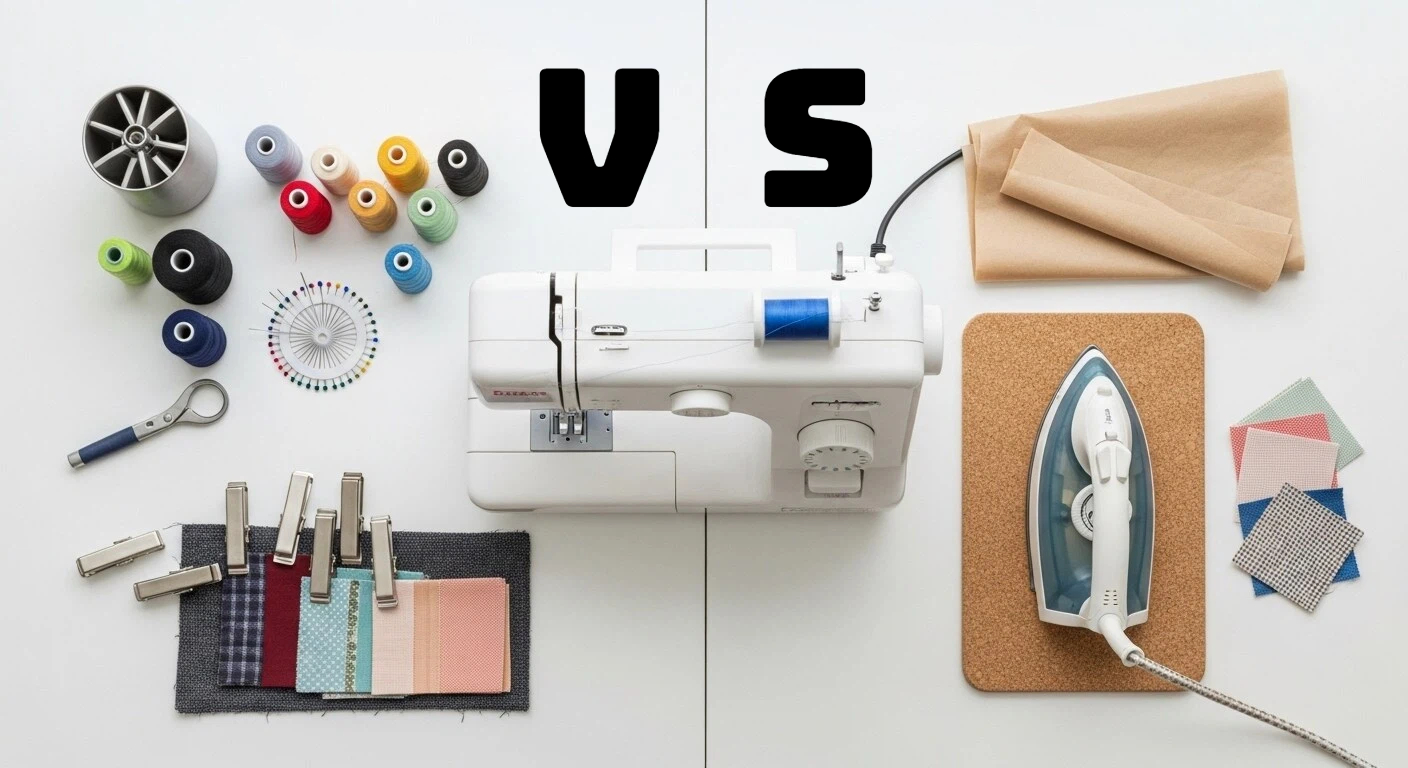
Heat Press vs. Iron-On: Which Attachment Method Wins for Durability?
You've designed the perfect patch. Now, how do you ensure it stays on through sweat, sun, and the occasional rain shower? The attachment method is as critical as the design itself.
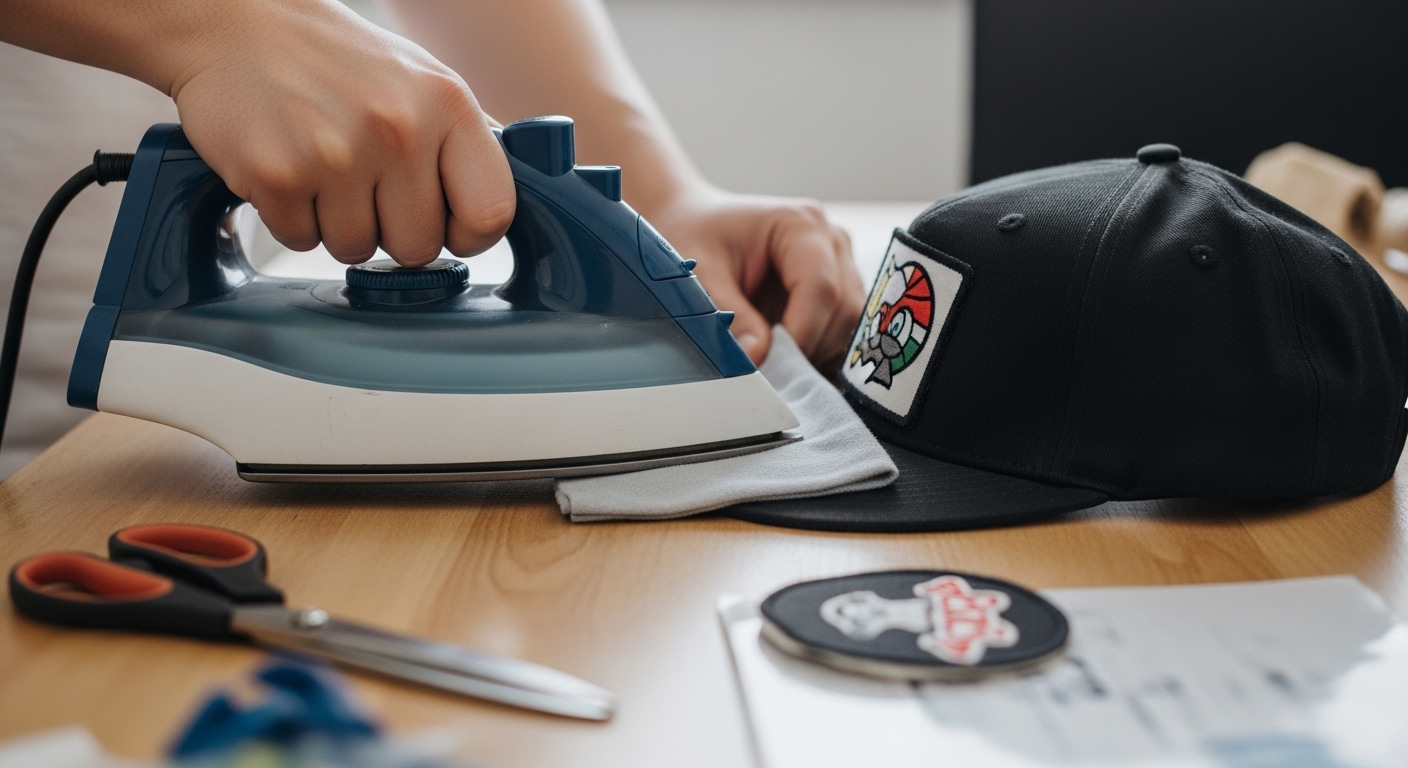
1. The DIY Favorite: Custom Iron On Patches for Hats
These patches come with a heat-activated adhesive (thermoplastic) on the back. They're the go-to for small batches, personal projects, or event giveaways.
2. The Professional Standard: Custom Heat Press Patches for Hats
This is what professional apparel decorators and brands use for their iron on patches for hats custom production runs. The difference is in the machinery and adhesive.
新标题
Function meets versatility. These patches have a hook (rough) side of Velcro sewn or glued to the back, which attaches to a loop (soft) side sewn onto the hat.
Style Guide: Matching Patch Material to Your Brand Vibe

The Retro & Luxe Look: Laser Engraved Leather Patches
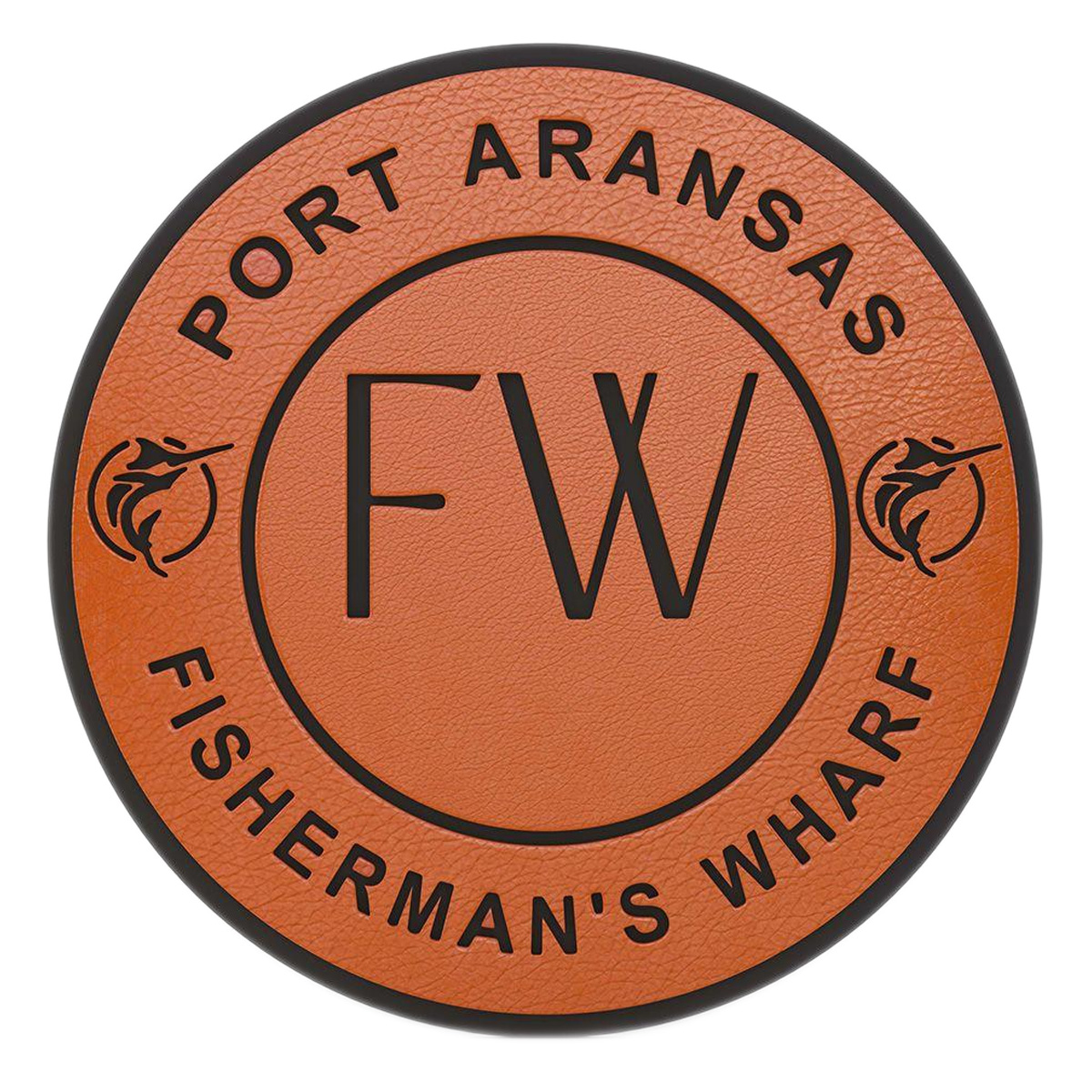
For brands that scream heritage, craftsmanship, and premium quality, nothing beats leather. Laser engraved leather patches for hats offer a unique advantage: they can capture astonishing detail. The laser can etch fine lines, subtle gradients, and small text that would be lost in embroidery, creating a sophisticated, almost printed look on a luxurious material. This is perfect for high-end denim brands, boutique breweries, or outdoor companies wanting a timeless, rugged-chic aesthetic. The leather naturally ages, developing a unique patina that tells a story.
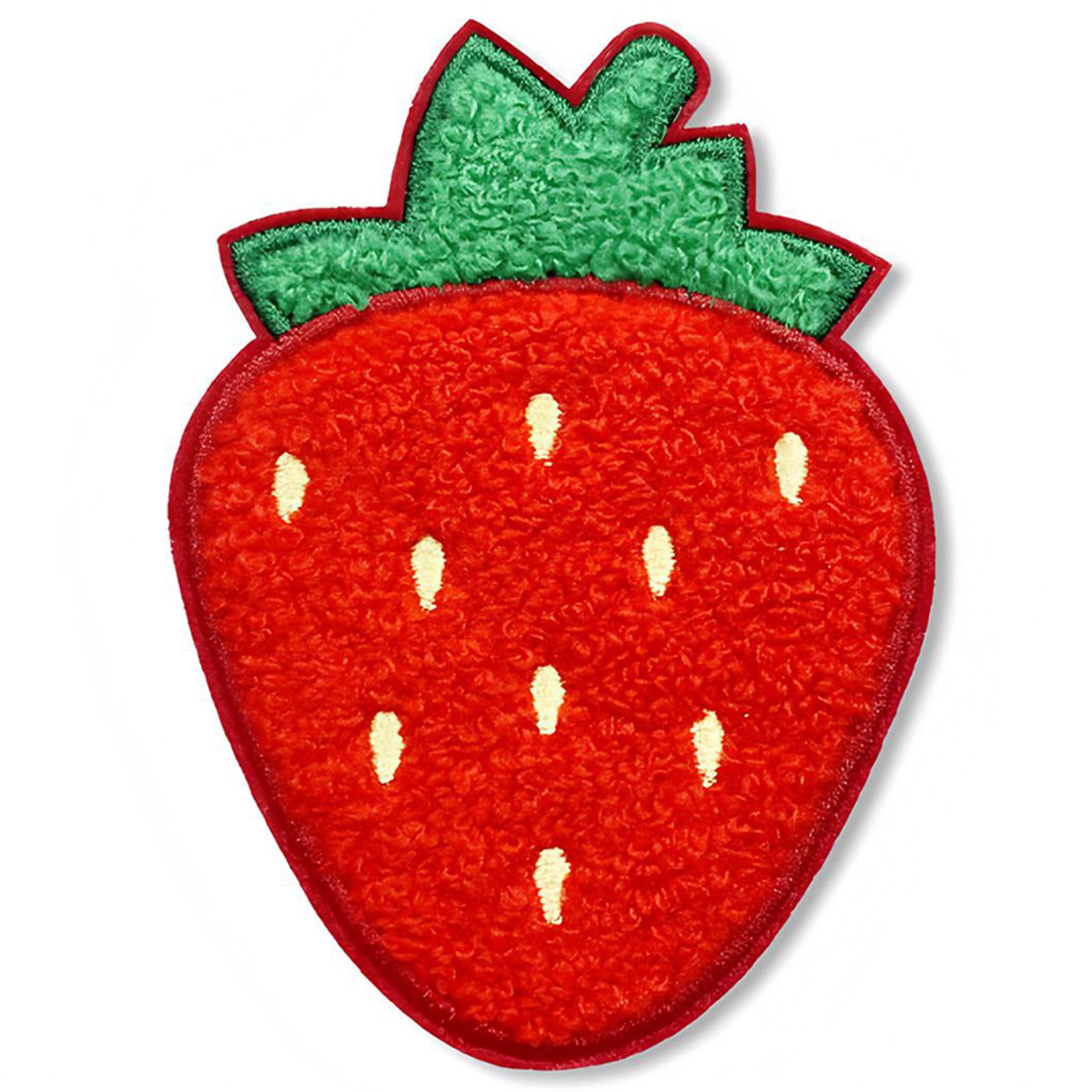
The Classic & Textured Look: Embroidered Patches
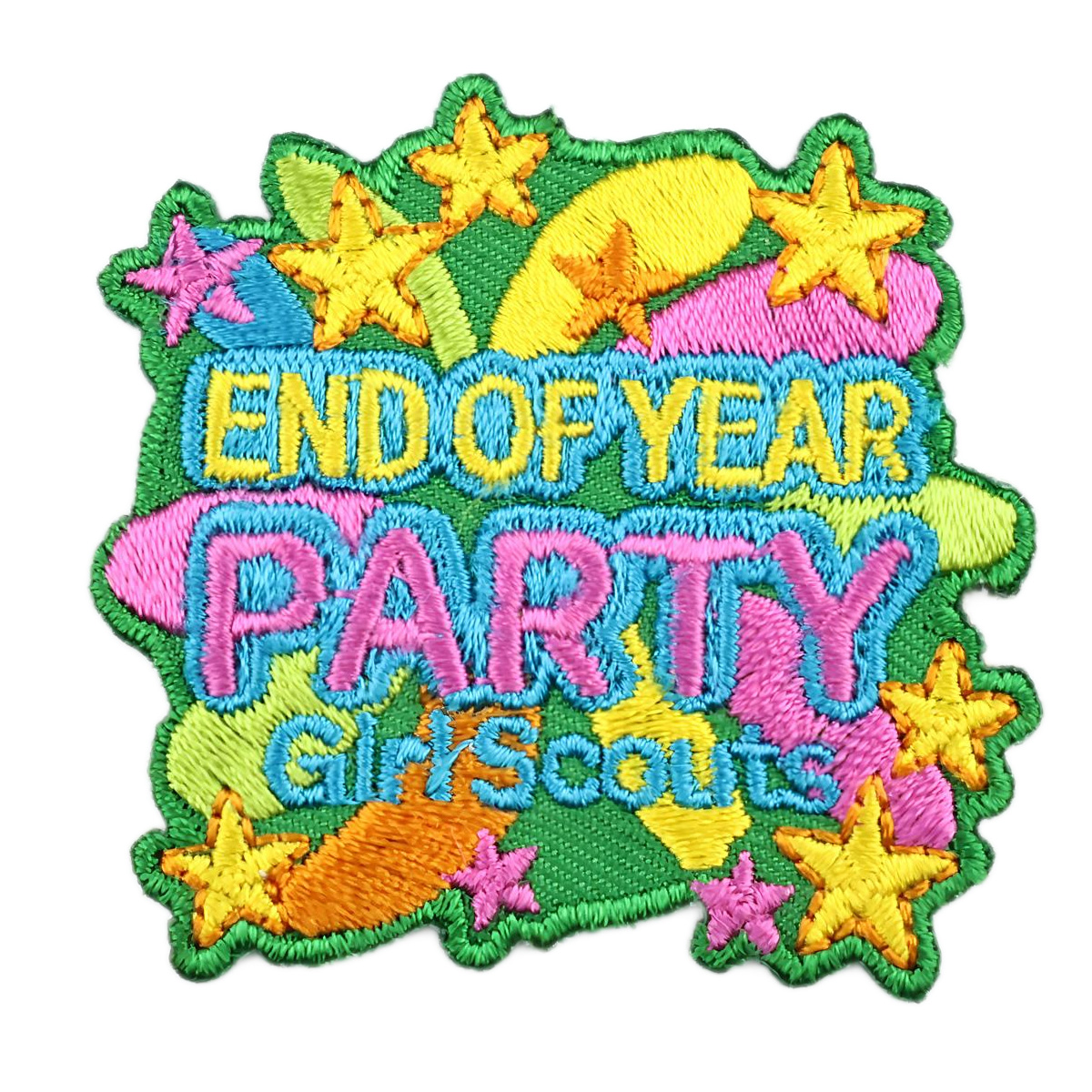
This is the heart of cap culture. Custom embroidery patches for hats provide unmatched texture and a classic, sporty feel. The raised threads catch the light and create a sense of depth. It's durable, colorfast, and universally recognized as a mark of quality. It remains the undisputed champion for sports teams, corporate logos, and any design that benefits from a bold, textured presence. When you think of a premium fitted hat with a custom patch, you're likely picturing expert embroidery.
The Modern & Detailed Look: Woven Patches
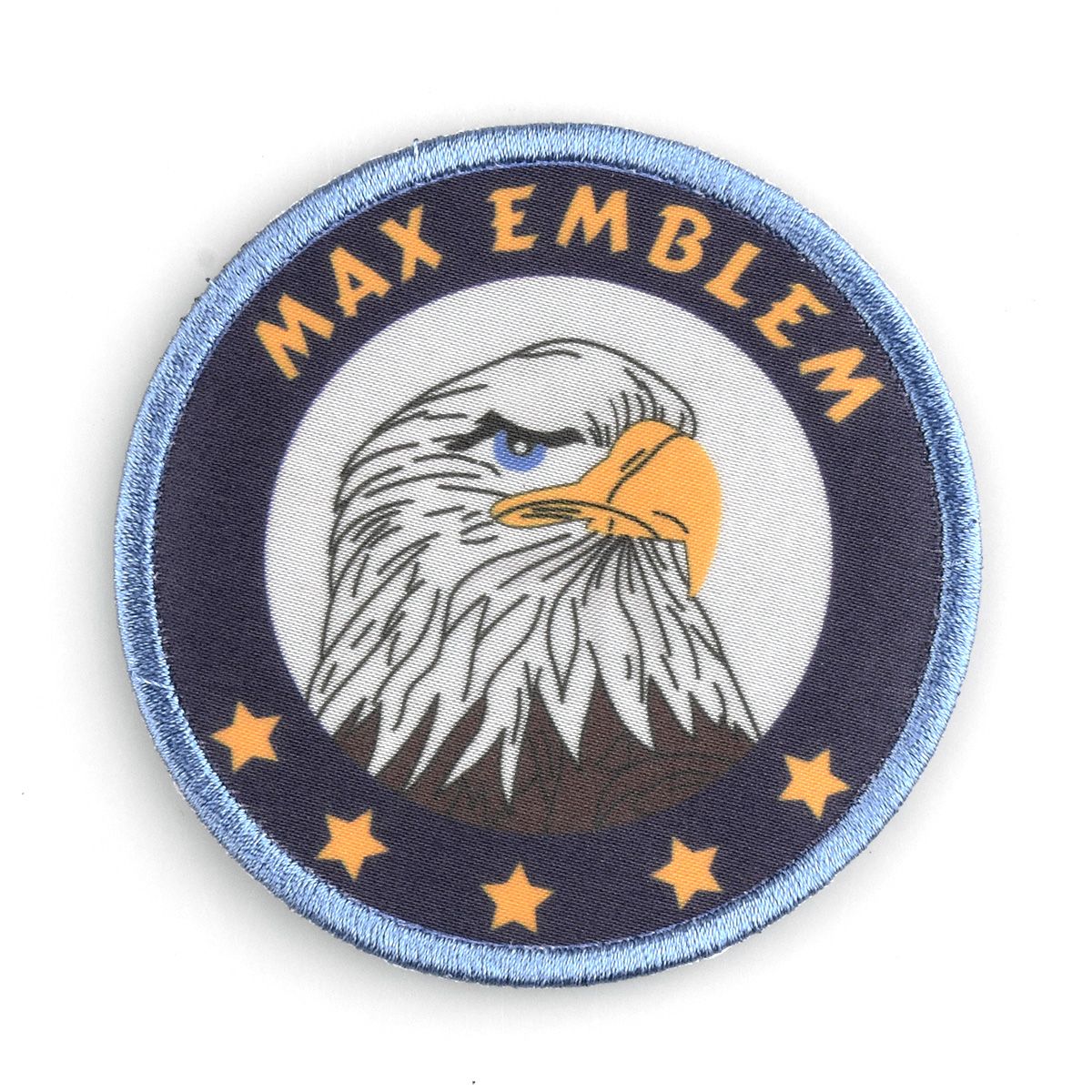
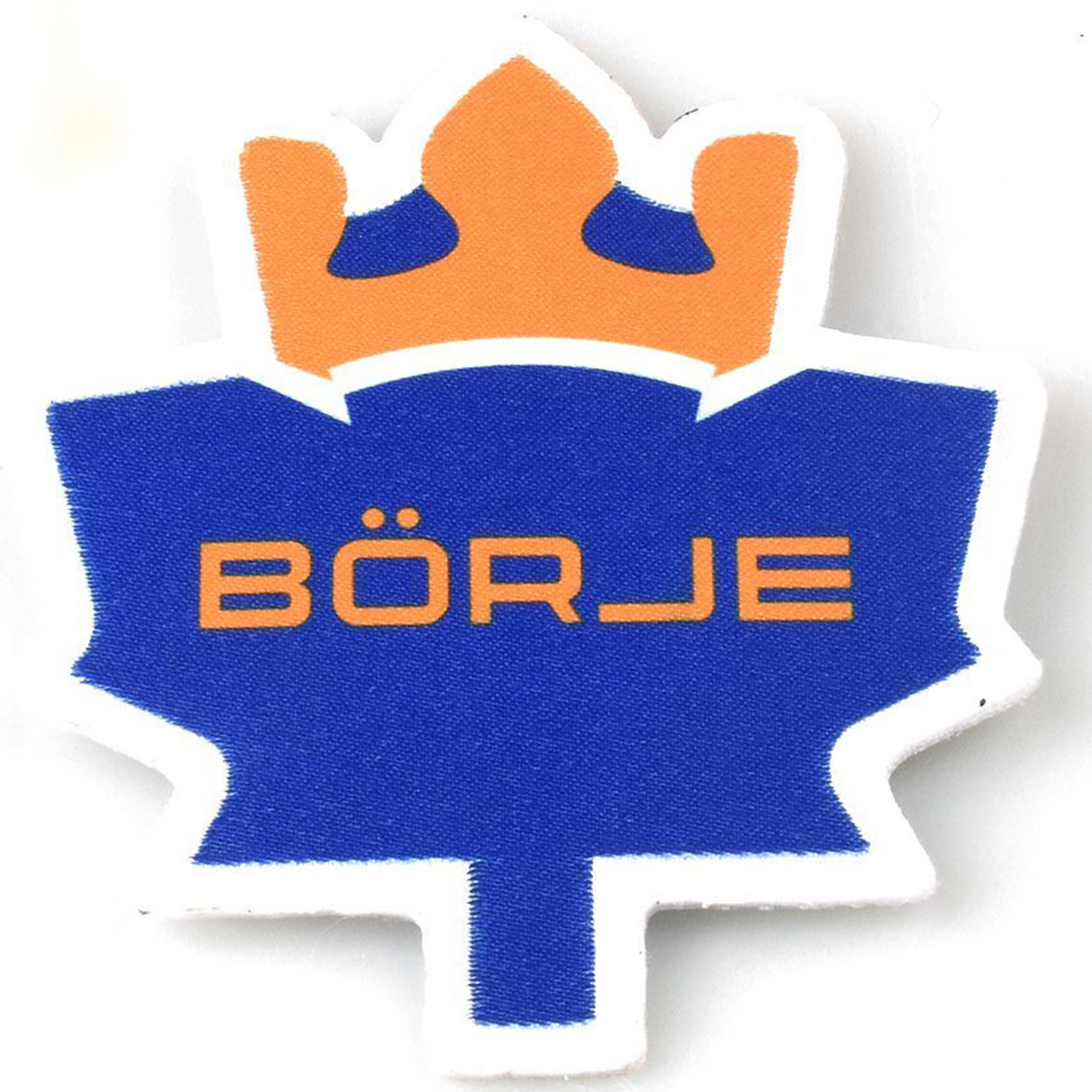
When your logo is all about fine details, thin lines, or incorporates tiny text, woven patches are your secret weapon. Unlike embroidery, woven patches are created on a jacquard loom, similar to how a fine tapestry is made. This allows for incredible detail—think of the small copyright text under a logo. They are also exceptionally thin and flat, lying seamlessly on the cap's surface without added bulk. They offer a sleek, polished look ideal for fashion labels, tech companies, or any design where precision is paramount.
From Concept to Cap: The Maxemblem Production Journey
Understanding our process gives you confidence. Here’s how your idea becomes a tangible product on our production floor.
Define Your Brand From the Top Down
Your hat is often the first thing people notice. A meticulously crafted custom patch doesn't just adorn a cap—it communicates quality, builds community, and turns customers into brand ambassadors. It’s the finishing touch that separates a generic item from a signature piece.
At Maxemblem, we combine two decades of manufacturing expertise with a collaborative partnership. We don't just take your order; we guide you through material selection, design optimization, and application strategy to ensure your custom made patches for hats project delivers exceptional return on investment.
Your Hat Patch Questions, Answered
Q: Will my iron-on patch fall off in the wash?
A properly applied heat press patch is designed to withstand commercial laundering. The key is the application method. While a home-ironed patch may survive gentle cycles, a professionally heat-pressed patch using the correct temperature, pressure, and time will be significantly more durable. We always recommend turning the hat inside out and washing in cold water to maximize the lifespan of any applied patch.
Q: Which patch material is most resistant to sun fading?
For maximum UV resistance, PVC/rubber patches and high-quality, dyed-through leather are your best bets. PVC colors are molded in, making them extremely fade-resistant. Top-grain leather, while it will naturally tan in the sun, won't see its design fade if it's laser engraved or embossed. Embroidered patches use colorfast polyester thread, which is very good, but prolonged, direct desert sun over years may cause some subtle fading compared to PVC.
Q: Why is there a setup fee for a small order?
Think of the setup fee as the "engineering and programming" cost. Whether we're digitizing a complex logo for embroidery (which can take an expert 1-2 hours) or machining a custom steel mold for a PVC patch (a precise CNC machining process), this work is done once, regardless of whether you order 10 patches or 10,000. The machine time and skilled labor involved are fixed. This fee allows us to maintain high quality and precision. For larger orders, this one-time cost is spread over many units, making the per-patch cost very economical.