Sign in
Create Your Account
Create My Account
Sign In
Create Your Account
Learn to choose premium custom sports medals with expert tips on pricing, mold costs, size & design. Avoid pitfalls for memorable event awards.


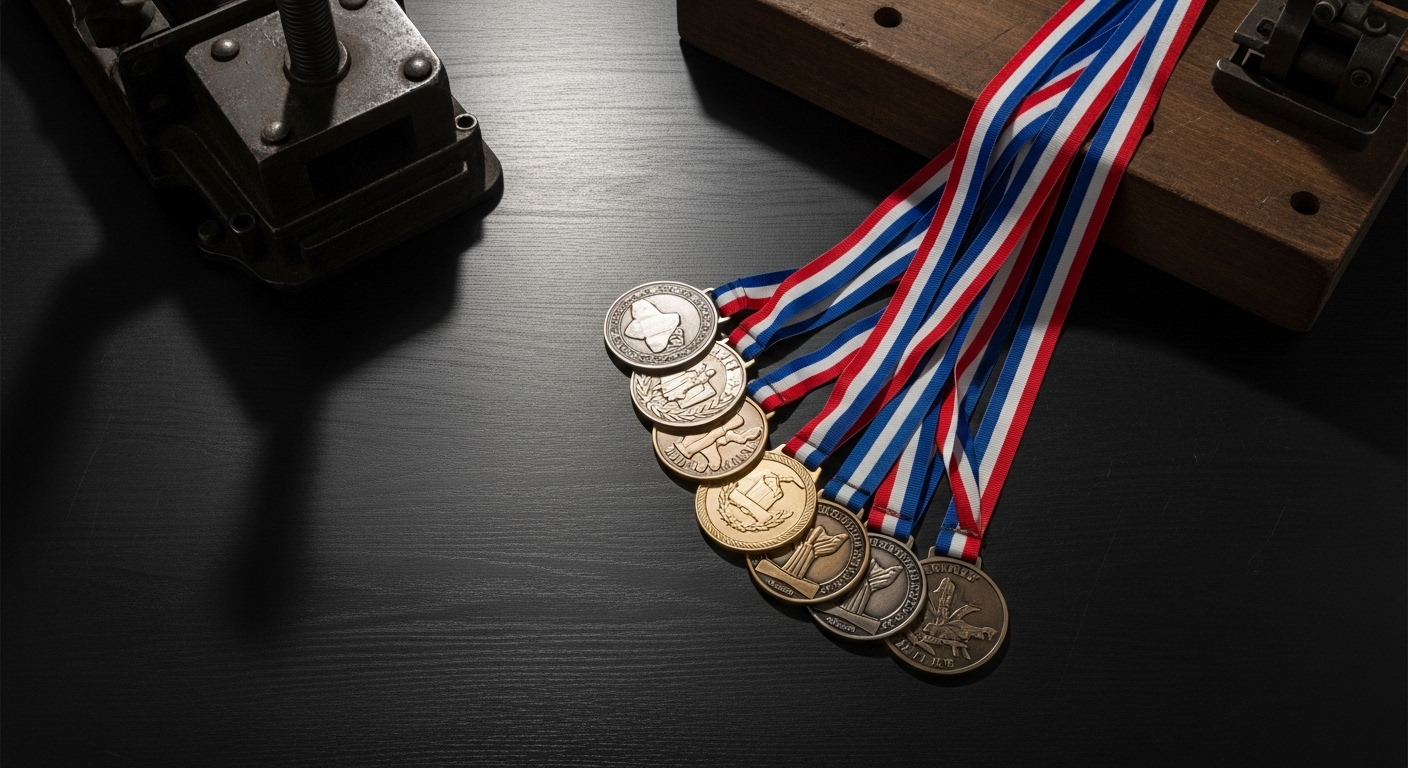
Every medal tells a story. Whether it's capturing the triumphant smile of a child at their first Sports Day or commemorating the grueling determination of a marathon finisher, personalised sports medals transform fleeting moments into tangible keepsakes. These awards become physical symbols of achievement that recipients cherish for years—sometimes for a lifetime.
But here's the reality most event organizers discover too late: not all custom medals are created equal. The difference between a medal that feels cheap and one that radiates quality often comes down to four critical decisions: price understanding, process selection, size consideration, and design execution. Getting these elements right means your awards will perfectly reflect the significance of your event. Getting them wrong can lead to disappointment, budget overruns, and logistical nightmares.
This comprehensive guide, drawn from two decades of manufacturing expertise at Maxemblem, will walk you through exactly what you need to know to navigate the custom medal landscape confidently. We'll demystify industry terminology, expose common pitfalls, and provide clear, actionable advice tailored to specific events—from personalised football medals for your local youth league to personalized graduation medals for academic ceremonies.
Industry Insights: The 4 Critical Dimensions of Custom Medals
Before you request your first quote, understanding these four pillars will transform you from a confused buyer into an informed partner in the creation process.

What Determines the Final Cost of Custom Medals?
Many first-time buyers experience sticker shock when they receive a quote for personalized award medals. The confusion usually stems from not understanding how metal fabrication differs from printing t-shirts or trophies.
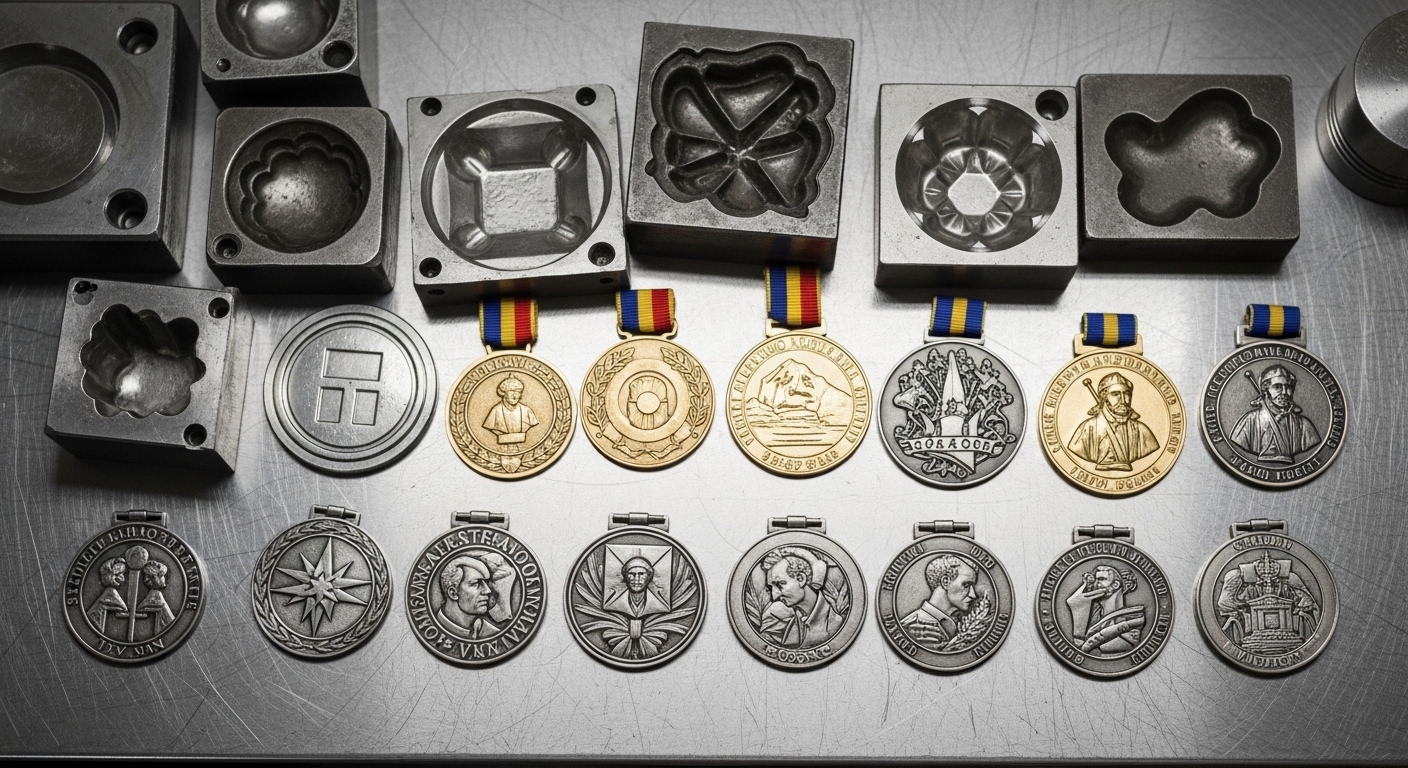
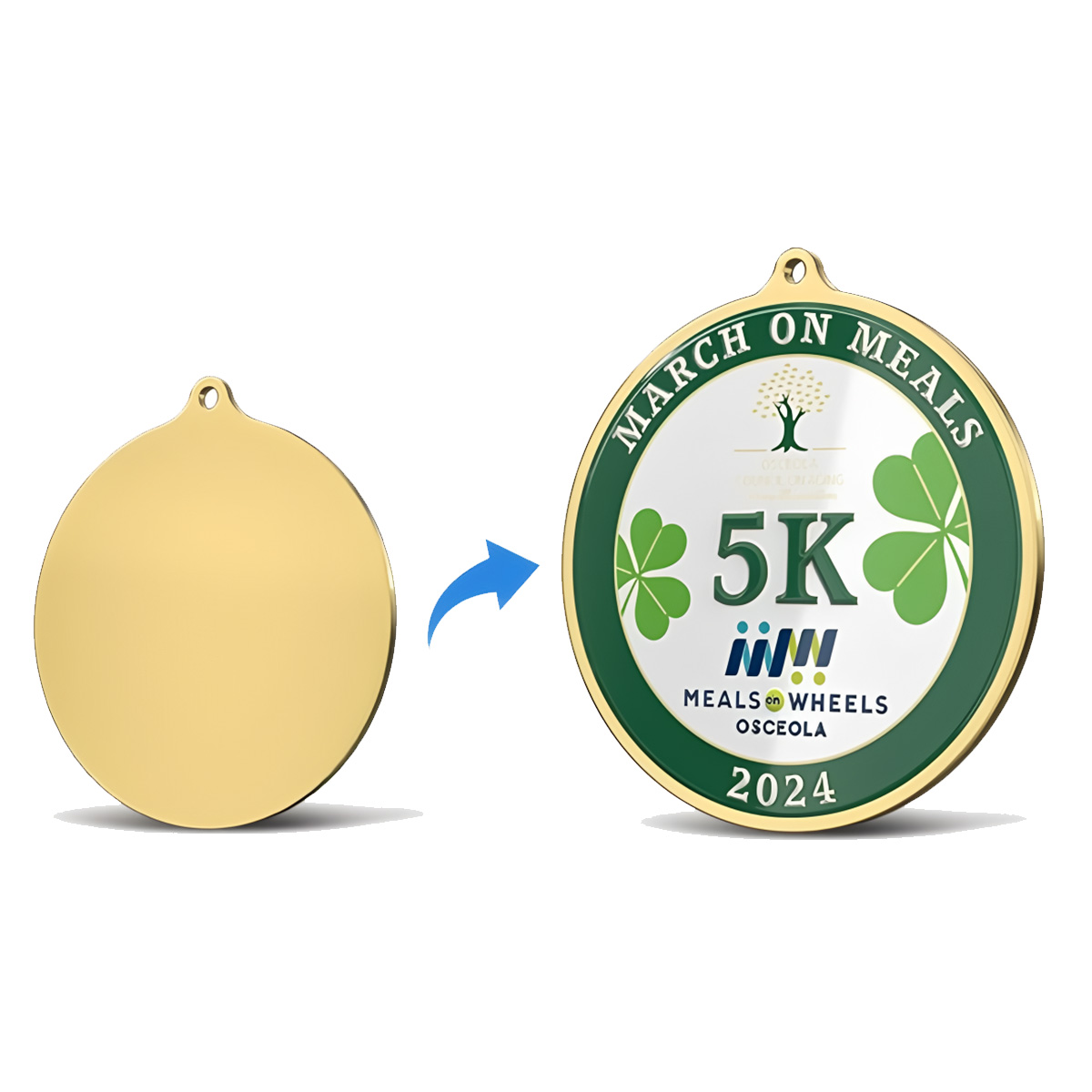
Unlike digital printing where setup costs are minimal, creating a metal medal requires custom tooling (mold/die creation). Think of this as carving a unique signature stamp that will imprint your design onto metal blanks. This mold, often made from hardened steel, is what gives your medal its raised (3D) details, crisp edges, and professional finish. The creation of this mold represents a significant, one-time engineering cost.
Key Insight: This explains the "per-piece" pricing structure.Your total cost = (Mold/Tooling Fee) + (Per Medal Cost × Quantity).The tooling fee is fixed regardless of whether you order 50 or 500 medals. This is why the per-medal cost drops significantly as your quantity increases—the fixed tooling cost is spread across more units.
For smaller events or pilot programs where budget is tight and quantities are low (e.g., under 100 pieces), be prepared for a higher per-unit cost. Always ask your supplier to break down the quote into tooling cost and production cost. Reputable manufacturers like Maxemblem are transparent about this. If a quote seems unusually low, it may indicate inferior mold materials (leading to blurry details after a few strikes) or hidden fees that will appear later.
How to Choose the Right Manufacturing Process: Enamel, Printing, or 3D Casting?
The manufacturing process you choose directly impacts the aesthetic, durability, and cost of your personalised sports medals. Here’s a breakdown of the three main techniques:
Process |
Best For |
Visual & Tactile Quality |
Cost Consideration |
|---|---|---|---|
Hard Enamel (Cloisonné) |
Traditional personalized award medals, corporate logos, designs with solid color fields and clear separations. |
Smooth, glossy, glass-like finish. Colors are vibrant and sealed under a polished surface. Extremely durable and scratch-resistant. |
Higher cost due to multi-step firing and polishing. Color count affects price. |
Soft Enamel (Imitation) |
Most personalised football medals and personalized softball medals. Offers great value and allows for textured, recessed areas. |
Textured feel with raised metal borders (cloisons). Colors are slightly recessed. Can be topped with epoxy dome for protection. |
Most cost-effective for multi-color designs. The industry standard for team sports. |
UV Printing/Digital |
Personalized medals for race with photorealistic images, gradients, or intricate sponsor logos. Complex designs that are impossible with enamel. |
Full-color, photographic quality. Can print directly on 3D surfaces. Finish can be matte or glossy. |
Excellent for complex art without additional color charges. Ideal for smaller runs of personalised running medals. |
Die Struck (3D) |
High-end personalized graduation medals, military-style awards, or any design requiring dramatic, sculptural depth. |
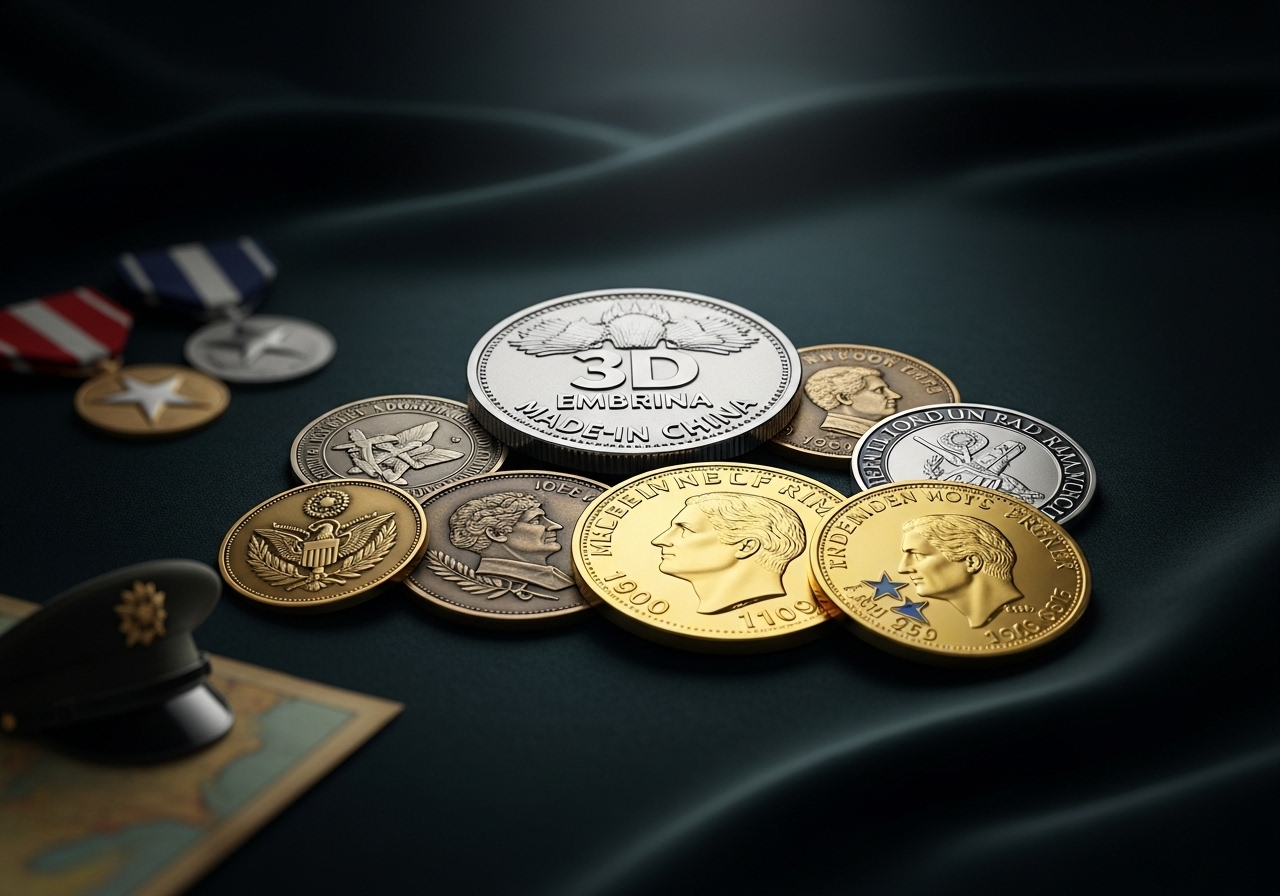
Extreme 3D relief with fine detail. Single metal tone (silver, gold, bronze). Has substantial weight and heft. |
Higher cost due to intense pressure required and detailed die-making. The premium choice for gravitas. |
A common question we address is the difference between die-struck and die-cast medals—a topic thoroughly explored in industry discussions. In short, die-struck involves stamping a solid metal blank under tremendous pressure, resulting in sharp, crisp details and work-hardened metal. Die-casting involves injecting molten metal (often zinc alloy) into a mold, which is better for more complex, undercut shapes but may have slightly less fine detail. For most sports awards, die-struck or cast medals with soft enamel offer the ideal balance of detail, color, and cost.
What Size and Weight Feel "Right" for My Event?
The physical presence of a medal matters. A flimsy, lightweight medal can feel like an afterthought, while a substantial one communicates value and significance. Size and weight are psychological tools.
Standard Size Guidelines:
Always request physical samples or dimension mock-ups from your supplier. A 60mm circle drawn on paper feels very different from a 60mm, 3mm-thick piece of metal in your hand.
How Does My Digital Design Translate into a Physical Medal?
This is where many well-intentioned projects stumble. A beautiful vector logo on a white screen doesn't automatically become a beautiful medal. Consider these translation factors:
Working with a manufacturer that offers professional design review is crucial. At Maxemblem, our team analyzes every file for potential production issues and suggests modifications—at no extra cost—to ensure the final product matches your vision and is manufacturable.
Tailored Solutions: Custom Medal Strategies for Your Event Type

Creating Durable & Celebratory Team Sports Medals
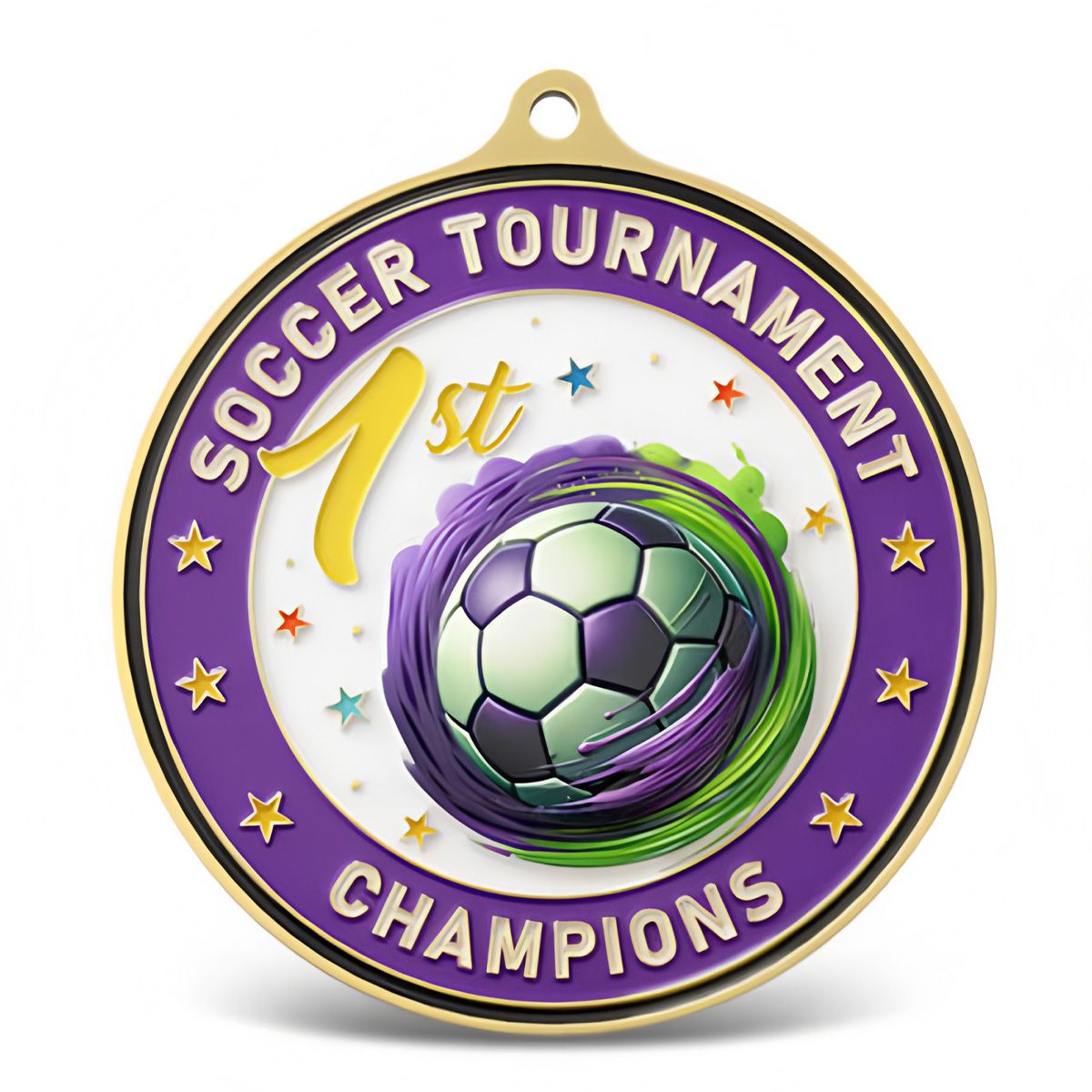
When creating personalised football medals or personalized softball medals, your primary considerations shift toward durability, clear team identification, and celebrating collective effort.
Durability is Non-Negotiable: These medals are often tossed into gear bags, worn during enthusiastic celebrations, and handled by young athletes. Soft enamel with a protective epoxy dome is the champion here. The epoxy layer shields the colored enamel from chipping and adds a glossy, finished look. The metal should be a sturdy zinc alloy (pewter) with a strong, seamless attachment loop for the ribbon.
Design for Instant Recognition: The front should prominently feature the league or tournament logo. The back is prime real estate for customization—this is where you can efficiently add the team name, year, and "Champions" or "1st Place" text. For large leagues, using a standard front design with customized backs for each division or age group is a highly cost-effective strategy, as it uses one master mold for all.
The Ribbon Matters: Team colors should be reflected in the ribbon. A woven ribbon with the team name or event logo printed along its length elevates the award from generic to special. For soccer, consider ribbons in national colors or classic black-and-white checkered patterns.
Designing Memorable Medals for Races & Athletic Meets
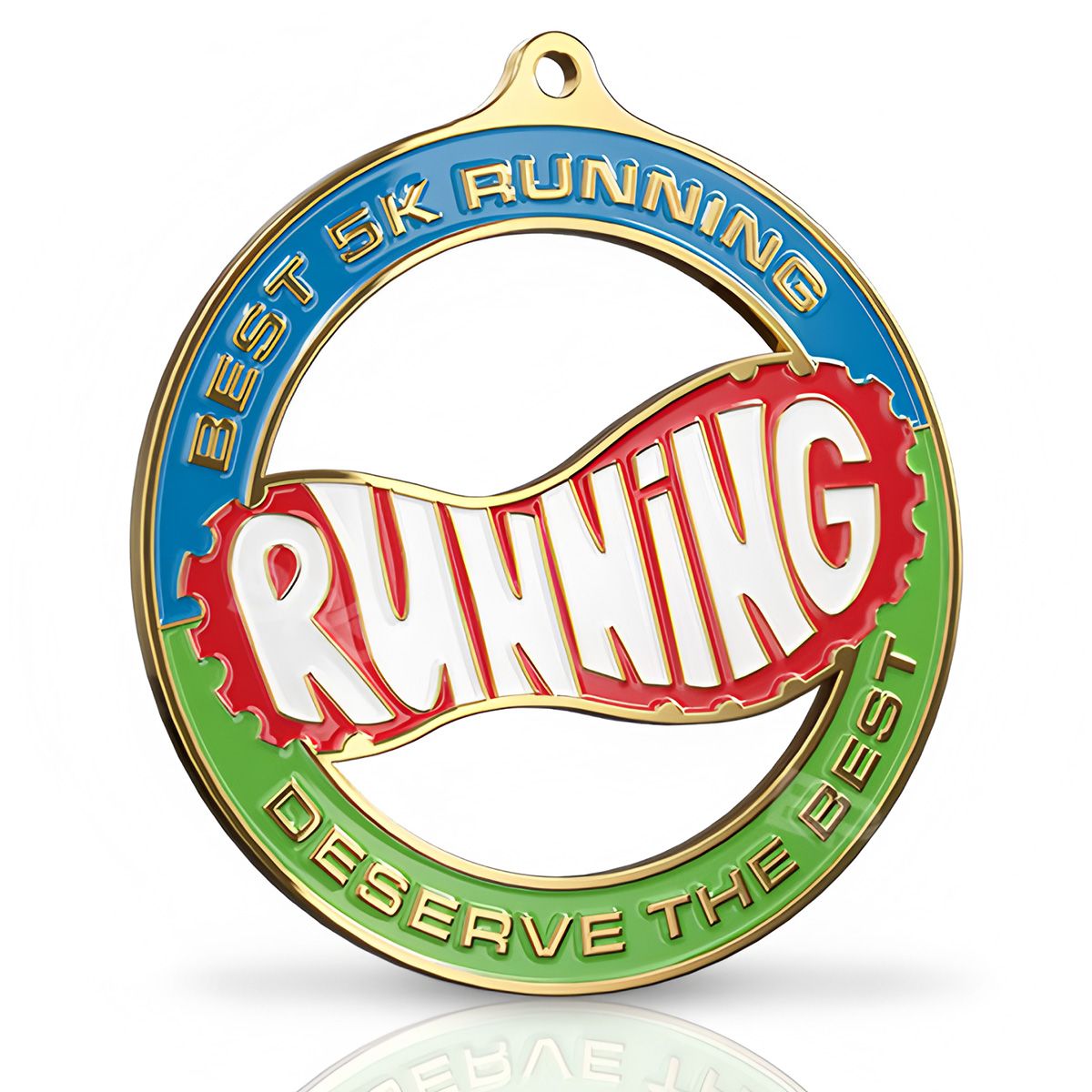
The culture of running and track events places a high value on the medal as a physical testament to personal endurance. Your personalised running medals or personalized medals for race events need to tell the story of the day.
Embrace Thematic Design: Incorporate iconic local landmarks, the race logo, or symbols of perseverance. UV printing excels here, allowing for scenic backdrops, sponsor logos in full color, and photographic elements. For a marathon, consider a multi-part, connector medal that changes each year, encouraging repeat participation.
Logistics Are Part of the Design: Race directors operate on immovable timelines. The medal must arrive, without fail, before race day. This is where a manufacturer's reliability is as important as their quality. Inquire explicitly about production timelines and shipping options. For example, many suppliers offer "Rush" services for critical deadlines. Always build in a buffer of at least 2-3 weeks for unforeseen delays.
For Sports Day: Personalised sports day medals often need to be produced in very large quantities for multiple events (1st, 2nd, 3rd place, participation). Here, efficiency is key. A simple but elegant die-struck design in gold, silver, and bronze finishes, perhaps with a small enamel accent in the school color, offers distinction and value. Using a stock ribbon in school colors keeps costs down while maintaining cohesion.
Crafting Elegant & Formal Academic Achievement Medals
Personalized graduation medals symbolize the culmination of years of study. The aesthetic should lean toward tradition, elegance, and formality.
Focus on Finishes: Instead of bright, glossy colors, consider sophisticated antique finishes. An antique silver or gold plating, with a darkening solution rubbed into the recesses to highlight the details, conveys heritage and prestige. Hard enamel can be used sparingly for a university crest or honor society colors.
Weight and Detail: A smaller medal (40-45mm) made with a die-struck process can feel incredibly substantial due to its high density and deep relief. Every detail of the academic seal should be razor-sharp. The ribbon should be a high-quality grosgrain or satin, often in the official institutional colors, with a classic fold or a custom slide.
Customization for Departments: Universities can use a common university seal on the front, with a customizable back to denote "School of Engineering," "Department of Sciences," or "Magna Cum Laude." This approach builds a unified award system across campus while allowing for distinction.
Your Blueprint for a Flawless Custom Medal Order
Knowing what you want is half the battle. Knowing how to get it produced flawlessly is the other half. Follow this checklist.
Shipping Service |
Production Time |
Shipping Time |
When to Choose |
|---|---|---|---|
Priority |
~10 business days |
~3 business days |
Tight deadlines (3-4 weeks total) |
Express |
~15 business days |
~3 business days |
Balanced speed & cost (4-5 weeks total) |
Standard |
~15 business days |
~9 business days |
Best for planning ahead (6-7 weeks total) |
Ready to Create Awards That Are Remembered?
Your event deserves medals that match its significance. With over 20 years of expertise, Maxemblem guides you through every step—from initial concept to final delivery—ensuring quality, reliability, and awards that truly honor achievement.
Frequently Asked Questions
What is the minimum order quantity for custom medals?
While there's no universal minimum, most manufacturers have practical minimums due to mold costs. At Maxemblem, we can work with orders as low as 50 pieces for some processes. However, remember that the per-medal cost is higher at low quantities. For the best value, consider orders of 100+ units.
How long does it really take to get custom medals?
Total time = Design/Proofing + Production + Shipping. A realistic timeline is 6-8 weeks for a smooth standard order. Rushed services can compress this to 3-4 weeks but at a higher cost. Always add a 1-2 week buffer before your event for unforeseen delays.
Can I get medals in the shape of my logo, or are they only round?
You can create medals in virtually any shape! Custom shapes (die-cast) require a custom mold, which adds to the initial tooling cost. Round and standard shapes are often more cost-effective, but a unique shape (like a state outline for a local race or a shield for a school) makes a powerful statement.
What's the difference between a "medal" and a "challenge coin"?
Medals are designed to be worn around the neck with a ribbon and are typically associated with awards for placement or participation in an event. Challenge coins are usually smaller, thicker, and not meant to be worn; they are collected, displayed, or used in tradition (like "coin checks"). The manufacturing processes can be similar, but the intent and design differ.