Sign in
Create Your Account
Create My Account
Sign In
Create Your Account
Create custom pins with no minimum order—learn die cost realities, price breakdowns & best processes to get great value for small-batch, personal or test runs.


Have you ever wanted to create a unique pin for a special event, a personal art project, or to test a new brand concept, only to be told you need to order 100 pieces or more? You're not alone. The search for custom pins no minimum order options is common, but it comes with unique challenges. While "no minimum" offers incredible flexibility, understanding the underlying cost structure is key to getting great value without surprises. This guide will walk you through exactly how to navigate small-quantity pin production, from avoiding hidden fees to selecting the right craftsmanship for your budget and vision.
The Real Cost Behind “No Minimum Order” Custom Pins
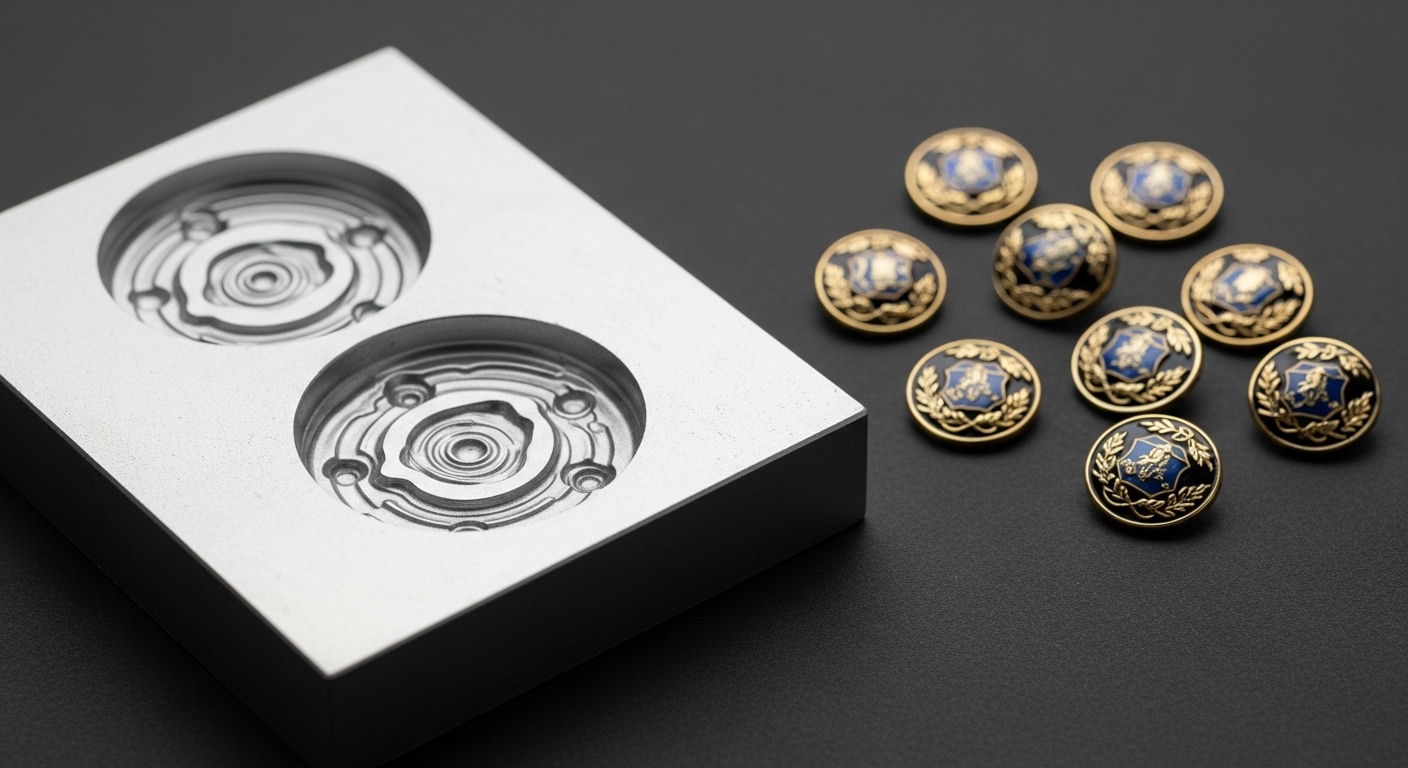
When a manufacturer offers custom lapel pins no minimum quantity, it's a service of flexibility, not a magic wand that eliminates fundamental production economics. The core concept to grasp is the die (mold) cost. For most metal lapel pins, creating your unique design requires a custom metal mold. This mold is crafted from steel and is used to stamp the shape of your pin from a metal alloy. The creation of this die is a skilled, one-time process.
Here’s the crucial point: This die cost is fixed. Whether you order 1 pin or 500 pins, the cost to create that mold is the same. In a large batch order of 500 pieces, the die cost is divided by 500, making its contribution to each pin's price quite small. In an order for just 10 pieces, that same fixed cost is divided by only 10, resulting in a significantly higher cost per pin.
Transparency is Key:
An honest manufacturer will clearly separate the one-time die cost from the per-unit production cost (materials, labor, finishing). When exploring custom made lapel pins no minimum, always ask for a quote that breaks down these two elements. This allows you to understand exactly where your money is going. For the smallest quantities, the die cost is the dominant part of your total. The goal is to find a partner who can help you optimize this balance—perhaps by suggesting alternative processes for ultra-small runs or designs that can share common die elements.
The 4 Decision Points for Successful Small-Batch Orders
Arming yourself with knowledge about price, process, size, and design empowers you to make confident decisions and communicate effectively with manufacturers. Let’s demystify each element.
How Should You Evaluate Price for Tiny Orders?
When seeking cheap custom pins no minimum, looking solely at the "per pin" price is the first mistake. You must evaluate the total project cost, which comprises three main components:
A savvy approach is to calculate a "cost per pin + setup" figure. For instance, if the die is $120 and the per-pin cost is $2, ordering 10 pins makes the effective unit cost ($120/10 + $2) = $14. Ordering 20 pins drops it to ($120/20 + $2) = $8. This clarity prevents sticker shock and helps you plan your budget realistically. For those needing the most cost-effective entry point for a handful of pins, exploring custom lapel pins cheap no minimum options might lead you to processes like UV layered printing on a standard shape, which can sometimes reduce or eliminate traditional die costs.
Which Manufacturing Process is Best for Low Quantities?
Your choice of process dramatically impacts both cost and aesthetic, especially for custom lapel pins small quantity orders. Not all techniques are equally economical for tiny batches.
Process |
Best For Small Batch Because... |
Considerations |
|---|---|---|
Soft Enamel |
The most common and often most cost-effective method for true metal pins. The die cost is standard, and the process is highly streamlined. |
Offers a classic, textured look with recessed colors. Excellent color vibrancy. |
UV Layered Printing |
Can be ideal for custom pins no minimum quantity with complex, full-color designs (photographs, gradients). It may use a simpler, less expensive base mold or even a standard shape. |
Achieves photographic detail. The finish is smooth with a protective epoxy layer. May have a different "feel" than traditional enamel. |
Die-Struck (No Color) |
A sophisticated, elegant option. While the die cost exists, there are no color-filling steps, simplifying production. |
Monochromatic (silver, gold, copper tones). Relies entirely on the beauty of the stamped metal detail and plating. |
Soft Enamel with Epoxy Dome |
A durable and attractive standard. The process is efficient, making it scalable from small to large orders. |
The epoxy dome protects the colors and gives a smooth, rounded surface. A professional and popular finish. |
Hard enamel, while producing a gorgeous, smooth, and premium finish, often involves more labor-intensive polishing steps. For a tiny order, this can be less cost-effective unless the jewel-like quality is a non-negotiable requirement for a special gift or award.
What's the "Goldilocks" Size for Small Orders?
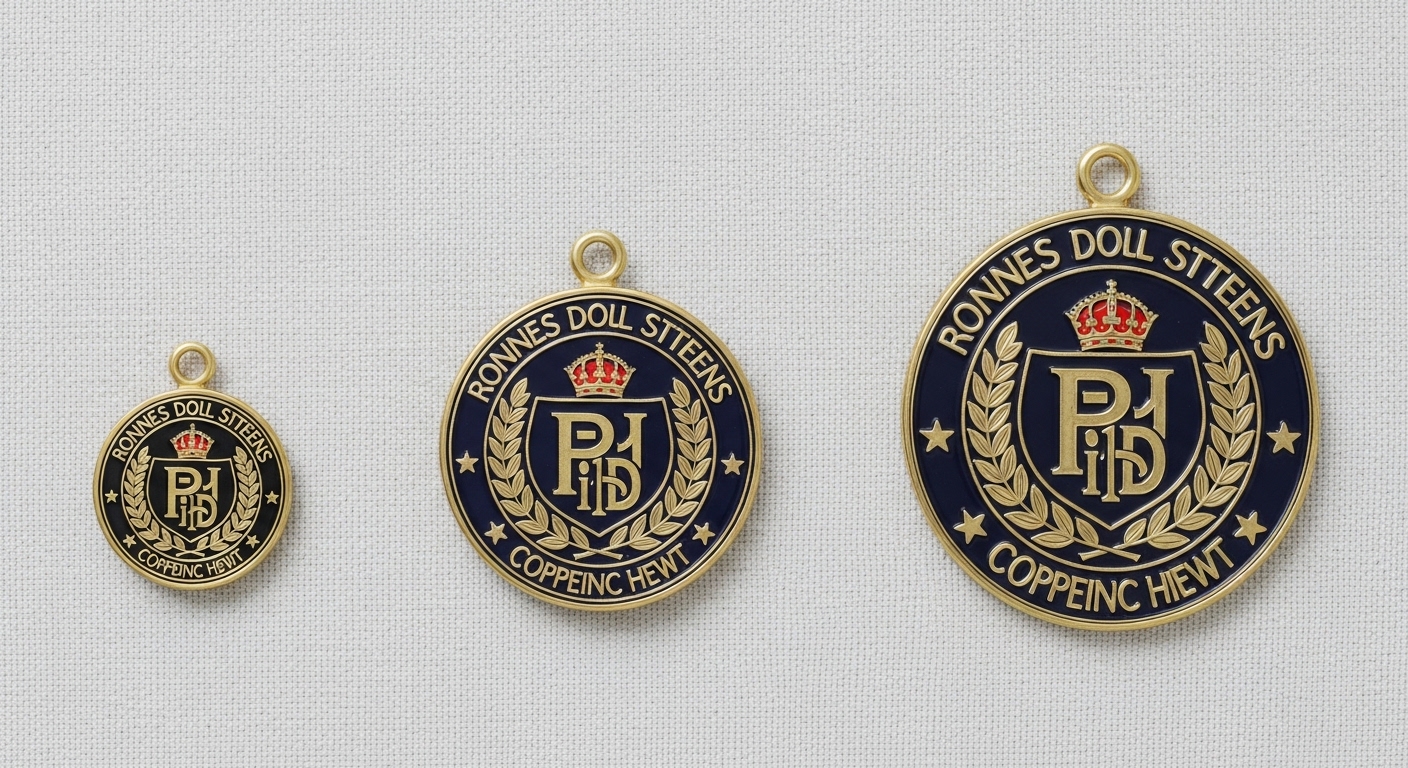
Size directly influences both the die cost and the per-unit material cost. A simple rule: the larger and more intricate the pin, the more expensive the die and the more metal used. For your first custom lapel pins no minimum order, consider these size guidelines:
Sticking to a standard, moderate size for your initial custom lapel pins small quantity project is the most budget-friendly path.
How Can Design Choices Lower Your Costs?
Simplification is your ally in custom made lapel pins no minimum projects. Complex designs lead to more complex, expensive dies and challenging production steps. Here’s how to design with cost and feasibility in mind:
Always, always consult with the manufacturer's design team. They can provide a free design review and alert you to potential issues that could increase cost or cause production delays before any metal is cut.
Tailored Solutions for Your Specific Needs
Whether you need something fast for an event or a heirloom-quality piece, there's a strategy for your small batch.
Need Pins Fast and on a Tight Budget?
If your primary drivers are speed and low cost for a one-time event, you're looking for cheap custom pins no minimum with a quick turnaround. In this case:
For example, a Rush Pin Service might turn around a small batch in 10-12 business days total (production + shipping), compared to a standard timeline of 3-4 weeks. This speed is invaluable for last-minute event planning.
Demanding Premium Quality for a Special Occasion?
Sometimes, you only need a few pins, but they must be impeccable—for a special award, a high-end corporate gift, or a symbolic piece for an organization. Here, quality trumps all.
This approach is perfect for creating a handful of meaningful custom lapel pins no minimum quantity that will be treasured for years.
From Order to Delivery: What to Expect
A reputable manufacturer treats a small order with the same care as a large one. The process typically follows these steps:
Timeline is crucial. "No minimum" doesn't mean "instant." Factor in time for each step. For planning, here are typical production timelines for pins:
Service Level |
Production Time |
Shipping Time |
Total Estimate |
|---|---|---|---|
Priority |
~8 business days |
3 business days |
~11 business days |
Express |
~15 business days |
3 business days |
~18 business days |
Standard |
~15 business days |
9 business days |
~24 business days |
Note: Times are estimates and begin after final artwork approval. Always confirm with your supplier.
Ready to Bring Your Small-Batch Idea to Life?
Creating custom pins with no minimum order is absolutely achievable. The key is partnering with a manufacturer who is transparent about costs, guides you through the process, and respects your project regardless of its size. At Maxemblem, we believe every great idea deserves a tangible form, whether it's for 10 people or 10,000.
Have a design in mind but unsure about the most cost-effective process? Don't navigate the trade-offs between die costs and quality alone. Contact our team today for a personalized, no-obligation consultation and quote. We’ll help you find the perfect path to create the pins you envision, with clarity and confidence every step of the way.
Frequently Asked Questions (FAQ)
What does "no minimum order" really mean?
It means the manufacturer does not require you to order a specific high quantity (like 100+ pieces). You can technically order even 1 piece. However, because creating a custom pin involves fixed costs like a mold/die, the price per pin will be significantly higher on very small orders to cover those upfront expenses. It's flexibility, not a discount.
Can I get cheap custom pins with no minimum?
"Cheap" is relative. You can get cost-effective pins by making smart choices: simplify your design, choose an economical process like soft enamel, select a standard size, and understand that the smallest possible quantity (like 1-5 pins) will have the highest cost per pin due to the fixed die cost. The total project cost for 10 simple pins can be very reasonable.
Why is there a mold/die fee for just a few pins?
The mold (or die) is a custom-made steel tool that stamps the shape of your unique design into metal. Crafting this tool requires precision machining and skilled labor. This cost is incurred once, at the start, regardless of how many pins you produce with it. It's the essential first step to making any custom metal pin, making it a fixed cost of your project.
How fast can I get a small order of custom lapel pins?
With expedited "rush" services, you can potentially receive a small batch in as little as 10-12 total business days from final artwork approval. Standard service typically takes 3-4 weeks. Always discuss your deadline with the manufacturer upfront, as rush options may involve additional fees.