The Origin and Development of Challenge Coins: From Military Tradition to Commemorative Culture
Table of Contents


The Origin of Challenge Coins
There are several stories about the origin of challenge coins.
One story is that challenge coins originated from a kind of game.
After World War II, among American soldiers stationed in Germany, there was a local bar game called “Check Fennie.”
The Fennie was the smallest unit of currency in Germany at that time.
In the game, if someone did not have a 1-fennie coin with them, they had to buy beer for the others.
Later, American soldiers changed the coins into unit insignias.
People playing the game challenged each other (challenge), and everyone would slap their own insignia onto the bar.
If any of the people being challenged did not have their insignia with them, that person had to buy beer for the challenger and all the other people who had insignias.
If everyone being challenged had an insignia, then the challenger had to buy beer for everyone.
Gradually, these kinds of insignias came to be called challenge coins (Challenge coin).
Another story is that during World War I, an American volunteer pilot was shot down over France
After landing safely, he was captured by the French army.
At that time, the U.S. military had not officially entered the war, so many volunteers could only carry out missions wearing civilian clothes.
Because the pilot had no identification documents to prove his identity, he almost got executed by the French as a spy.
Fortunately, he was carrying a bronze coin that had been awarded to him by the lieutenant of his flying squadron for his outstanding performance in aerial combat.
The coin was engraved with the insignia of their squadron.
It was precisely this insignia that prevented the French from executing him immediately, and delayed the execution long enough for them to verify his identity.
In the end, he was cleared of suspicion.
The French did not shoot him, but instead even gave him a bottle of wine!
After returning to his squadron, he told his comrades about this experience.
In order to prevent similar incidents from happening, pilots were required to carry their own medals or coins of this kind with them at all times.
Later, it developed into a symbol used in military drinking bets and continued to be passed down.
There is also another story that during World War II, France was occupied by Germany.
The U.S. military sent a large number of secret intelligence personnel to infiltrate France to collect various kinds of intelligence and organize resistance.
Some personnel from the Office of Strategic Services used a set of gold and silver commemorative coins as secret meeting identification signals.
Different gold and silver commemorative coins were randomly arranged as identification symbols for meetings held at different times, in different locations, and for different purposes, in order to prevent infiltration by Nazi spies.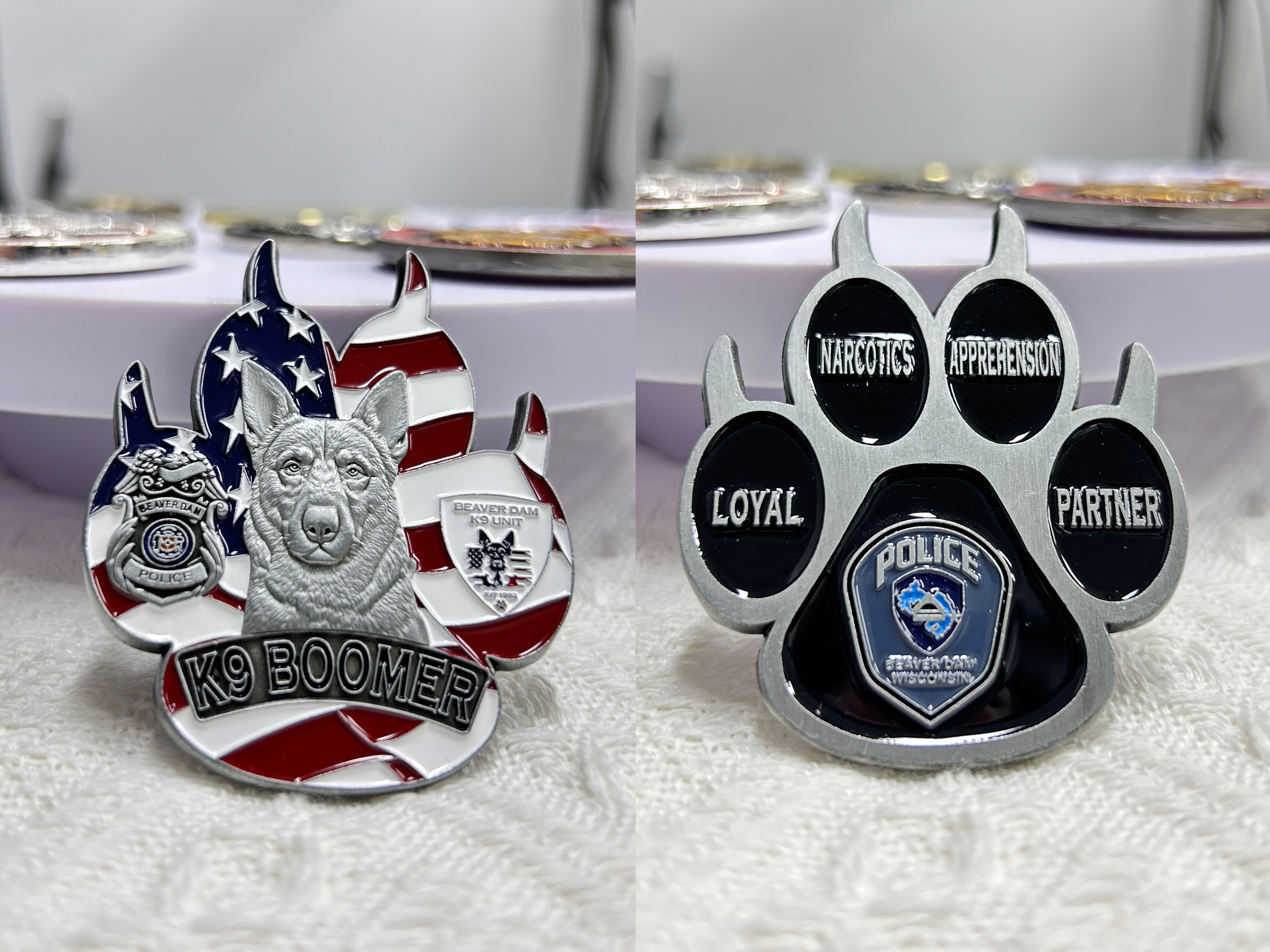
H2: How Did Challenge Coins Evolve from a Military Tradition into a Symbol of Identity and Honor?
Today, challenge coins have become a unique military culture in the United States.
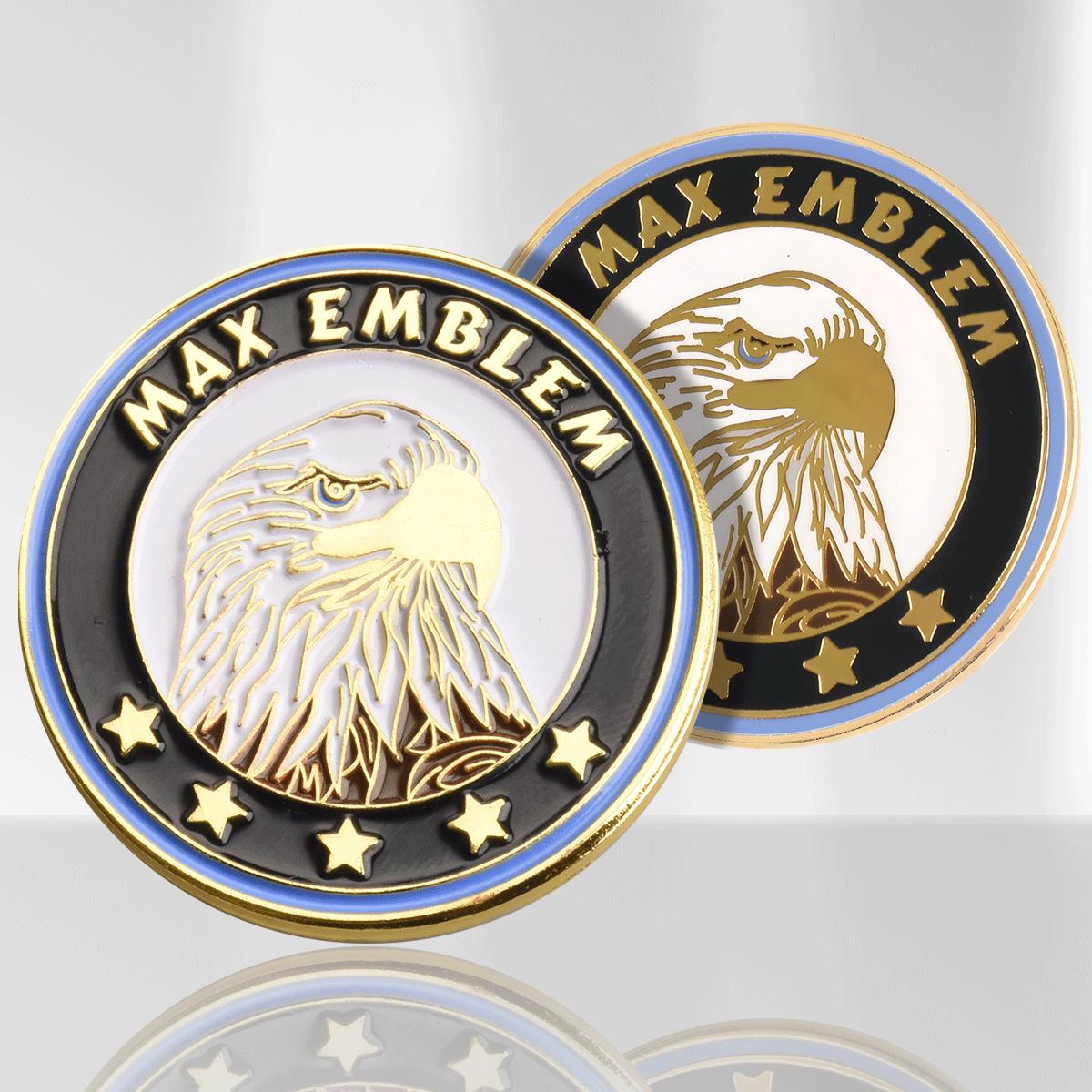
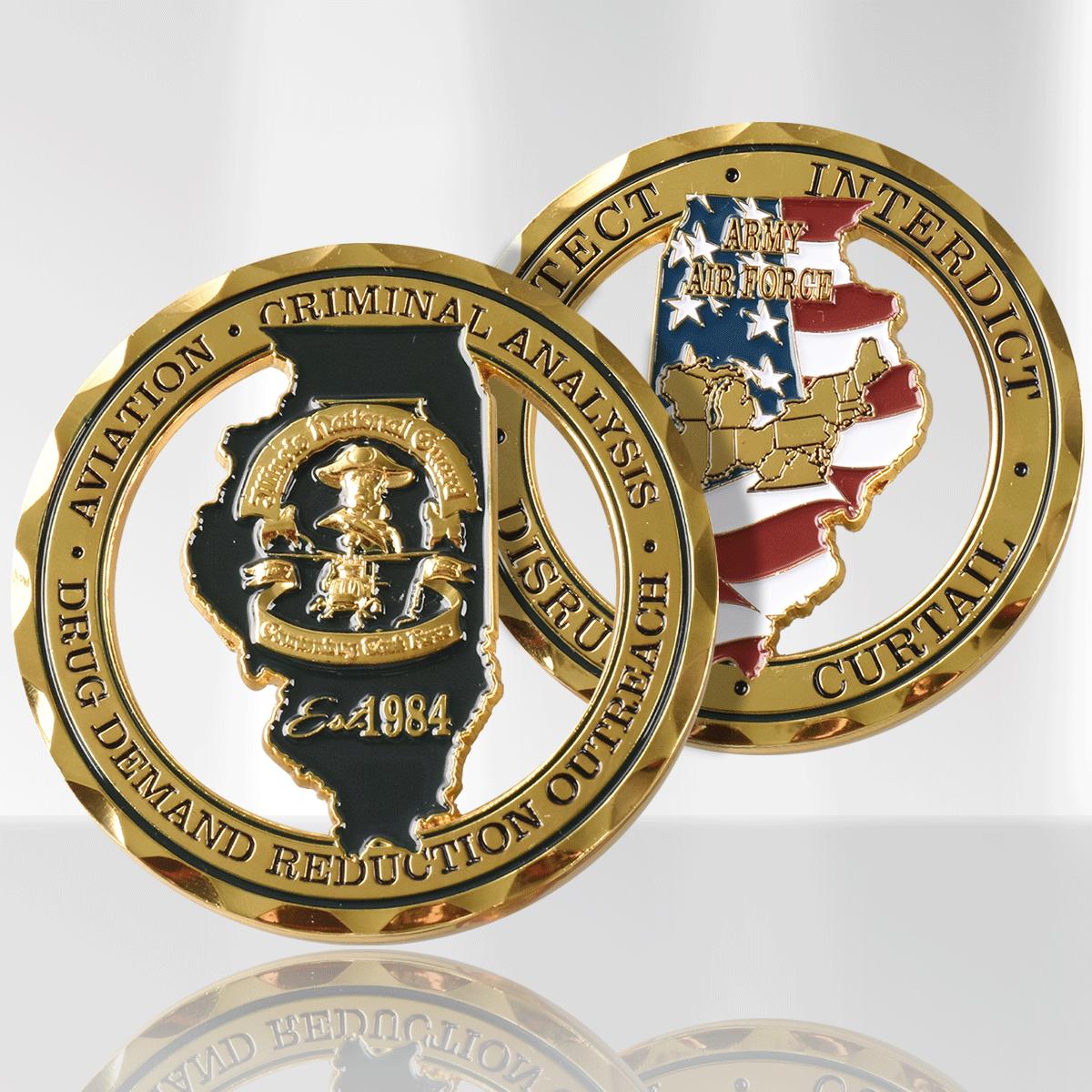
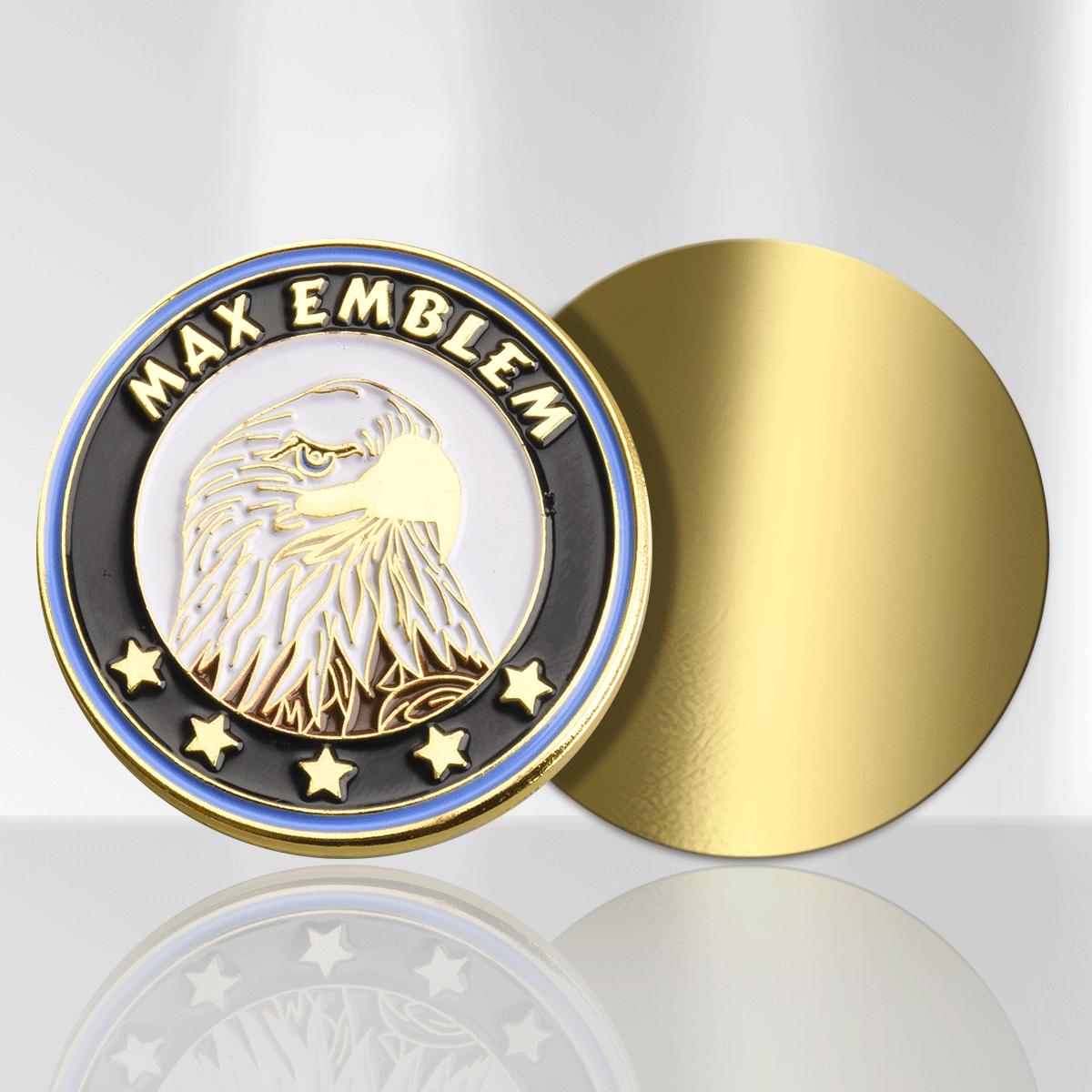
They are actually coin-shaped metal commemorative badges, usually with a diameter of 1.5 to 2 inches (3.8–5 cm) and a thickness of about 1/10 inch (2.5 mm).
They are usually made of alloys.
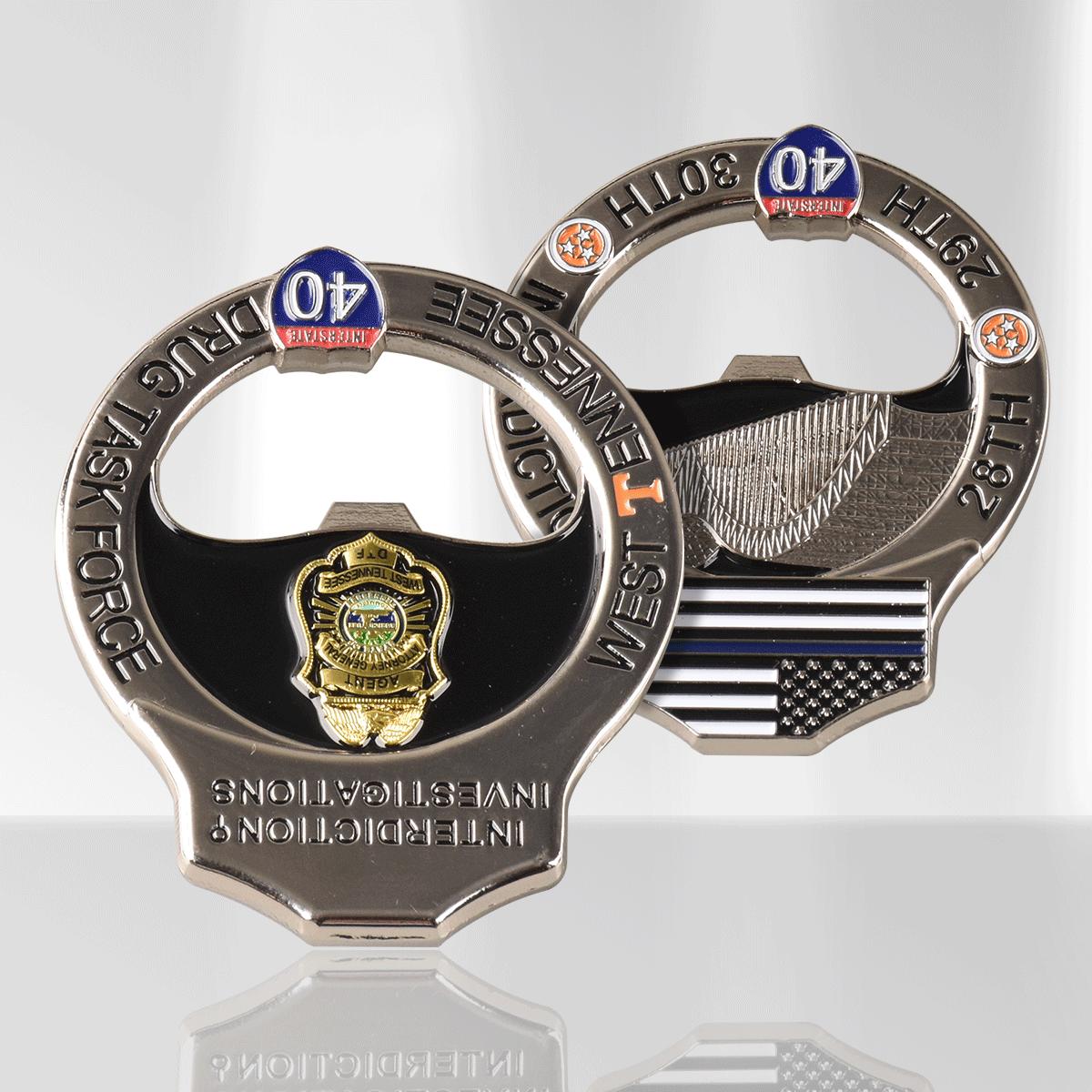
Some units also use special shapes such as shields, stars, or dog tags.
There are no special rules regarding the content of challenge coins.
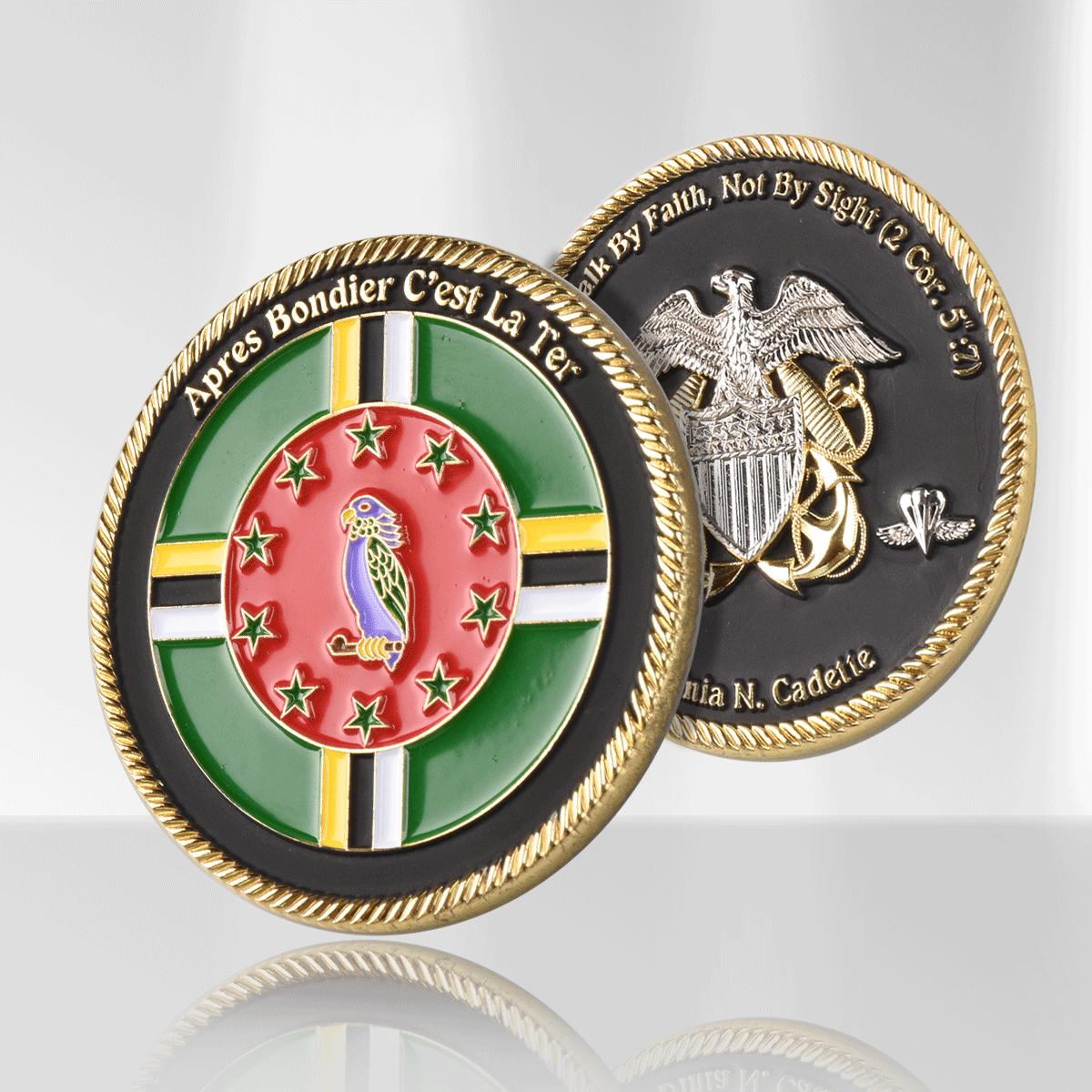
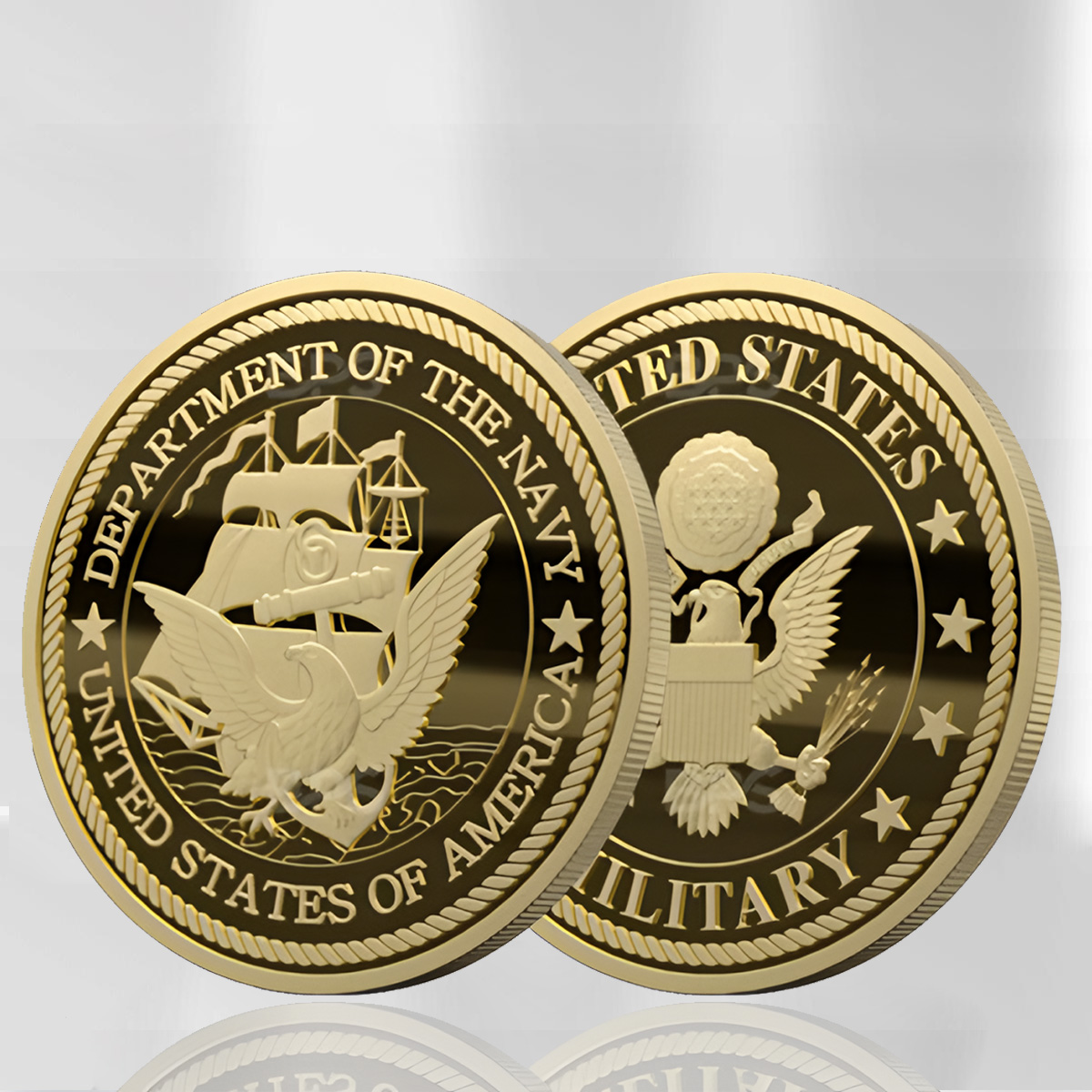
They can feature the insignia of a military unit, a major military operation, a certain weapon, a particular event, or even religious beliefs.
They come in all kinds of forms.
They can be given as souvenirs to other military units or individuals, or awarded as prizes to soldiers who have performed outstandingly.
These metal commemorative badges are often carried by soldiers as lucky charms.
There have also been many lucky stories in which they blocked bullets or shrapnel for their owners during battles and saved their lives.
Therefore, soldiers also nicknamed them “lucky coins.”
They are a way for various U.S. military units and branches of the armed forces to showcase their traditional culture, comradeship, and unique spirit.
Ralph Head, the former commander of the U.S. Pacific Fleet, presented challenge coins as souvenirs to some members of the Chinese PLA Navy Marine Corps after coming to Zhanjiang to watch a performance by the Chinese PLA Marine Corps.
There are many coin collectors abroad, and challenge coins are also among the collectibles they collect.
Although challenge coins have no face value and are not currency, some rare or special challenge coins can still be sold for good prices among collectors.
Today, challenge coins are no longer limited to the military.
Many non-military organizations and political groups, including Congress, design various kinds of challenge coins and give them to members or constituents.
They serve as a form of reward, a means of boosting morale, and a way to commemorate special events.
For example, the U.S. Naval Special Warfare Command designed a commemorative challenge coin to commemorate the completion of the BUD/S (Basic Underwater Demolition/SEAL) training course by the Navy SEALs.
The phrase “The only easy day was yesterday” can be described as the best interpretation of how difficult the SEAL selection and training course is.
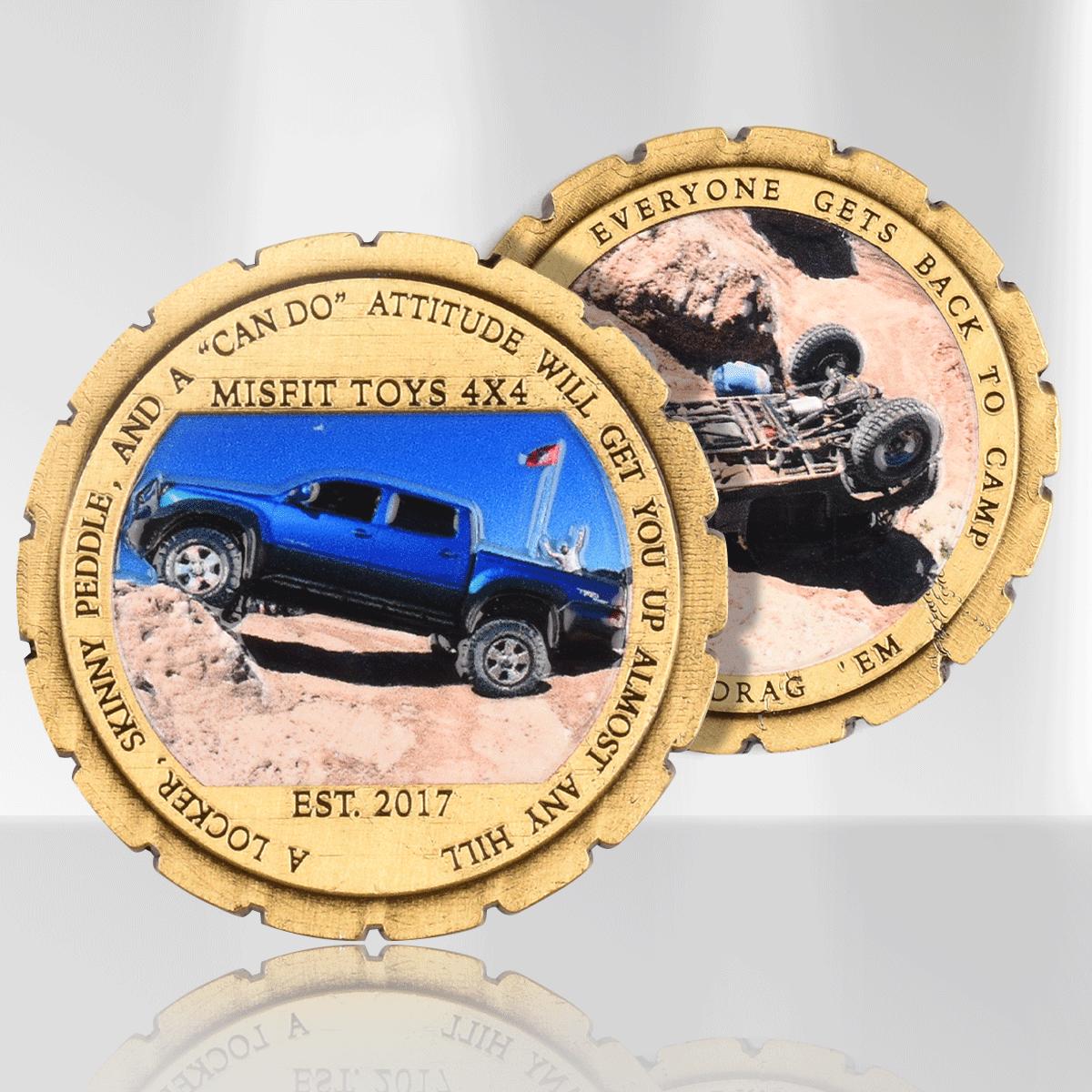
For another example, many government agencies, police departments, fire organizations, corporate teams, and nonprofit organizations also customize exclusive challenge coins to reward members, commemorate important activities, or strengthen team cohesion.
For example, some companies make customized challenge coins featuring the company Logo, founding year, or elements from important projects, and use them as gifts for employee anniversaries, outstanding employee awards, or customer appreciation gifts.
Compared with ordinary medals or commemorative souvenirs, challenge coins have stronger collectible value and long-term preservation value.
In the political field, Congress, government agencies, and various social organizations also design challenge coins with special meanings to give to members or commemorate important events.
These challenge coins are not only symbols of identity, but have also become important carriers for recording history, passing on honor, and expressing recognition.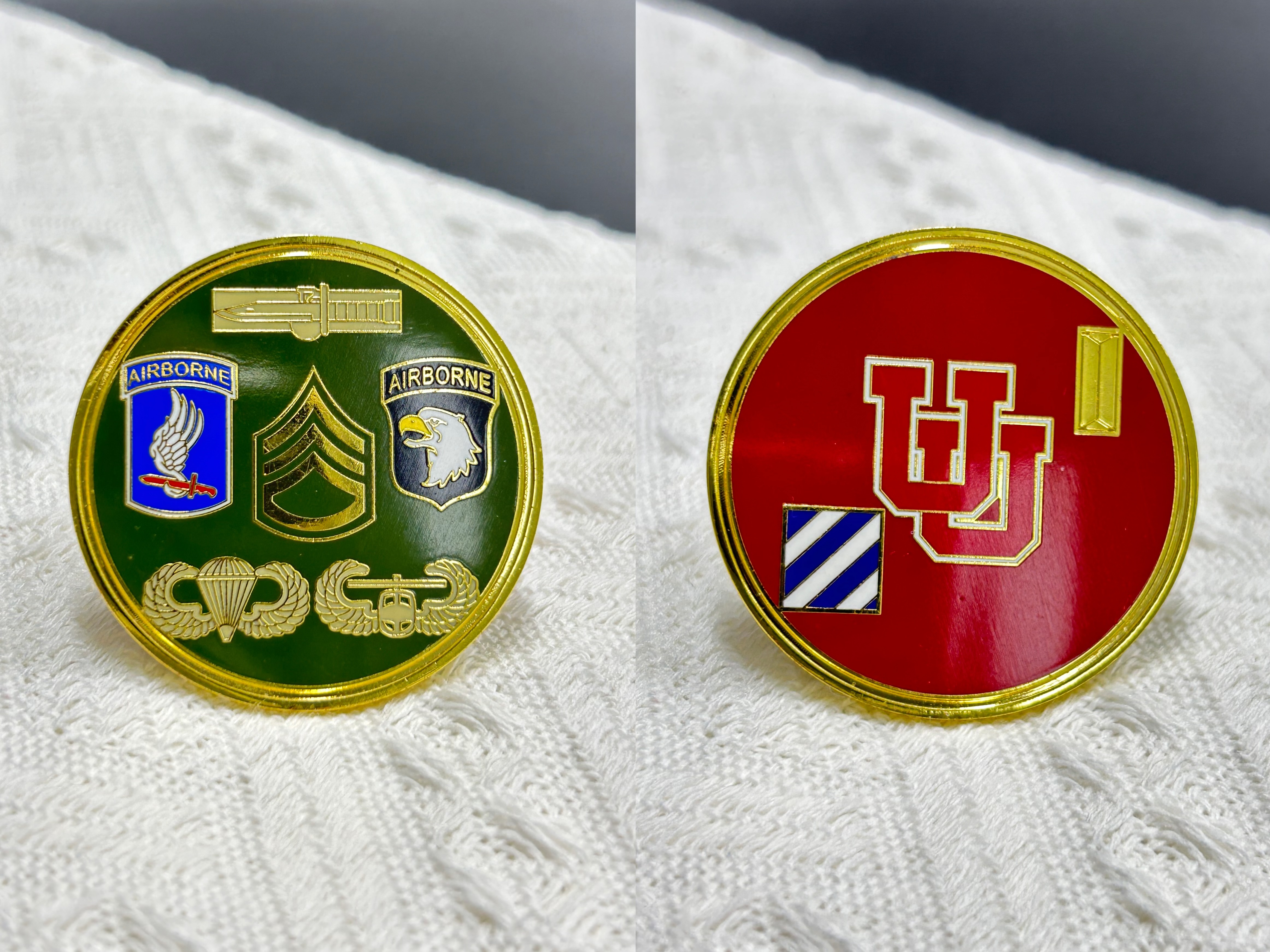
Conclusion:
With the development of customization techniques, modern challenge coins offer endless design possibilities.
Through techniques like relief, hollowing, enamel filling, 3D three-dimensional engraving, and special plating, products such as custom challenge coins with no minimum, personalized military challenge coins, and custom enamel souvenir coins can feature intricate patterns and striking visual effects.
This transforms them from simple commemorative items into exclusive works of art with high collectible value.
For groups looking to build team honor or commemorate milestones, these custom metal challenge coins have become a highly representative choice.
Looking to bring your unique design to life? Maxemblem specializes in crafting high-quality custom challenge coins, medals, pins, and custom metal crafts tailored to your exact specifications, helping organizations and events build lasting pride.