How to Clean Custom Pins: Complete Maintenance and Storage Guide
Table of Contents


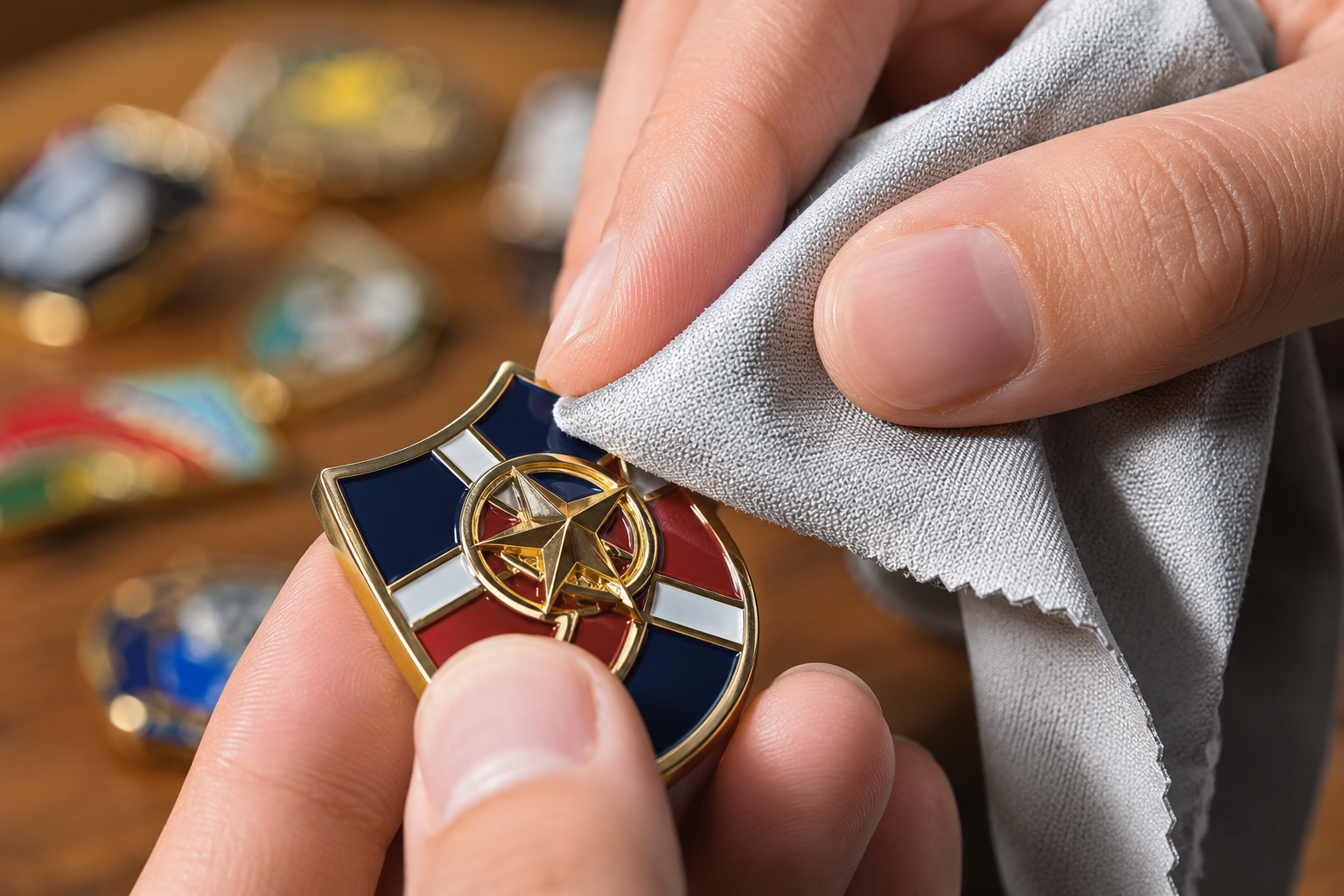
The cleaning and maintenance of custom pins mainly include five aspects: cleaning care, oxidation prevention, avoiding friction, proper storage, and accessory inspection. These methods apply to various custom pins used by collectors, brands, small businesses, and event organizers, including Custom Enamel Pins, Custom Lapel Pins, and custom brooch pins. Proper care can help maintain the shine of your pins, reduce wear and tear, and extend their service life.
I. Why Do Custom Pins Need Proper Maintenance?
After being worn for a long time, custom pins may accumulate dust, sweat, and oils on the surface, causing them to lose their original shine. A humid environment may lead to oxidation or discoloration, while frequent friction can affect the appearance and lifespan of the pin. Proper maintenance not only keeps your custom pins looking great but also makes them more suitable for long-term collecting, brand display, or use as commemorative items.
II. How to Properly Clean and Maintain Custom Pins?
1. Choose Gentle Cleaning Tools
Recommended use a microfiber cloth (such as an eyeglass cleaning cloth or lens cleaning cloth) to gently wipe the surface. Microfiber cloths are soft and effective at removing dust while reducing friction on metal and enamel surfaces.
Avoid using rough paper towels, regular cloths, or hard brushes, as they may create tiny scratches on the surface and affect the shine of the pin.
2. Avoid Contact with Corrosive Chemicals
Chemical protection: Alcohol, strong acidic or alkaline cleaners, bleach, and similar chemicals may react with the metal plating layer, causing fading or affecting the plating finish.
If you want to learn more about how different plating processes affect the appearance, color, and texture of pins, you can refer to “Custom Pin Plating and Surface Finish Options Guide.”
Usage order: When wearing pins, it is recommended to apply perfume, sunscreen, or cosmetics first and allow them to dry before attaching the pin. This helps reduce direct contact between the pin and chemical residues.
3. Store Pins Separately to Avoid Mixing
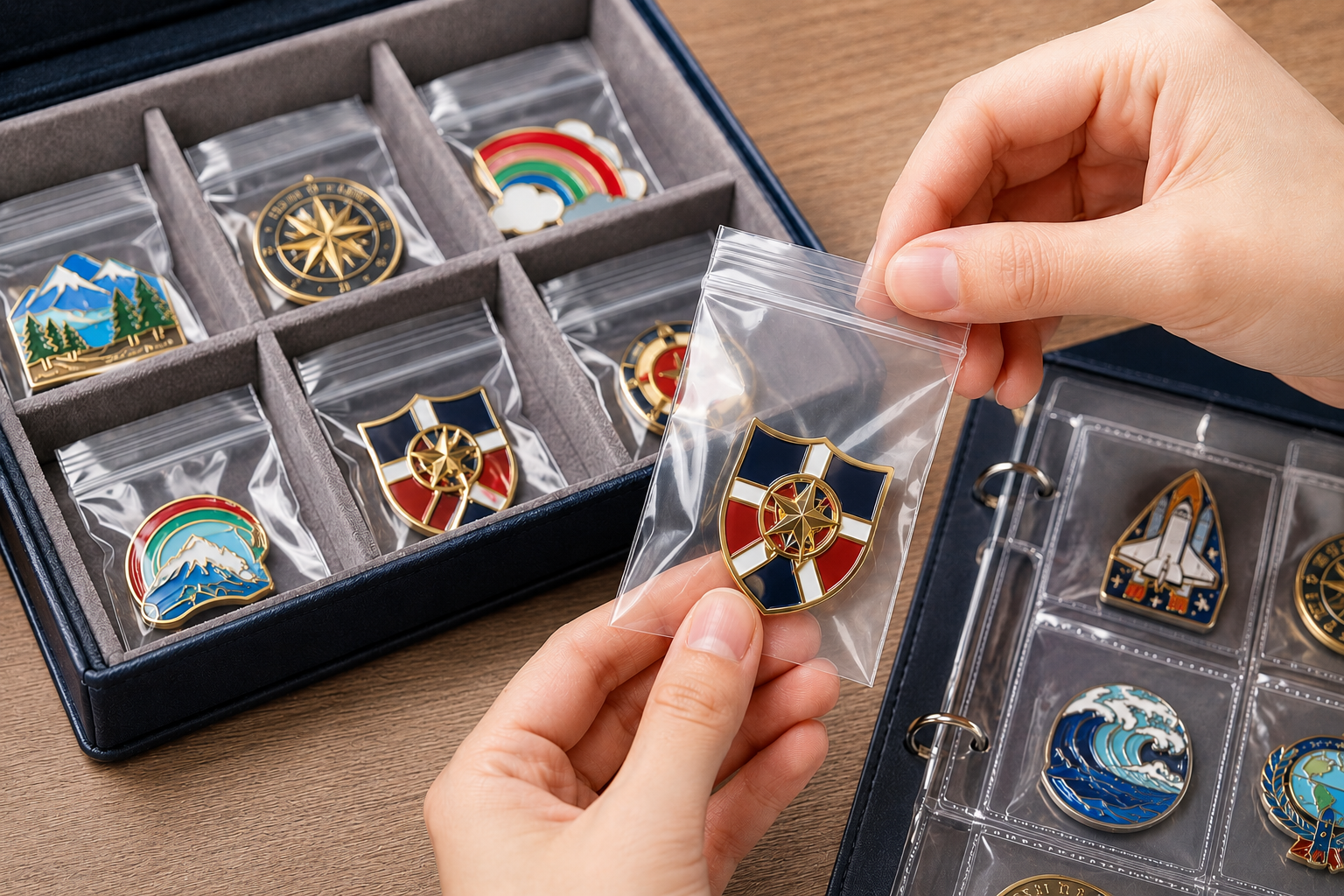
For pins that are not being worn, it is recommended to place them in individual sealed bags or a pin storage box. Storing multiple metal pins together without protection can easily cause edge scratches, impact marks, or damage to the surface of other pins.
For long-term storage of large collections, you can choose a soft storage box with separate compartments, a display frame, or a pin collector book with protective sheets.
4. Choose a Suitable Wearing Location
Try to avoid placing pins in areas that experience frequent friction, such as the bottom of backpacks, the outer sides of sleeves, or clothing edges that are prone to bumps and collisions. Instead, it is better to wear them on areas like the chest, lapel, or the side of a hat. These positions not only help reduce scratches and surface wear but also better showcase the design details of the pin.
Learn more about the best places to wear custom lapel pins and how they can complement your outfit in this guide: “Show Your Fashion with Custom Lapel Pins.”
5. Control Humidity and Prevent Oxidation
Metal pins and plated surfaces that are exposed to moisture for a long time may experience oxidation or color changes. Therefore, pins should be stored in a dry environment.
- Control the storage environment’s humidity and avoid places such as bathrooms, basements, outdoor balconies, or areas with prolonged direct sunlight. Placing an appropriate amount of desiccant in storage boxes or display cabinets can help reduce moisture exposure and slow down metal oxidation.
- Handling after contact with water: If a pin gets wet from rain or outdoor activities, wipe it dry with an absorbent soft cloth as soon as possible. Allow it to air dry completely in a well-ventilated area before storing it.
6. Maintain Accessories and Prevent Loss
- Regularly check the condition of accessories: Whether your pin uses a Butterfly Clutch, Rubber Clutch, Safety Pin, or Magnetic Back, the backing may become loose after long-term use. It is recommended to regularly check the attachment strength of Butterfly Clutch, Rubber Clutch, Safety Pin, or Magnetic Back. Replace loose parts promptly to prevent losing the pin.
- Clean thoroughly before long-term storage. Before placing pins into long-term storage or display, make sure to remove fingerprints and sweat residue from the surface. Store them only after they are completely dry. This helps prevent local stains or rust spots caused by leftover moisture or sweat during storage.
III. FAQ
Q1: Can enamel pins be cleaned with water?
Yes, enamel pins can have limited contact with water, but long-term soaking is not recommended. After cleaning, dry them immediately to avoid affecting the metal parts and plating finish.
Q2: How can I keep Custom Lapel Pins looking shiny?
It is recommended to regularly wipe them with a soft cloth and avoid contact with chemical cleaners, perfume, and humid environments.
Q3: Which is easier to maintain, soft enamel pins or hard enamel pins?
Both types are durable and relatively easy to maintain. Hard enamel pins have a smooth, flat surface, making daily cleaning easier. Soft enamel pins have a textured surface with raised metal lines, so extra care should be taken to remove dust that may collect in the recessed areas.
Q4: Can custom pins be collected for a long time?
Yes. With the right material selection, moisture protection, and scratch prevention methods, custom pins can be preserved for many years.
Q5: Where can I order custom pins with no minimum quantity?
For small-batch customization, Custom Lapel Pins no minimum services are suitable for individual creators, small brands, and event organizers who want to customize pins based on their actual needs.
IV. Conclusion
A custom pin is more than just a small metal accessory. Whether it represents a brand, an event, a personal design, or a special memory, proper maintenance helps preserve its appearance and meaning over time.
By following simple care steps such as regular cleaning, moisture protection, and safe storage, your Custom Lapel Pins can maintain their finish and remain a lasting keepsake for years.