Medal and Ribbon Pairing Guide: How to Make Awards and Events Look More Professional
Table of Contents


When customizing medals, ribbons are far more than mere accessories for hanging. Their color, width, and pattern design directly influence the overall visual presentation. If you have already finalized your medal design, you can choose the most suitable ribbon by considering three dimensions: the metal material, the enamel color, and the event theme.
1. Match the Metal Material
Common gold, silver, and bronze medals pair well with different ribbon color schemes:
Gold Medals: Pairing with dark blue, red, or black creates a strong color contrast that highlights the metal's luster and texture.
Silver Medals: Suitable for blue, black, white, or red, delivering a crisp, clear, and well-layered visual effect.
Bronze Medals: Best paired with burgundy, dark green, or brown to maintain a calm, vintage, and steady style.
Design Tip: If the medal itself features a rich and complex design, the ribbon should remain relatively simple by extracting just one primary color to maintain overall harmony.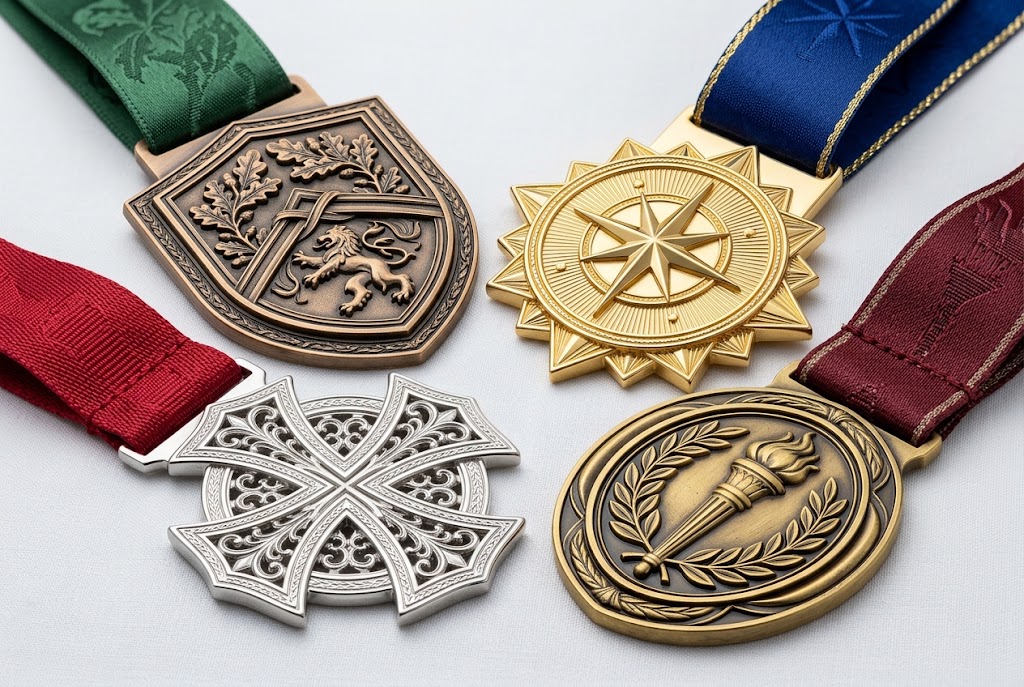
2. Complement the Enamel Colors
If your medal features colored enamel, you can extract one of the colors from the design to use as the main tone of the ribbon.
Single-Color Harmony: For instance, if the medal is predominantly blue, pairing it with a blue ribbon instantly unifies the look.
Multi-Color Integration: If the medal incorporates red, blue, and white, these colors can be woven into the ribbon using stripes, color-blocking, or other patterns.
Visual Balance: For medals with intricate patterns, the ribbon design should remain restrained to prevent the visual focal point from becoming too cluttered.
3. Fit the Event Type
Different application scenarios correspond to distinct aesthetic styles:
Marathons and Sports Events: Bright and lively colors like blue, green, yellow, or red work best, and can include event logos, names, or years.
School and Youth Activities: Recommended to incorporate school representative colors or logos, complemented by simple stripes or theme patterns.
Corporate Recognition and Anniversaries: Classic dark tones such as black, dark blue, and burgundy convey dignity and formality.
Military, Police, and Fire Services: Sturdy and steady color schemes paired with emblem elements create a rigorous and professional style.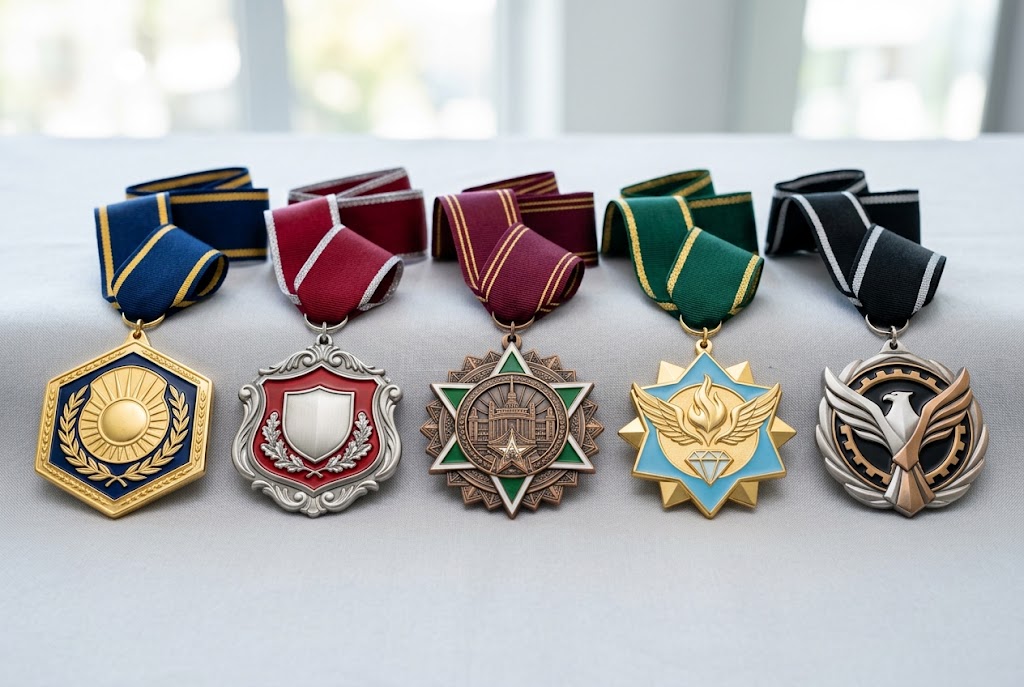
4. Control Size Proportions
The width of the ribbon must match the scale of the medal. A ribbon that is too wide will overpower the medal, while one that is too narrow will look top-heavy and disproportionate.
Evaluations should consider not only the physical dimensions of the medal but also its weight and practical wearing comfort.
It is recommended to provide the exact weight, size, and wearing style of your medal when ordering to receive professional sizing recommendations.
For more details on ribbon width, length, folding dimensions, and attachment options, see our guide to [Custom Medal Ribbons].
5. Solid Colors vs. Custom Patterns?
Solid-Color Ribbons: Clean, versatile, and formal, easily adapting to various complex medal designs.
Custom Patterns: If the event has a strong theme, multi-color stripes can enhance the sense of motion (e.g., sports events), or brand VI colors and commemoration years can be integrated (e.g., corporate and celebration events).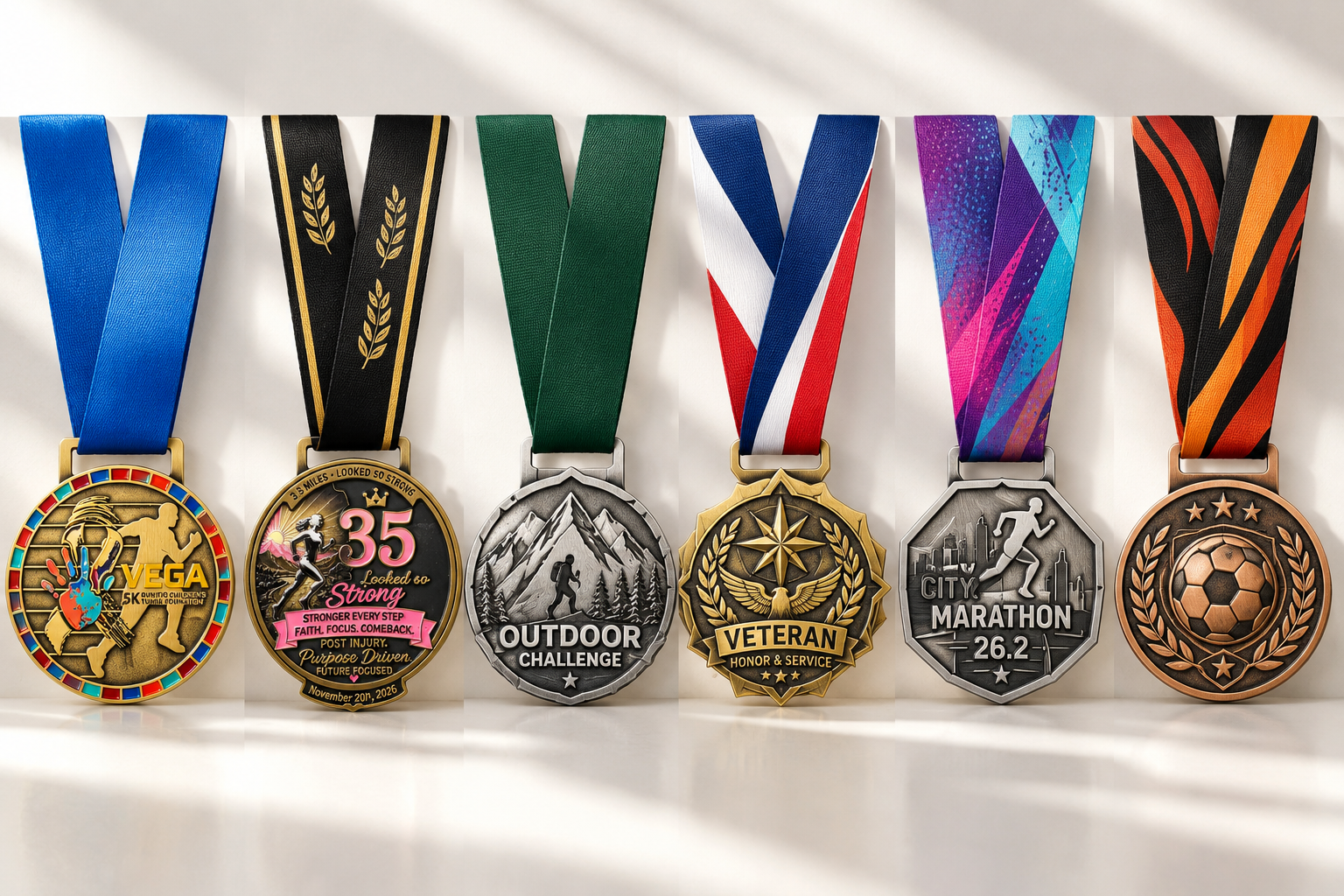
6. Synchronized Customization
To ensure the best final result, it is recommended to customise medals and ribbons in the same production cycle.
By providing your medal design draft, dimensions, quantity, and event theme all at once, the manufacturer can cohesively coordinate materials, colors, widths, and production techniques.
FAQ
Q: How wide should a medal ribbon be?
A: There is no absolute fixed standard; it depends on the medal's size, weight, and wearing scenario.
Smaller medals generally suit narrower ribbons, while larger, heavy-weight medals require wider specifications to ensure both load-bearing strength and visual balance.
Q: Can medals and ribbons be customized together?
A: Absolutely. It is best to submit the designs and requirements for both simultaneously so the manufacturer can uniformly confirm colors, dimensions, materials, and production plans to guarantee a flawless final presentation.