How to Wear Enamel Pins Without Damaging Clothes? 4 Practical Tips
Table of Contents


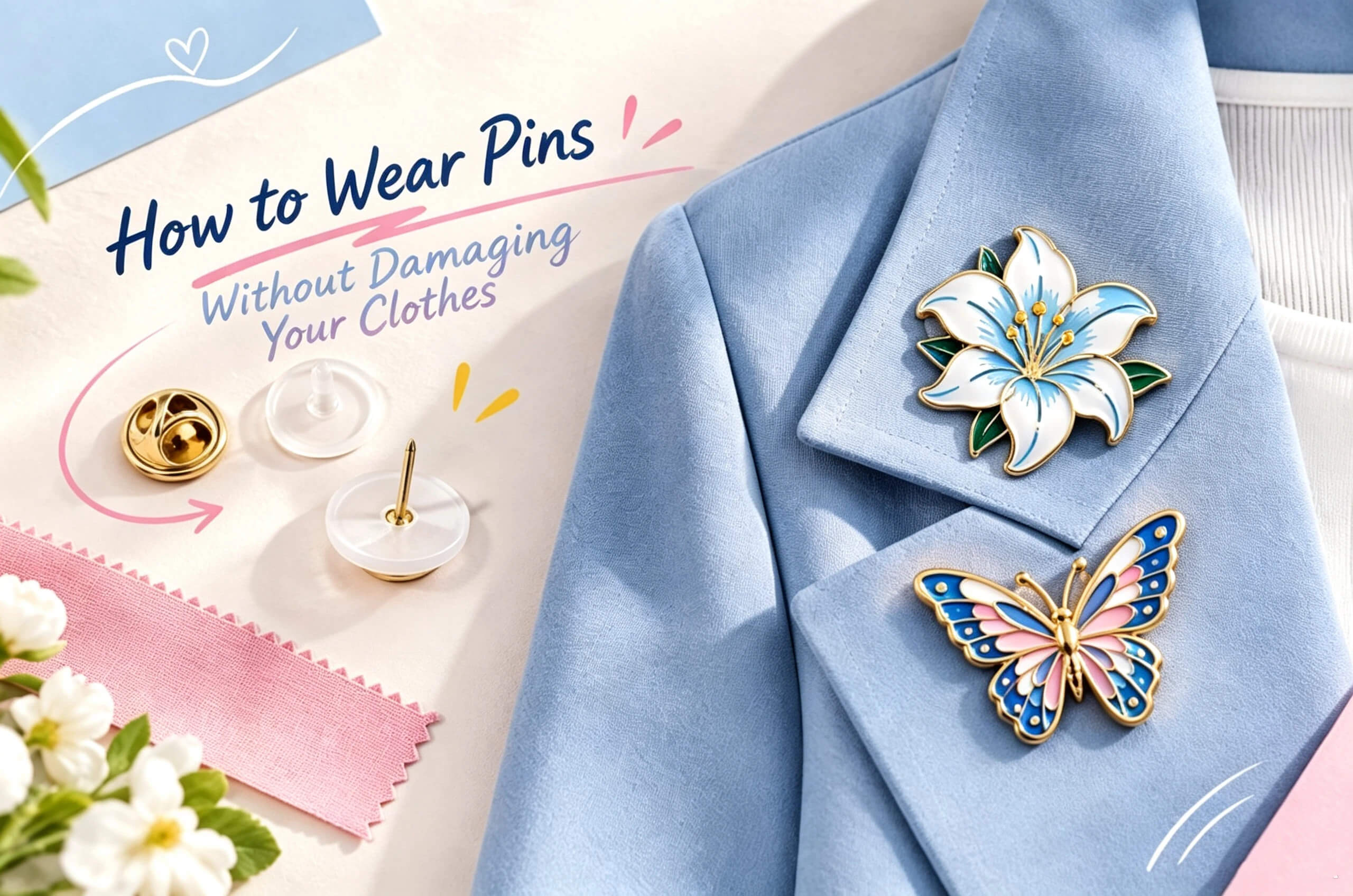 Enamel pins can be used on jackets, shirts, uniforms, hats, backpacks and many other items, making them a very popular way to accessorize.
When people choose pins as an accessory, they definitely want them to enhance their outfit rather than leave hard-to-remove pinholes in the fabric, especially on formal dresses, suits and workwear for important occasions.
Regular pin-back badges do leave pinholes, but choosing the right placement, backing and pin weight can significantly reduce their impact on clothing.
This article shares four practical tips for wearing pins while minimizing damage to your clothing.
Four Methods for Minimizing Clothing Damage When Wearing Pins
1. No Needle Holes — Use Existing Buttonholes
Use the buttonholes already on your clothing to secure the pin — for example, the buttonhole on a suit lapel, the buttonhole on a shirt collar, the buttonhole on a denim jacket pocket, or the buttonhole on a uniform. No need to punch new holes in the fabric.
For business attire, corporate uniforms, school uniforms and event apparel, this method avoids repeatedly piercing the fabric with pin needles, preventing the fabric quality from being compromised on formal occasions and preserving a polished look.
2. Buttonhole Too Wide — Add a Cardboard Backing
If the buttonhole is relatively wide, or the pin is too small to stay securely in place, you can add a small piece of thin cardboard, cardstock or plastic to the back of the garment.
Cut the material to match the shape behind the buttonhole so it fits flush against the fabric with no edges showing.
Then pass the pin post through the buttonhole and the backing material, and fasten the pin back.
This method adds support and keeps the pin more stable. It also works well for jackets, uniforms, team apparel and event clothing.
3. Prevent Slipping and Pulling — Apply a Bandage or Add Earring Backs on the Back
If you need to wear a pin on a shirt or other lightweight fabric, you can add a layer of cushioning on the inside of the garment to distribute the pin's weight and reduce pulling from the pin and backing on a single spot.
Three common approaches:
- Pad with a small piece of fabric or a pin backing board: Cut it slightly larger than the pin, place it inside the garment, then pass the pin through and fasten.
- Apply a bandage: Stick a small bandage on the inside of the garment at the corresponding position.The cotton backing effectively distributes pressure and leaves no adhesive residue when removed, making it ideal for temporary wear.
- Add earring backs: Slide a silicone earring back onto the pin post, replacing the metal pin back in direct contact with the fabric to reduce scratches and pressure marks.
For company logo pins, employee pins, brand pins and event pins that need to be worn for extended periods, these methods are especially convenient.
4. Damage-Free Wear — Choose a Magnetic Backing
If your clothing doesn't have a suitable buttonhole and you still don't want any holes in the fabric, you can choose a pin with a magnetic backing when purchasing.
Magnetic pins don't need to pierce the fabric, so they're suitable for suits, formal dresses, performance costumes and more delicate garments.
Before wearing, gently move the clothing to confirm the pin won't easily slide or fall off.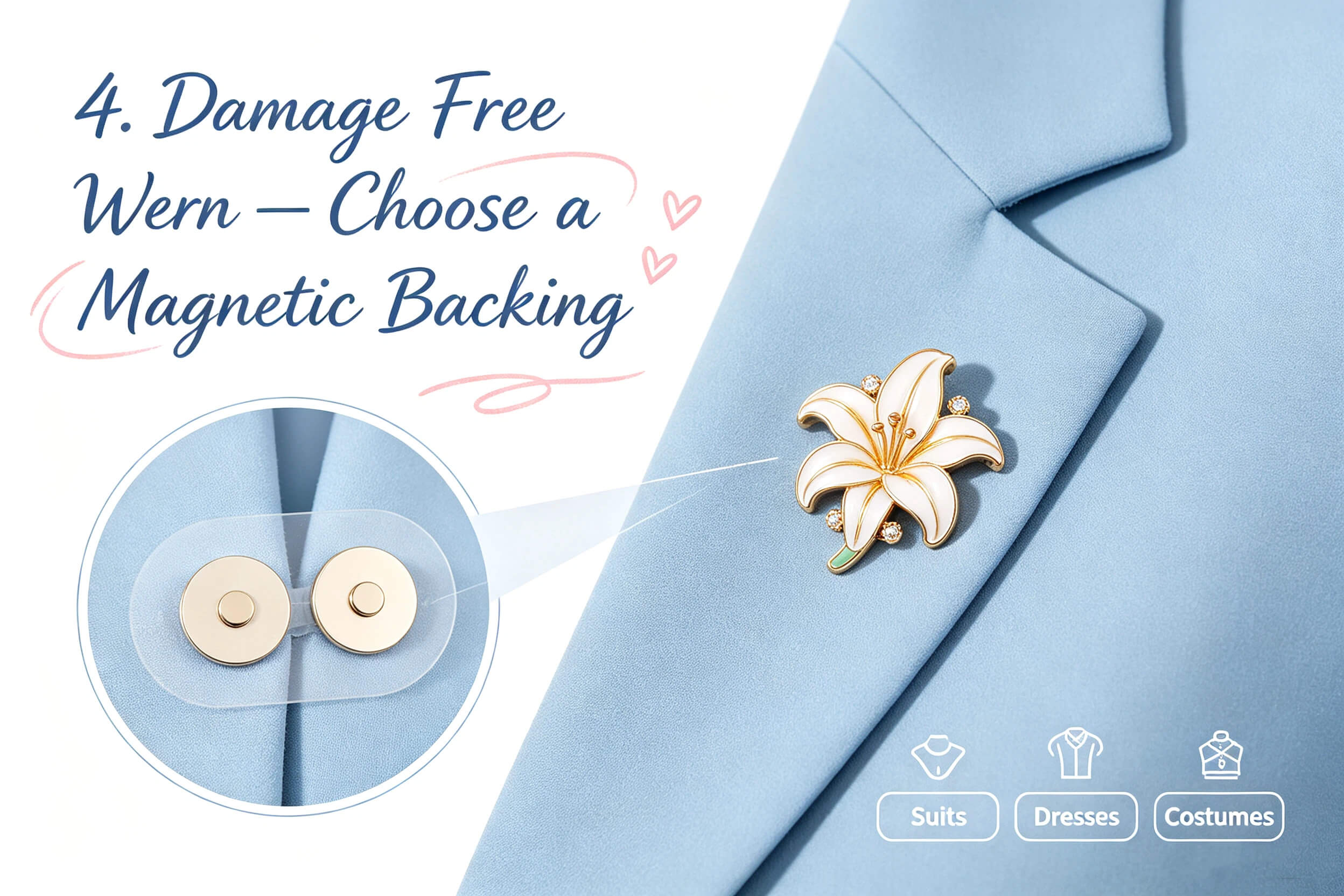
How to Choose Pins for Different Types of Clothing?
Different clothing types have different requirements for fabric thickness, placement and weight capacity.
Choosing the right pin type ensures both a great look and no damage to your clothes.
Jackets and Denim: Suitable for Slightly Larger Pins
Jackets and denim are made of thick, durable fabric that can comfortably support larger and heavier pins without sagging or distorting the material.
Denim jackets in particular are ideal for displaying pin collections — the dense twill weave holds pins securely and naturally conceals pinholes.
Design-forward styles like soft enamel pins, 3D embossed pins or glitter enamel pins stand out beautifully against textured fabric.
Enamel pins for denim jackets and custom jacket pins are among the most popular categories for everyday personal style.
1. Shirts and Suits: Choose Lightweight, Small-Size Pins
Suits and shirts are made of thinner fabric, so they're best suited for small, lightweight enamel pins — choose the lightest weight possible to avoid pulling the fabric.
Suits can be secured directly using the lapel buttonhole, while shirts are recommended with a butterfly clutch backing to minimize pinhole damage.
Custom suit lapel pins and shirt enamel pins are the most common choices for business settings.
2. Uniforms: Standardize Size and Placement
Uniforms for corporations, schools, clubs and sports teams emphasize consistency, making uniform-spec metal pins a good fit.
We recommend a fixed size (for example, 25mm or 30mm round), consistent placement on the left chest, and a safety pin backing or magnetic backing for easy bulk wear that stays secure.
Custom corporate uniform badges and school lapel pins are high-demand items in these scenarios.
3. Hats, Backpacks and Tote Bags: Prioritize Durability and Holding Power
These accessories have thick fabric and see frequent use, so they're well suited to hard enamel pins or baked-enamel metal pins for better wear resistance.
For backpacks and tote bags, a dual-post backing prevents spinning and wobbling; for hats, small hat pins with a locking clutch are ideal.
Enamel pins for backpacks and decorative hat pins are fast-growing categories in everyday fashion and brand merchandise.
How to Clean and Store Pins After Use?
Different pin finishes, such as hard enamel, soft enamel, UV printing, and gold- or silver-plated finishes, have different levels of resistance to friction and cleaning products.
After use, gently wipe your pins with a soft, dry or slightly damp cloth and keep them dry. Avoid using alcohol, bleach, or other harsh cleaning products.
For detailed cleaning and storage tips, see our guide, “How to Clean and Store Enamel Pins.”
Customize Your Own Pins With No Minimum Order

Since different clothing suits different pins and backings, you can tell the manufacturer your usage scenario in advance when customizing, which helps them choose the option that causes the least damage to your clothes.
Maxemblem has over 20 years of experience customizing pins for individuals, corporations, brands, schools and events.
We've built a complete customization system with multiple backing options to meet your clothing-protection needs.
We don't set a minimum order — even a single pin can be customized.
If you or your team need custom pins, we can provide free design services. If you already have artwork, we can help you choose the right size, style and finish based on your usage scenario and how you plan to wear it.
FAQ
Q1: What should I do if there are pinhole marks on my clothes after removing a pin?
If your clothing is made of common fabrics like cotton, linen or polyester, gently squeeze and rub toward the center of the pinhole with your fingers — most small pinholes will close on their own.
You can also use a steam iron on low heat to steam the area, then gently press to help the fibers recover. For wool and silk fabrics, we recommend professional dry cleaning rather than pulling at the fabric yourself.
Q2: Do magnetic pins fall off easily?
Under normal wearing conditions and activity levels, the magnetic backing has enough holding power to secure small pins. However, in windy conditions, crowded places or during strenuous exercise, an extra check is recommended.
If you're worried about it falling off, you can choose a style with a "magnetic + safety pin" dual-security backing.
Q3: Can I wear enamel pins on loose-knit fabrics like sweaters and knitwear?
Yes, but we don't recommend piercing directly with a pin needle — the yarn in knit fabrics can easily snag and break, causing the hole to grow larger.
A magnetic backing is recommended, or you can place a piece of non-woven fabric inside at the placement point before inserting the pin to distribute tension. Avoid wearing overly heavy pins.