How to Choose the Right Thickness for Custom Challenge Coins
Table of Contents


When ordering custom challenge coins, thickness directly affects the coin’s feel, appearance, and cost.
At 3.0mm, most custom challenge coins offer a well-balanced combination of weight, durability, and portability, making it the safest choice for most designs.
To help you make the right decision quickly, this guide covers common coin thicknesses and practical recommendations for choosing the right one.
I. Quick Guide to Choosing the Right Thickness
If you want a quick answer, use the recommendations below:
- 3.0mm | The Safe Choice: The most commonly used thickness and the easiest option to get right. It works well for most custom challenge coins.
- 3.5mm and Above | For 3D Relief: If your design includes 3D relief, a thickness of 3.5mm or more is recommended to provide enough depth for the design.
- Other Thicknesses | Based on Your Needs: If you want a lighter coin, consider 1.5mm–2.5mm. For large display pieces, 3.0mm–8.0mm+ may be appropriate.
The best thickness ultimately depends on how the coin will be used, the level of detail in the design, and your specific customization requirements.
II. Common Challenge Coin Thickness Comparison
| Size Category | Common Diameter | Common Thickness | Common Weight | Common Materials | Typical Uses & Features |
| Small Commemorative Coins | 10mm - 27mm | 1.5mm - 2.5mm | 1g - 15g | Gold, Silver, Platinum | Suitable for miniature commemorative coins, token coins, keychain attachments, or as accent pieces in gift sets. Compact, refined, and relatively low-cost. |
| Medium Commemorative Coins | 30mm - 45mm | 2.0mm - 3.5mm | 15g - 100g | Copper, Silver, Gold, Alloys | The most common custom size (such as 37mm and 40mm). Suitable for everyday handling, challenge coins, and standard collectibles, with balanced proportions and enough space for moderate relief details. |
| Large Commemorative Coins | 50mm - 100mm+ | 3.0mm - 8.0mm+ | 100g - 1kg+ | Silver, Gold, Copper | Suitable for premium gift-box displays, desktop paperweights, major sporting events, or commemorative events. Their substantial weight creates a strong presence and makes them ideal for high-relief designs and intricate edge finishes. |
III. How to Choose Between Thick and Thin Challenge Coins — Mistakes to Avoid
1. 3D Relief Requires a Thicker Coin
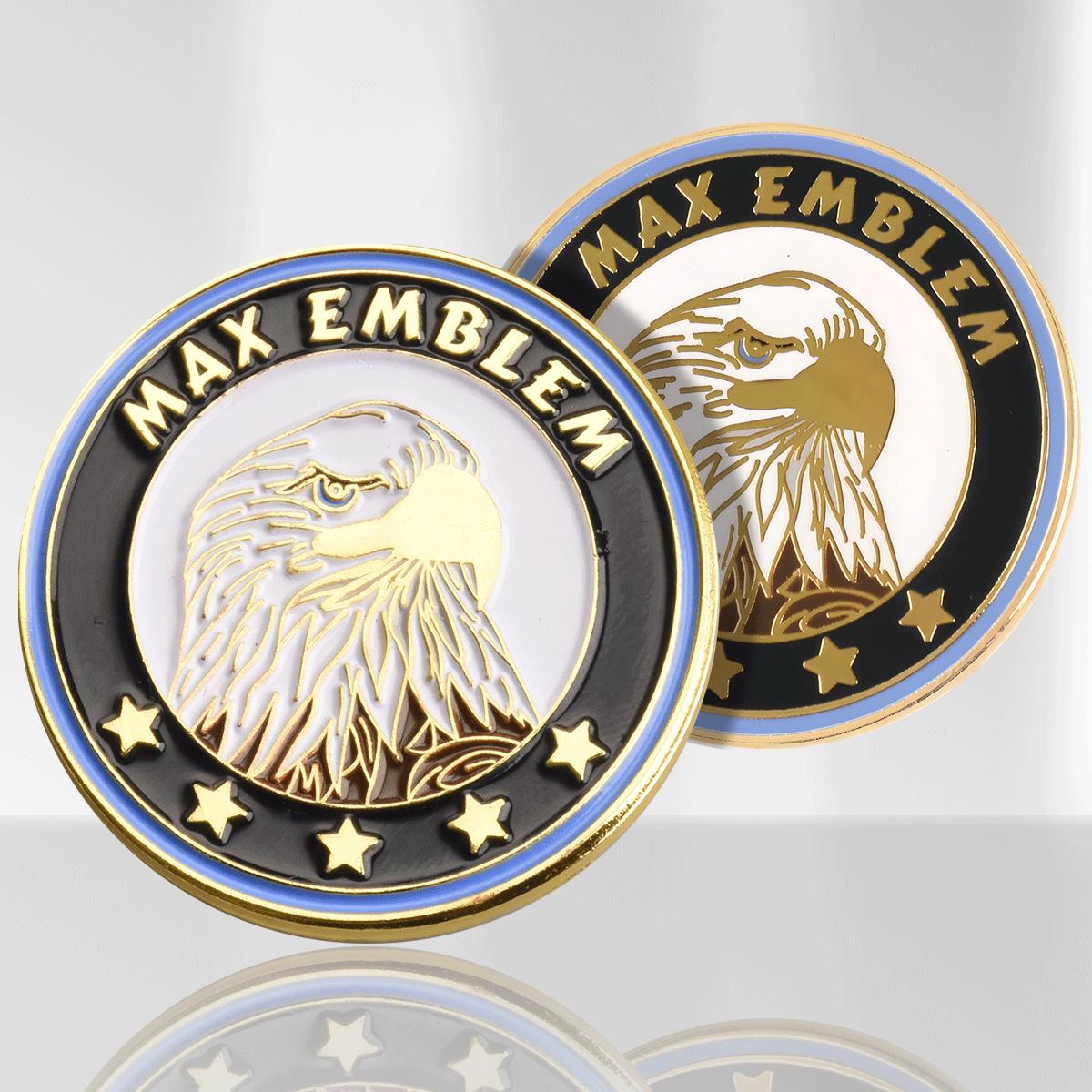
If your design features complex 3D relief, such as a raised eagle, portrait, or building, a thickness of at least 3.5mm is recommended.
If you choose a 2.0mm or 2.5mm coin, there may not be enough depth to create the three-dimensional effect you want.
2. Consider Portability
If you plan to carry the coin regularly in a pocket or wallet, it is best to keep the thickness at 4.0mm or below. This helps prevent the coin from feeling unnecessarily bulky.
3. Consider the Ratio Between Diameter and Thickness
Thickness should not be considered on its own. A large coin that is too thick can look like a “hockey puck,” while a small coin that is too thin can look more like a “piece of paper.”
The proportions should feel balanced. For example, a 50mm coin paired with a 3.5mm thickness and a 40mm coin paired with a 3.0mm thickness create a well-proportioned look.
For more details, see our guide to common challenge coin sizes.
4. Consider the Edge Finish
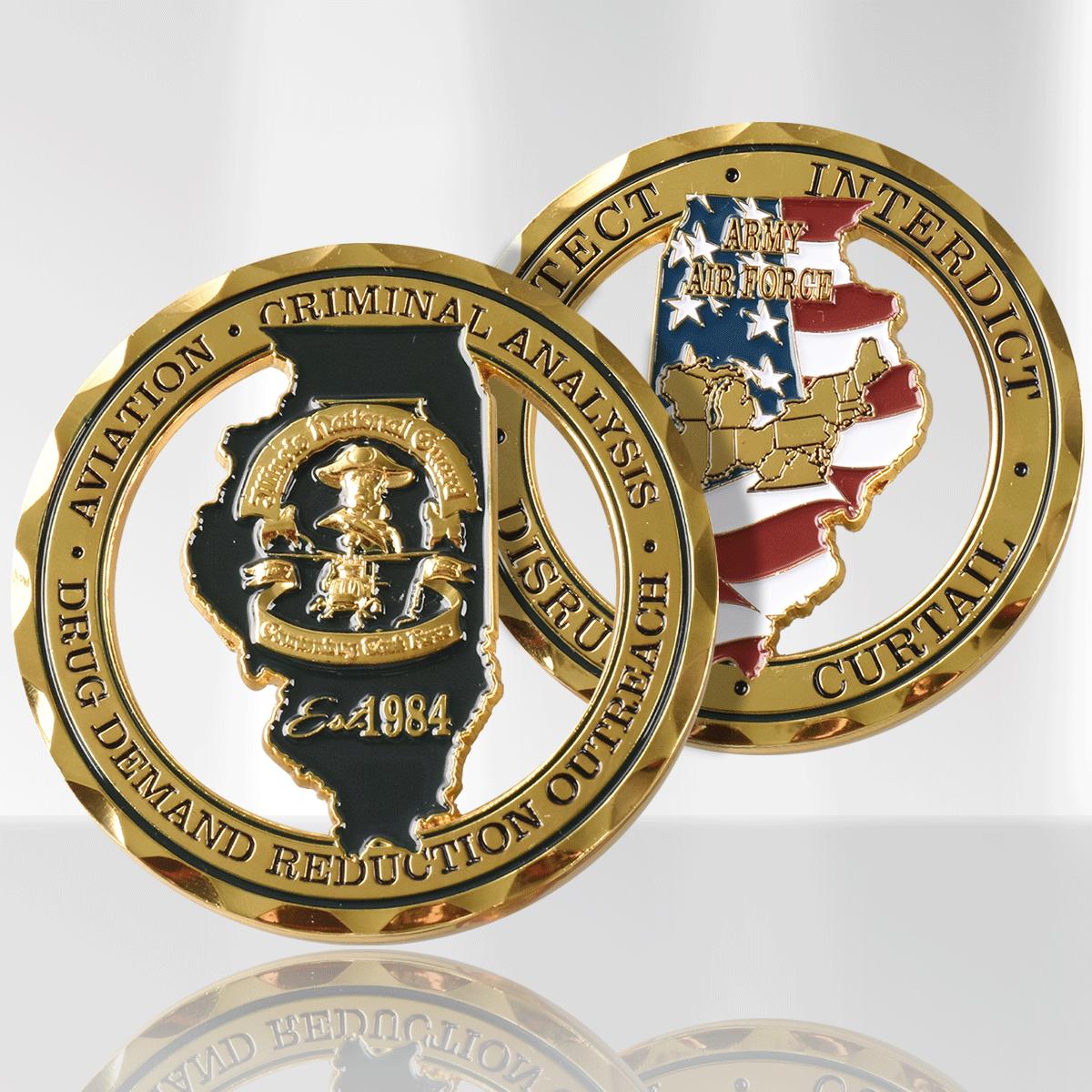
Thicker coins provide more room for detailed edge finishes, such as lettering, reeded edges, or stepped edges, giving the coin a more refined appearance.
With thinner coins, improper edge treatment can increase the risk of bent edges, so they are generally better suited to flat or simple beveled edges.
5. Consider Packaging Compatibility
Thicker coins require deeper protective cases or acrylic capsules.
Before placing an order, make sure the packaging is compatible with the final coin thickness to avoid a coin that does not fit properly or moves around inside the case.
IV. What Impact Does Challenge Coin Thickness Have?
1. Thicker Challenge Coins
Advantages: They have a more substantial feel and greater weight in the hand.
They are also better suited for high-relief and three-dimensional designs, allowing more room for detailed artwork.
This makes them particularly appealing for collectors and anyone who enjoys handling and displaying their coins.
Disadvantages: More metal means higher material costs.
If the design and proportions are not well balanced, a thick coin can feel bulky.
It can also be less convenient to carry or store.
2. Thinner Challenge Coins
Advantages: They are lightweight and easy to carry.
Their slimmer profile can give them a more refined appearance, while the lower material cost makes them suitable for large production runs and gift sets.
Disadvantages: They have a lighter feel and may not provide the substantial weight some customers expect from a challenge coin.
They also offer less space for relief work, which can limit the depth and dimensional effect of the design.
V. Which Thickness Should You Choose for Your Custom Challenge Coin?
1. Military, Police, and Fire Departments
Recommended: 3.0–3.5mm
If the coin needs to be carried regularly, 3.0–3.5mm is a practical choice.
It provides a solid, substantial feel while remaining comfortable enough for everyday carry.
2. Veterans' Organizations, Associations, and Clubs
Recommended: 3.0–3.5mm
These coins are often used as member keepsakes, event mementos, and symbols of membership or identity.
A 3.0–3.5mm thickness offers a good balance of weight, quality, and everyday portability.
3. Premium Collectibles and Display Pieces
Recommended: 3.0mm–8.0mm+
If the coin is primarily intended for collecting, display, or presentation in a gift box, a thicker specification can be a good choice.
A thicker coin creates a stronger sense of weight and allows for a more pronounced three-dimensional effect.
4. Marathons and Sporting Events
Recommended: 2.5–3.0mm
Sporting events often require large production quantities. A 2.5–3.0mm thickness helps control costs while still providing the solid feel expected from a metal challenge coin.
5. Schools, Alumni Associations, and Businesses
Recommended: 3.0mm
A 3.0mm coin provides a balanced combination of cost and quality, making it suitable for commemorative gifts, recognition pieces, and corporate gifts.
6. Automotive, Motorcycle, and Hobby Clubs
Recommended: 3.0–3.5mm
Challenge coins for these groups often place a strong emphasis on design details and collectibility.
A 3.0–3.5mm thickness provides a substantial feel while offering enough space for more detailed artwork.
7. Event Commemorative Coins and Personal Customization
Recommended: 2.5–3.5mm
The ideal thickness can vary depending on your budget, design complexity, and how the coin will be used.
If the design includes 3D relief, a thickness of 3.5mm or more is recommended.
VII. Final Recommendations
This guide provides practical thickness recommendations for common challenge coin applications.
You can choose the thickness based on your specific use case, design requirements, and budget.
If you have a specific custom challenge coin project in mind, the Maxemblem design team can help you choose a thickness that best fits your design and intended use.