Sign in
Create Your Account
Create My Account
Sign In
Create Your Account
Craft premium custom challenge coins with no minimum order. Expert metallurgy, enamel options, plating & edge detailing for military, corporate & commemorativ

In the specialized world of commemorative metalwork, a challenge coin is far more than a simple souvenir. It is a dense, physical manifestation of a group's soul. Whether you are looking for custom challenge coins no minimum for a specialized Navy SEAL platoon or a high-tech startup, the technical execution of the coin determines whether it stays in a pocket as a treasure or ends up forgotten in a drawer. As a premier challenge coin maker, we believe that understanding the molecular and mechanical journey of a coin is essential for any creator.
We will examine the hydraulic pressures required for die-striking, the chemical stabilizers in enamel pigments, and the strategic branding psychology behind corporate challenge coins.
The Metallurgy of Excellence - Zinc vs. Brass vs. Iron
The foundation of every coin is its substrate. Choosing the right metal is the first critical step when you design your own challenge coin. Most people assume all coins are made the same way, but the physical properties of the base metal dictate the limits of the design.
1. Zinc Alloy: The King of 3D Detail
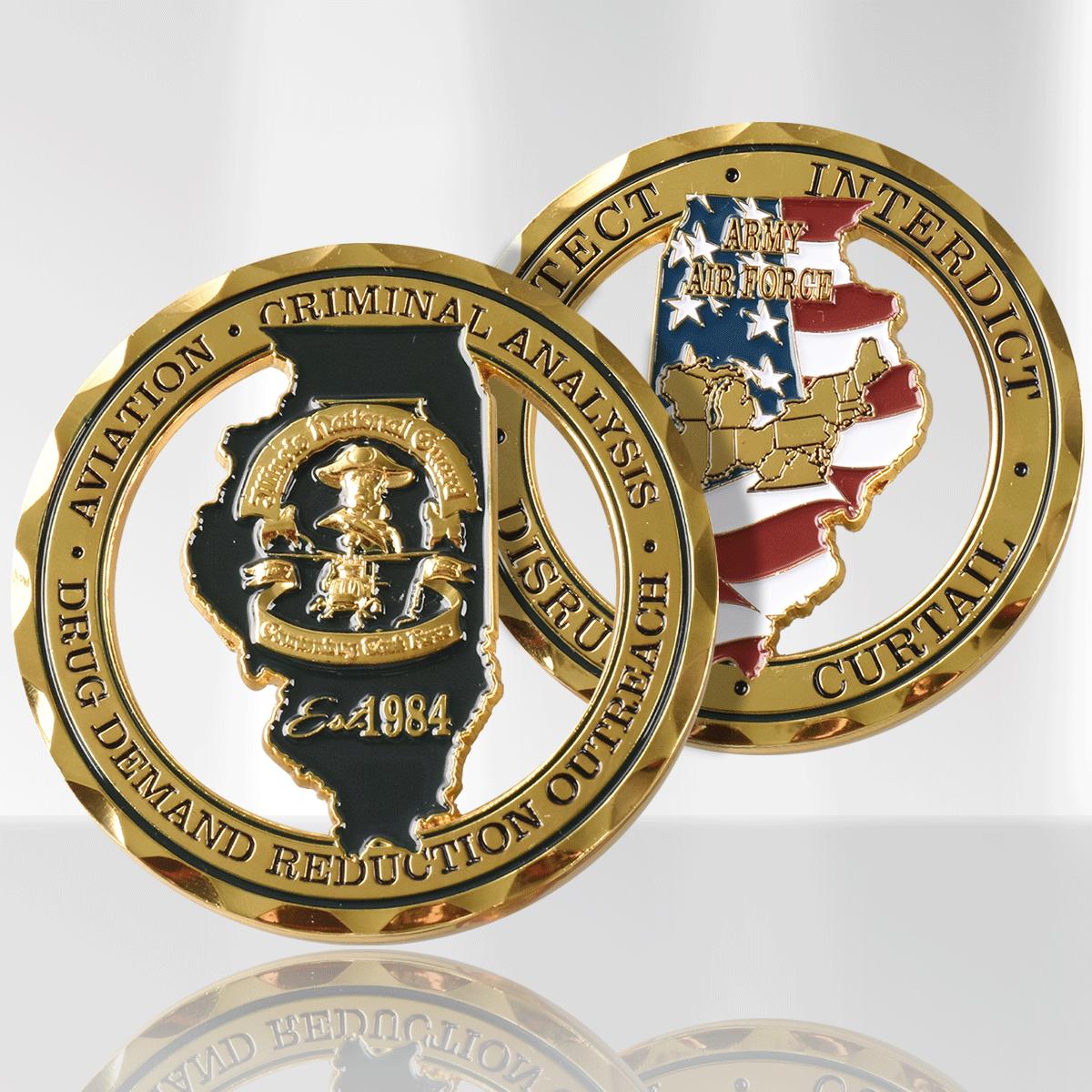
Zinc alloy is the modern standard for custom challenge coins no minimum. Because zinc has a lower melting point than brass, it is used in a process called "Die Casting." In this method, molten metal is injected into a steel mold under high pressure. This allows for "cut-outs" (holes in the middle of the coin) and extreme 3D relief where certain parts of the design can stand up to 4mm high. If your design features a realistic 3D eagle or a complex mechanical gear, zinc is your only viable option.
2. Brass: The Traditional Heavyweight
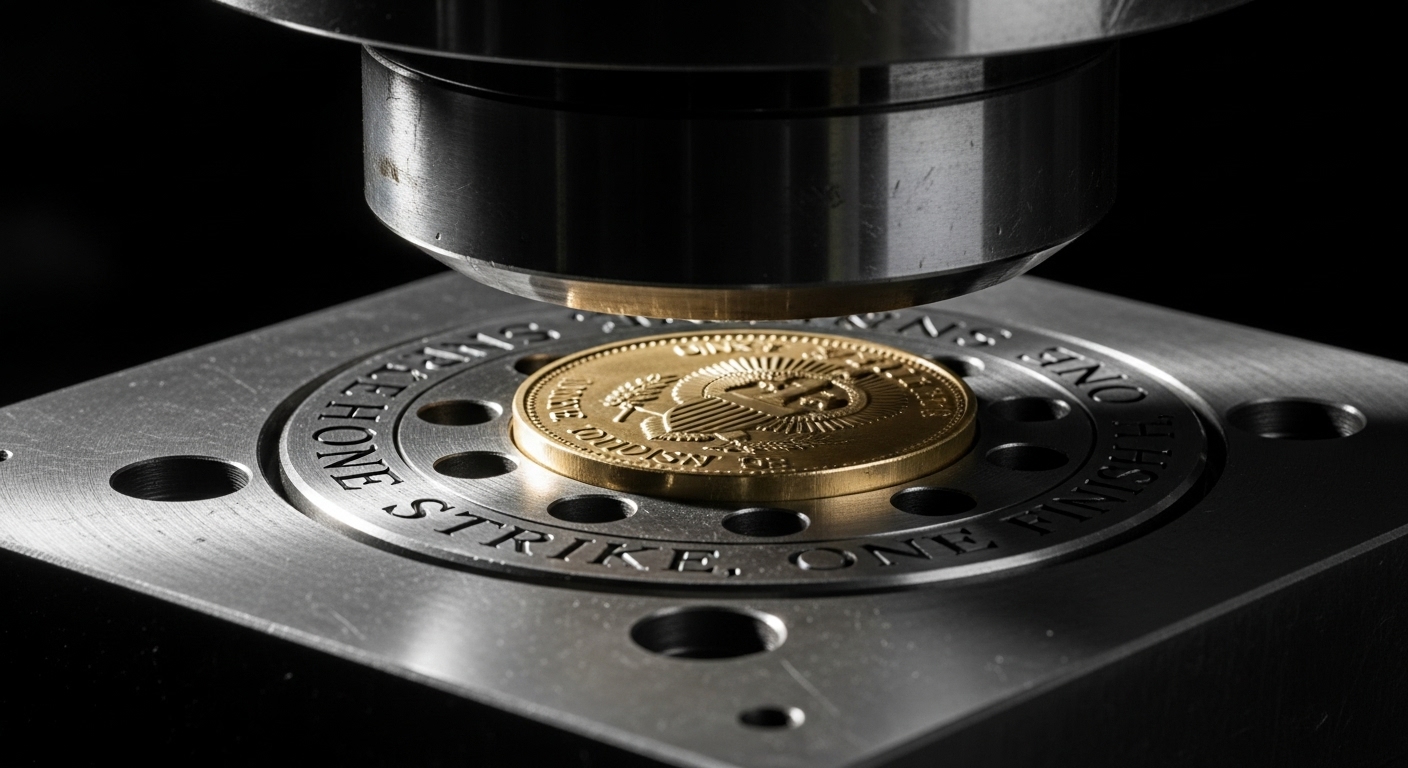
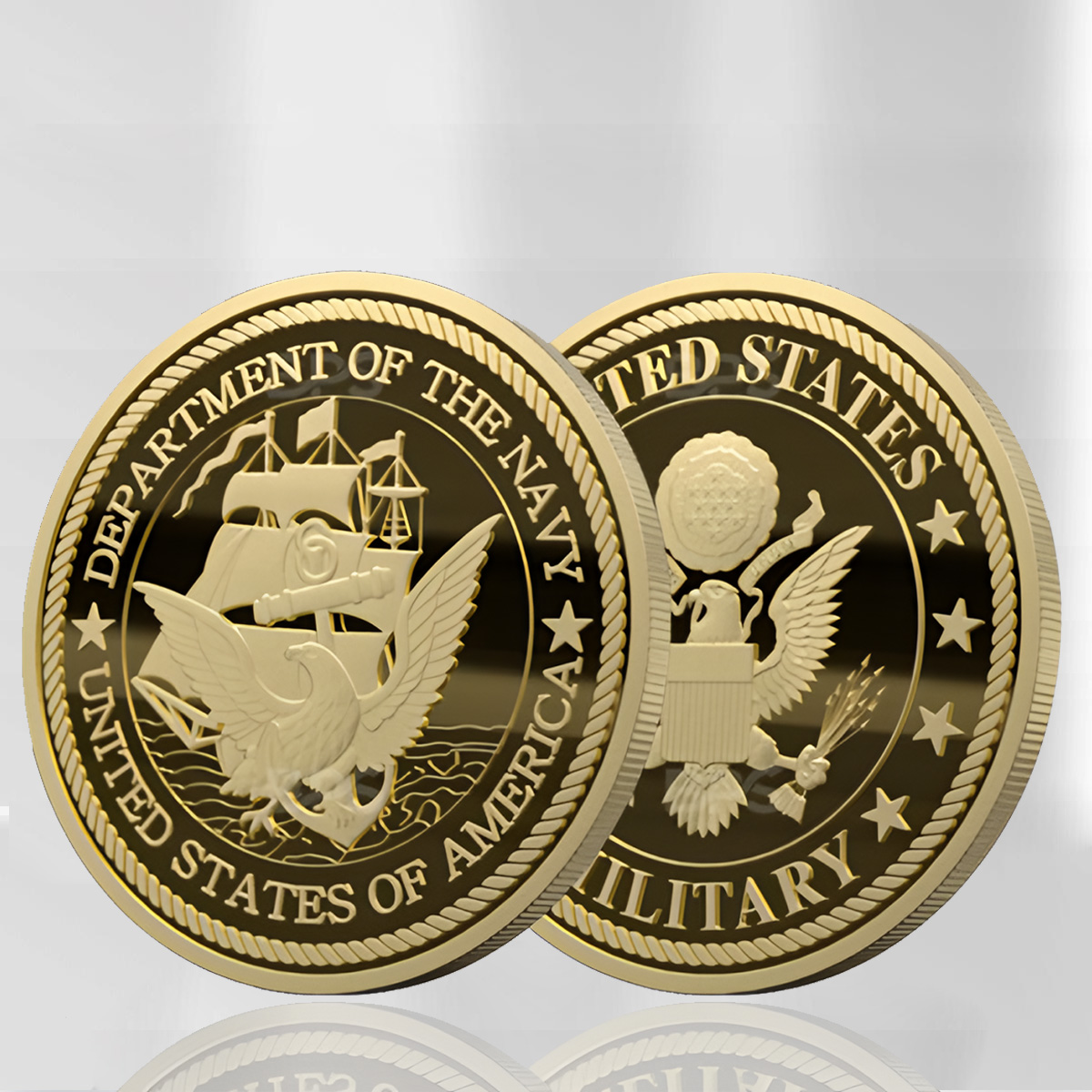
For those seeking the "classic" feel of custom military coins no minimum, brass is the gold standard. Brass coins are "Die Struck," meaning a massive hydraulic press (up to 200 tons) slams a steel die onto a solid brass blank. This creates incredibly sharp, clean lines that die casting cannot match. However, brass is limited to 2D or "2.5D" designs—you cannot have holes or extreme 3D depth. It is, however, the heaviest material, giving it that unmistakable premium "clink" when dropped on a table.
Material Class |
Manufacturing Method |
Best Design Use Case |
|---|---|---|
Zinc Alloy |
Injection Molding / Die Cast |
3D Textures, Cut-outs, Multi-level shapes |
Brass |
Hydraulic Die Striking |
Traditional High-Detail 2D text and logos |
Iron |
Soft-Impact Die Striking |
Budget-friendly, high-volume event coins |
The Chemistry of Color - Enamel Science
A challenge coin maker must also be a chemist. The vibrancy of your coin depends on the type of enamel used. When we discuss soft enamel vs hard enamel coins, we are talking about two very different chemical curing processes.
1. Hard Enamel: The Jewelry Grade
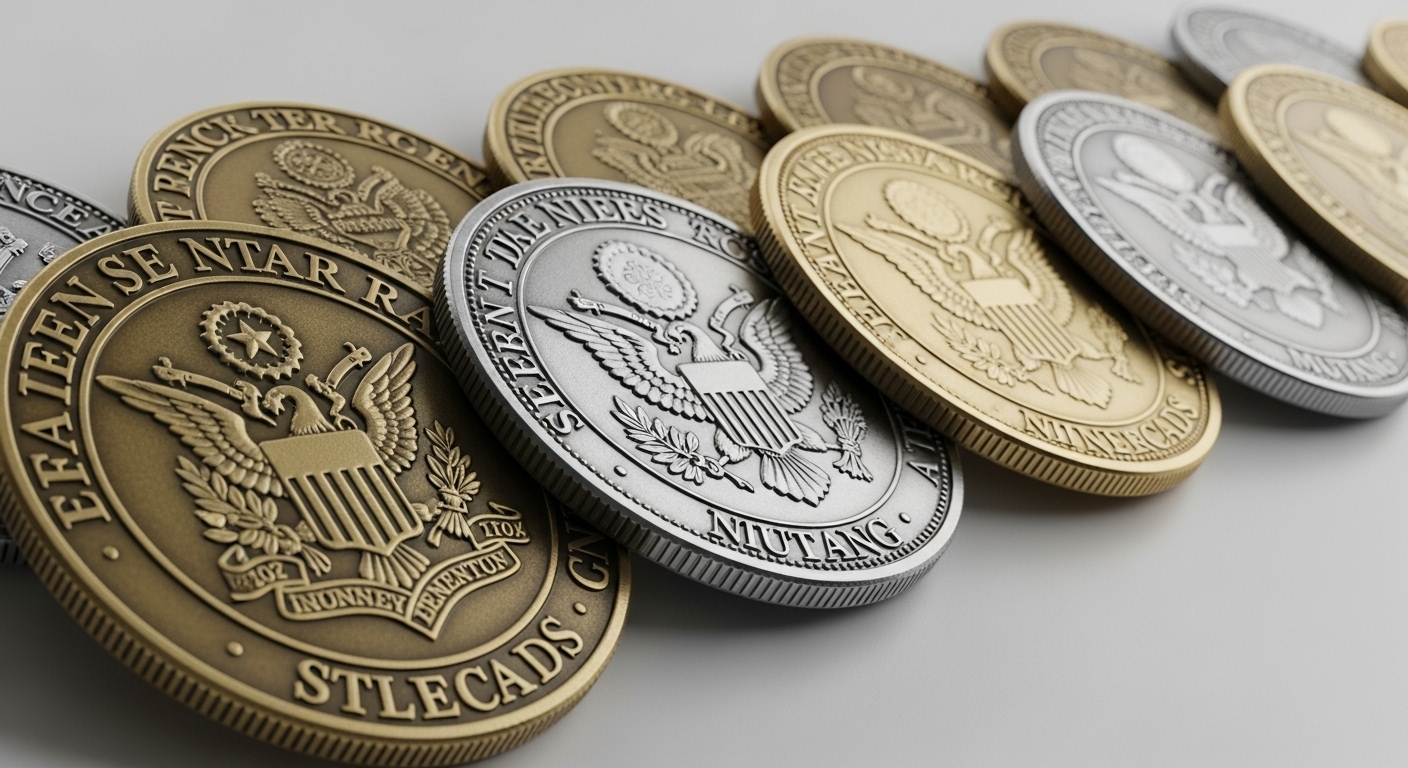
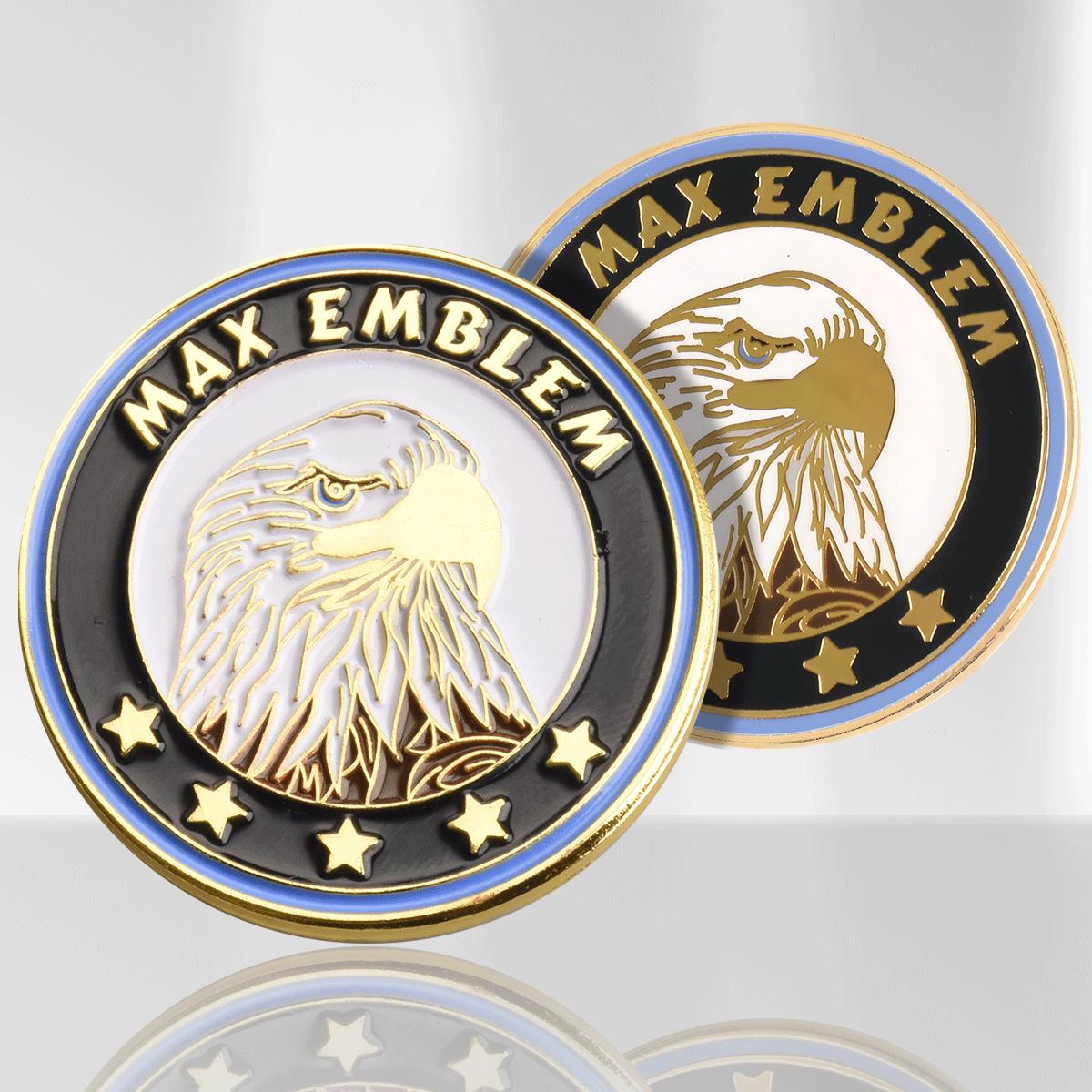
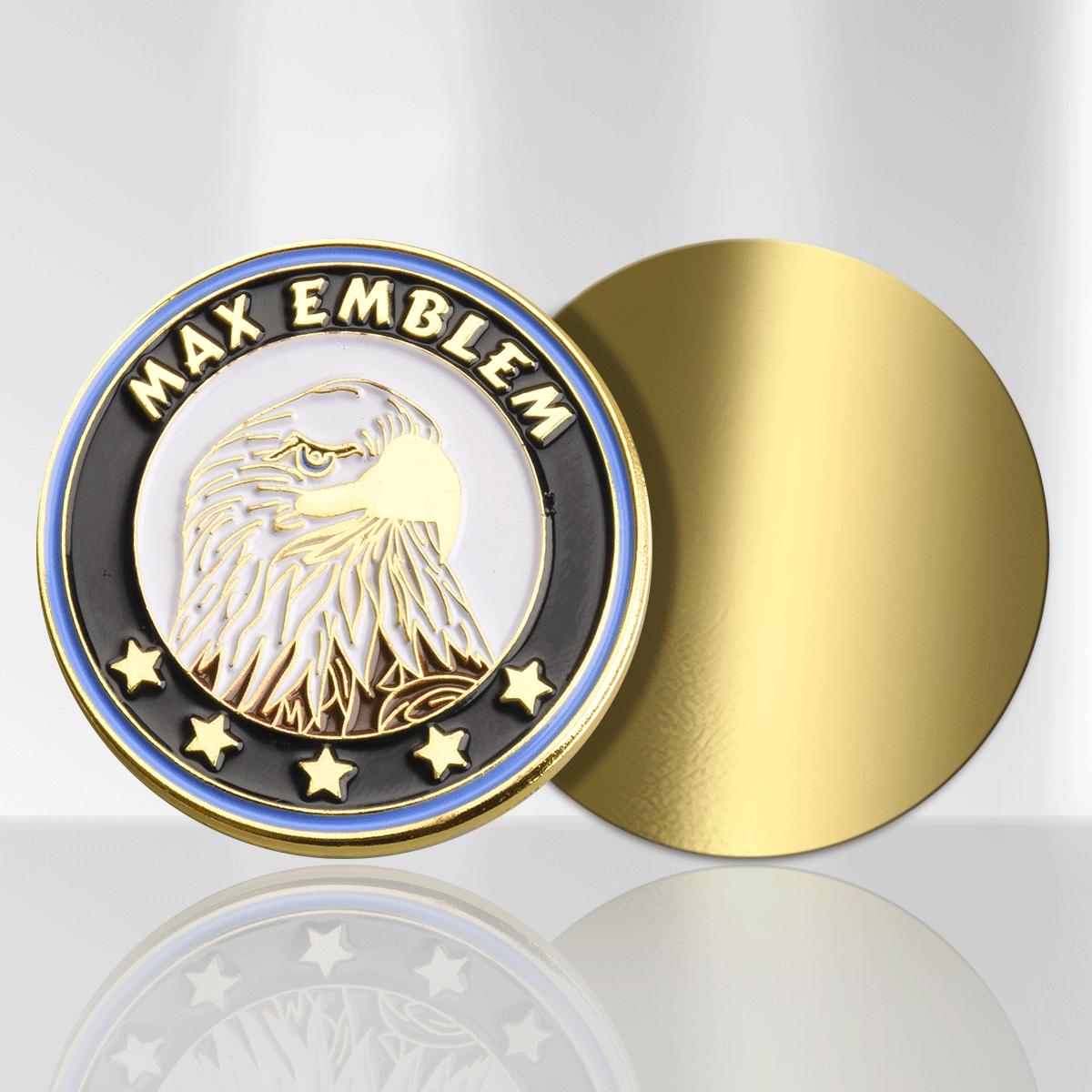
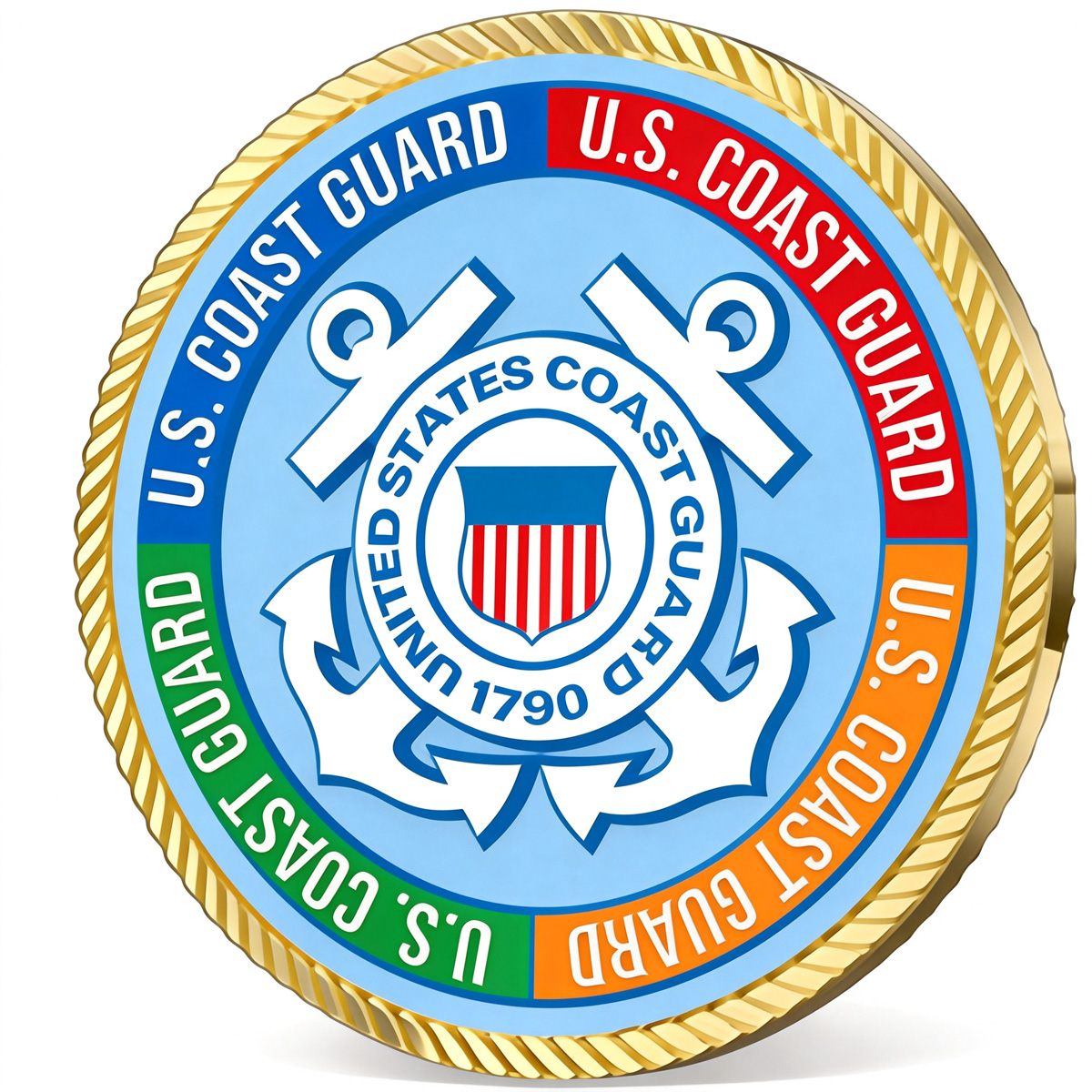
Hard enamel is a glass-like resin that is applied in layers, baked at over 400°F, and then hand-polished until the enamel is perfectly flush with the metal ridges. This creates a smooth, mirror-like surface. Hard enamel is virtually indestructible and will not fade for decades, making it the top choice for corporate challenge coins and official state department gifts.
2. Soft Enamel: The Tactile Tradition
In soft enamel production, the paint is thinner and sits below the metal borders, giving the coin a "topographic" feel. This is the preferred style for most custom challenge coins for sale because it allows for more vibrant color gradients and can be coated with an epoxy dome for added protection and a 3D "bubble" effect.
Plating and Finishing - The Final Skin
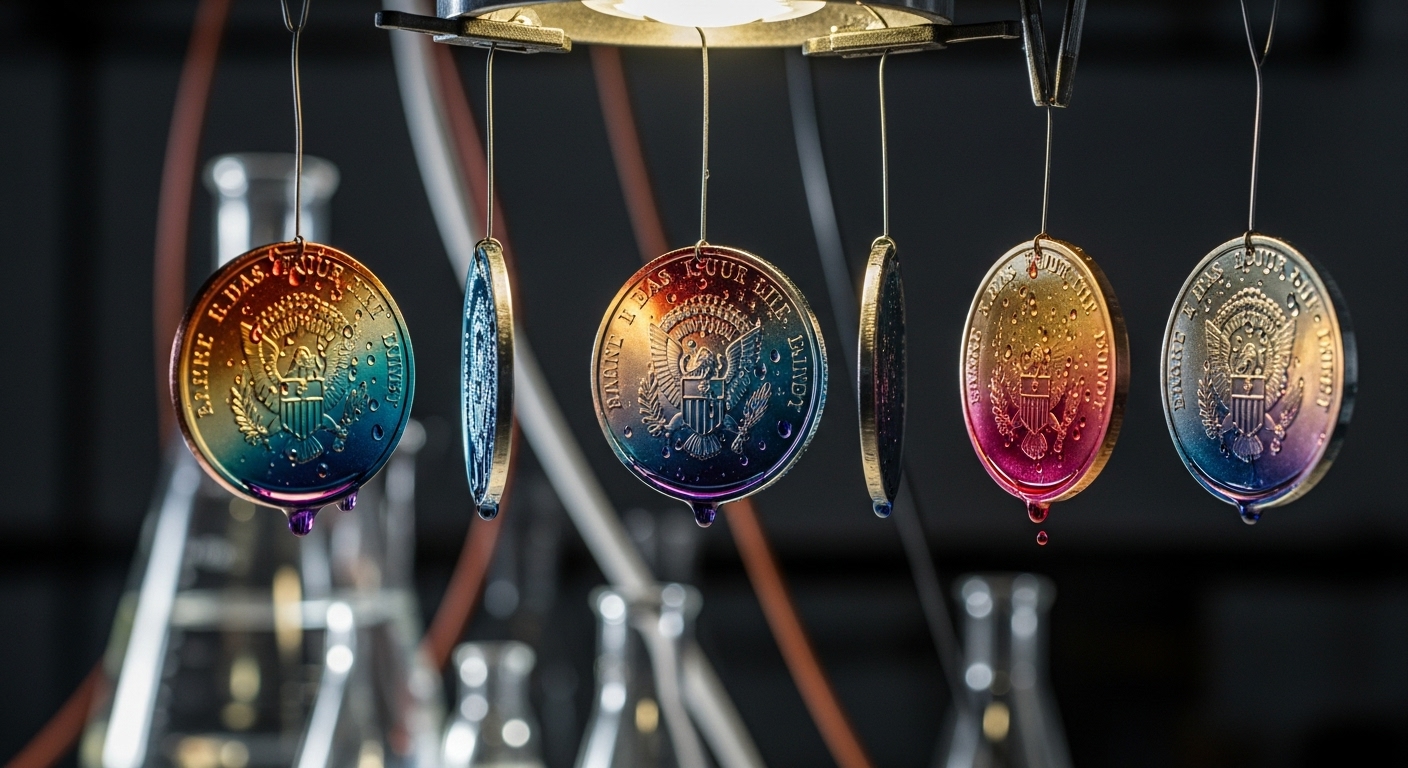
The "plating" is the chemical bath that gives the coin its color (Gold, Silver, Copper, etc.). For high-end custom military coins no minimum, we offer "Antique" finishes. An antique gold challenge coins finish involves applying a dark chemical wash that settles into the crevices of the design, highlighting the details and giving the coin a battle-worn, historic appearance.
Advanced Edge Detailing - The 3rd Dimension
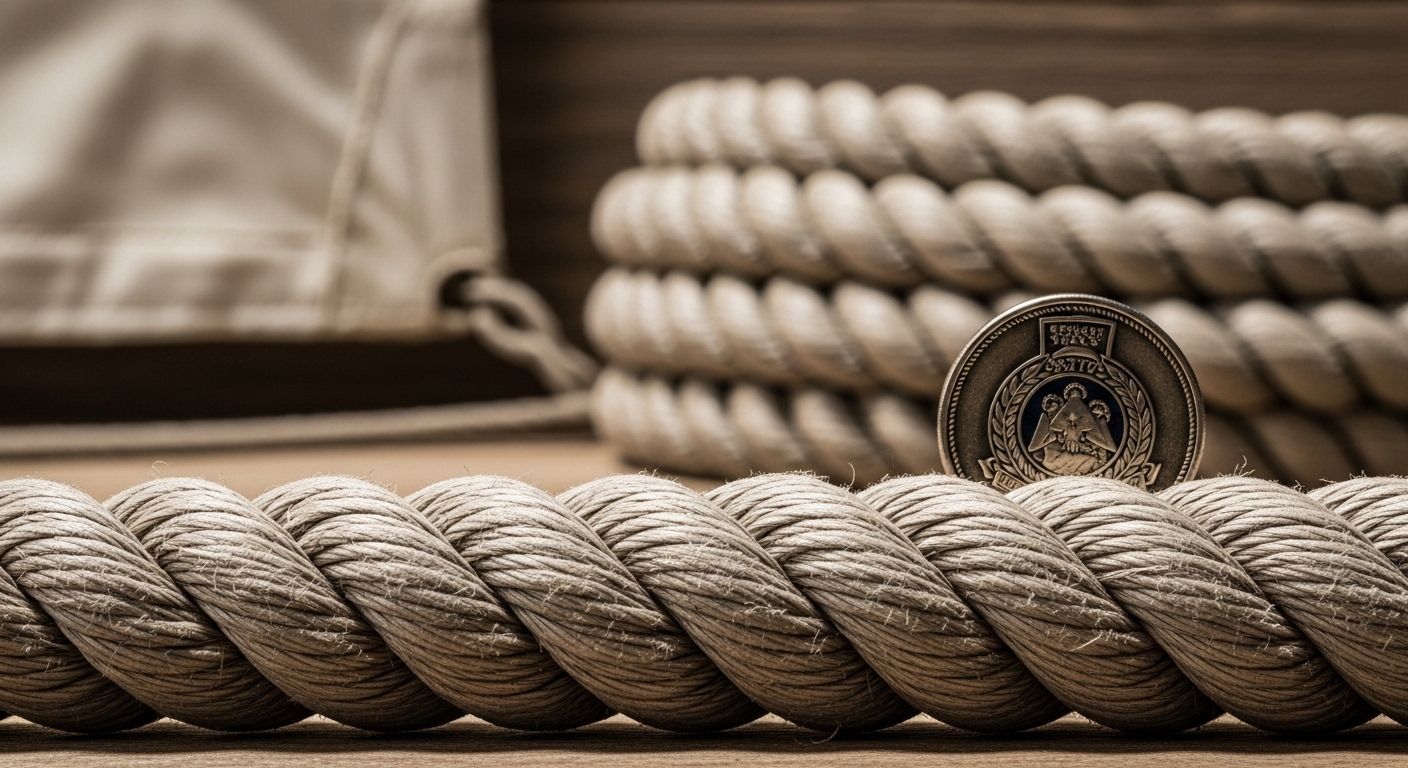
When you design your own challenge coin, don't ignore the edge (the "third side" of the coin).Standard coins have a smooth edge, but a professional challenge coin maker offers custom options:
Strategic Branding - Why Corporations are Minting History
In the digital age, physical connection is a premium. Corporate challenge coins have become a powerful HR tool. Major tech companies use them to denote "founding member" status or to celebrate the completion of a massive software sprint. The weight of the coin in an employee's hand creates a "haptic anchor"—a physical memory of their hard work that a PDF certificate can never provide.
The Production Pipeline - From Vector to Metal
Your Legacy, Forged in Metal
A challenge coin is the only piece of branding that people are hesitant to throw away. It carries a perceived value that far exceeds its cost. Whether you are honoring a fallen hero with custom military coins no minimum or rewarding your sales team with corporate challenge coins, the quality of the finish tells the world how much you value the recipient.
As a leading challenge coin maker, Max Emblem is committed to the highest standards of numismatic engineering. We don't just make coins; we mint history. Ready to create something that will be passed down for generations? Explore our custom challenge coins for sale and start your design journey today.
Frequently Asked Questions
Q: Can challenge coins include functional elements like a bottle opener or a spinning center?
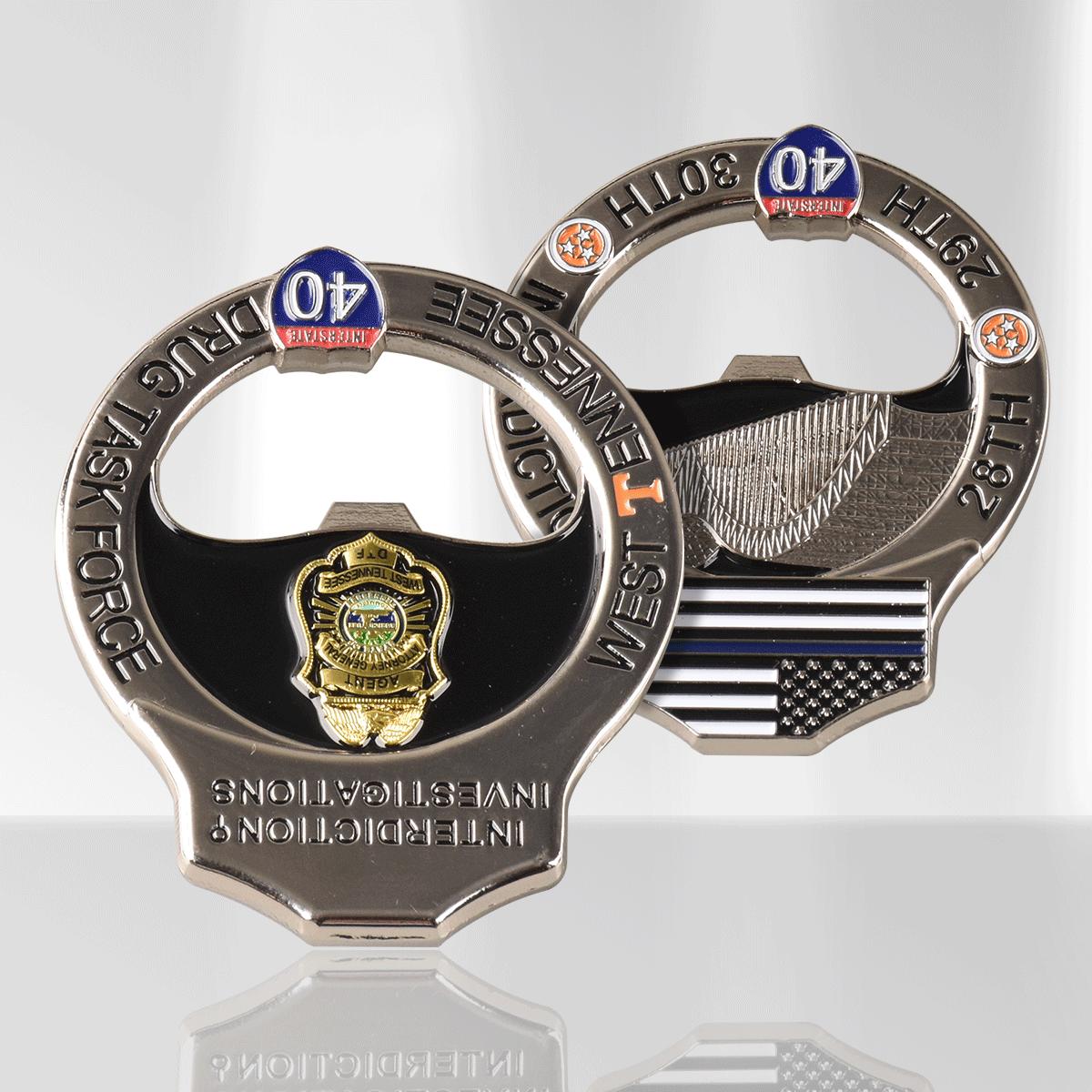
Yes, we specialize in "interactive" custom challenge coins. We can integrate cut-outs for bottle openers, rotating centerpieces, or even sliding elements. These functional designs transform a traditional commemorative coin into a versatile tool that people are even more likely to carry and use daily.
Q: What are the best edge-cutting options to make my corporate challenge coins stand out from the crowd?
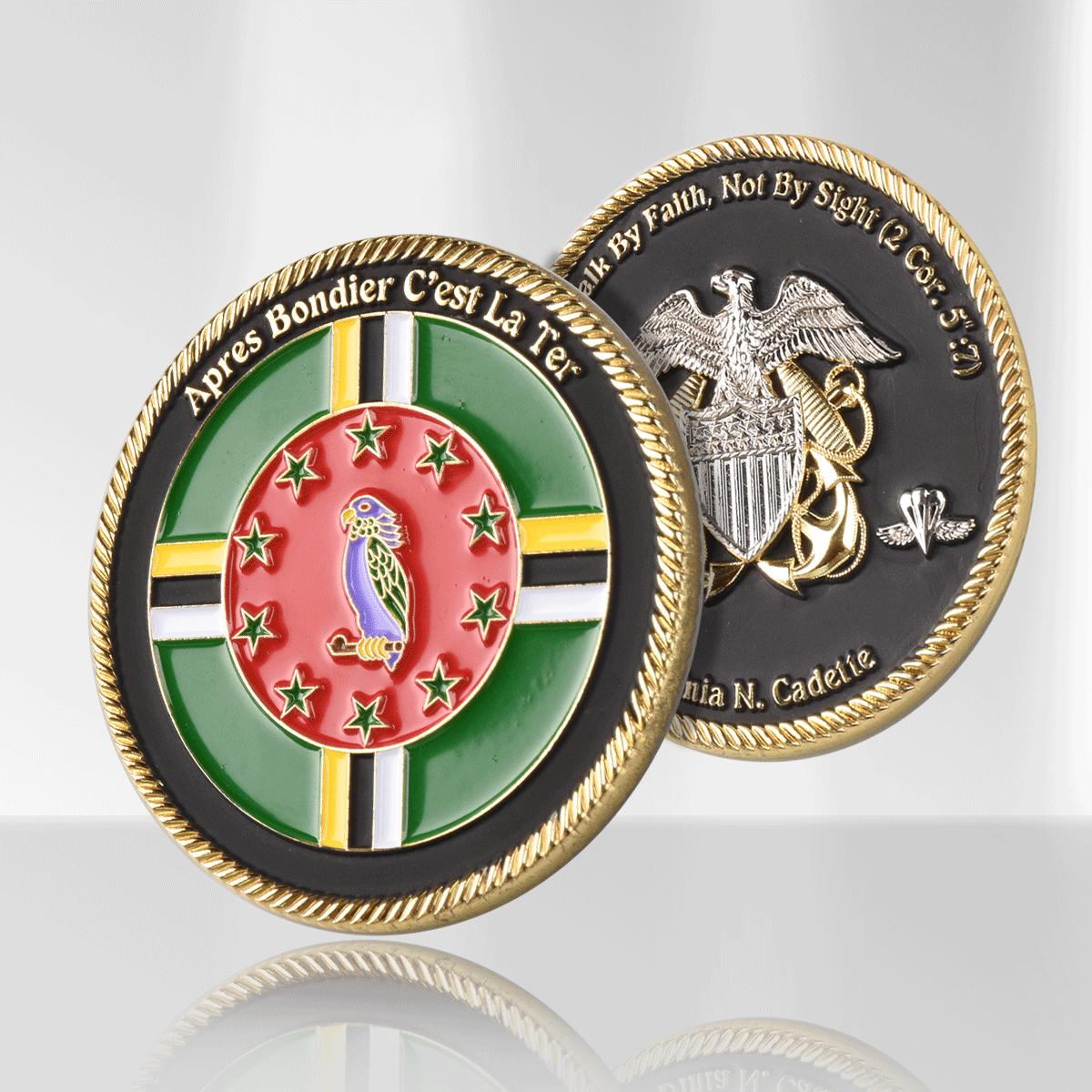
Beyond the standard smooth edge, we offer decorative options like diamond-cut edges (rope, wave, or cross-cut styles). These textured borders catch the light and add a sophisticated, jewelry-like finish to your custom challenge coins, significantly increasing their aesthetic appeal and perceived weight.
Q: How do you handle fine text or small legal disclaimers on custom military coins?
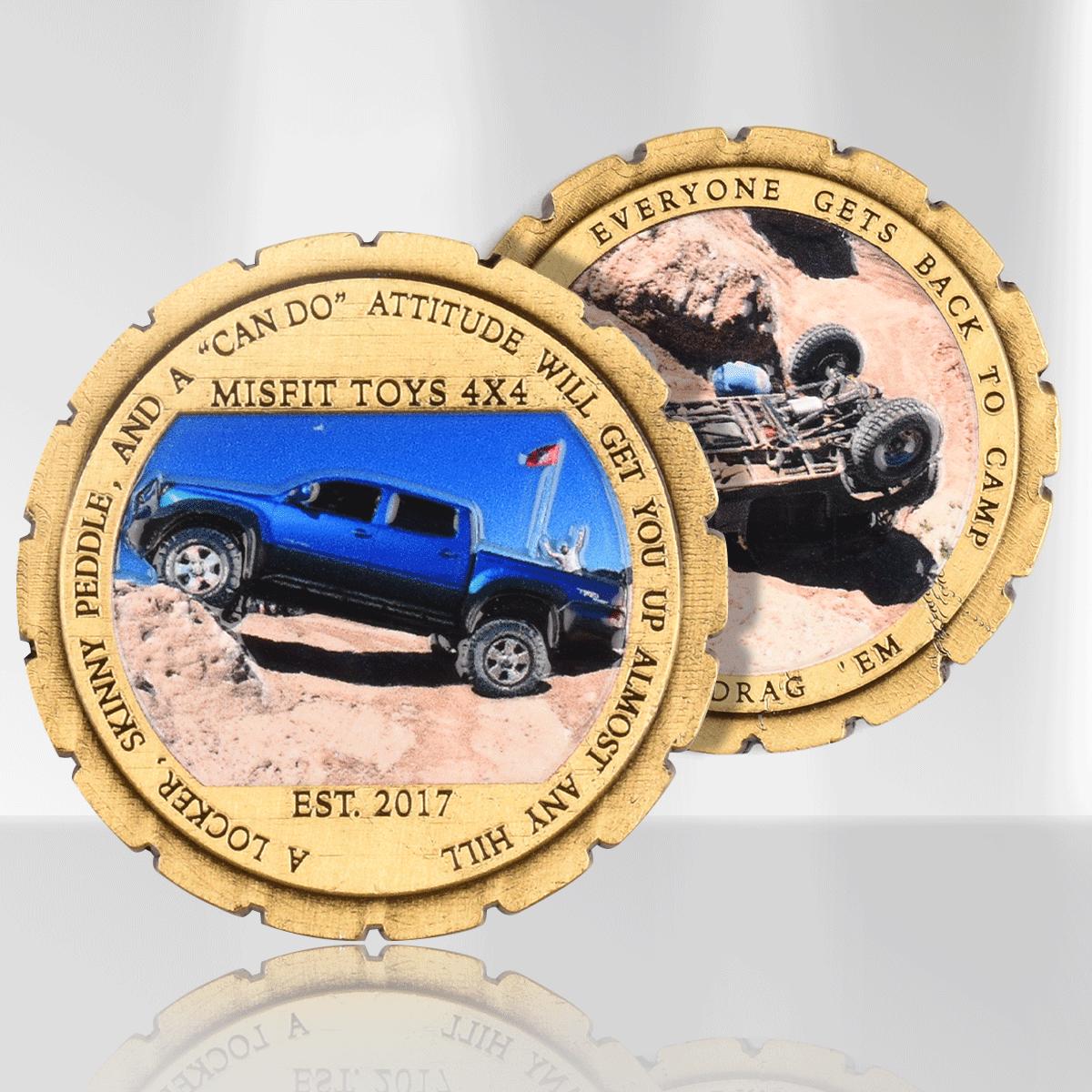
For extremely fine detail or small text that might be lost in metal casting, we utilize high-resolution screen printing or laser engraving over the metal surface. This allows us to include complex mottos or unit citations that remain perfectly legible while maintaining the coin's structural integrity.
Q: Is it possible to create a coin with two different finishes, such as antique bronze on one side and shiny gold on the other?
While most coins share a consistent plating, we can perform specialized dual-plating or selective plating to highlight specific design elements. This technique is ideal for custom challenge coins that need to represent two different branches of service or contrasting brand identities on each side.
Q: Do you provide digital mockups for my custom challenge coin design before I commit to the full order?
Absolutely. Our design department provides a detailed 2D or 3D digital proof for every order. This mockup outlines the exact metal colors, enamel placements, and dimensions, allowing you to approve every detail of your challenge coin maker project before we create the physical die.