How to Choose the Right Size for Custom Enamel Pins?
Table of Contents


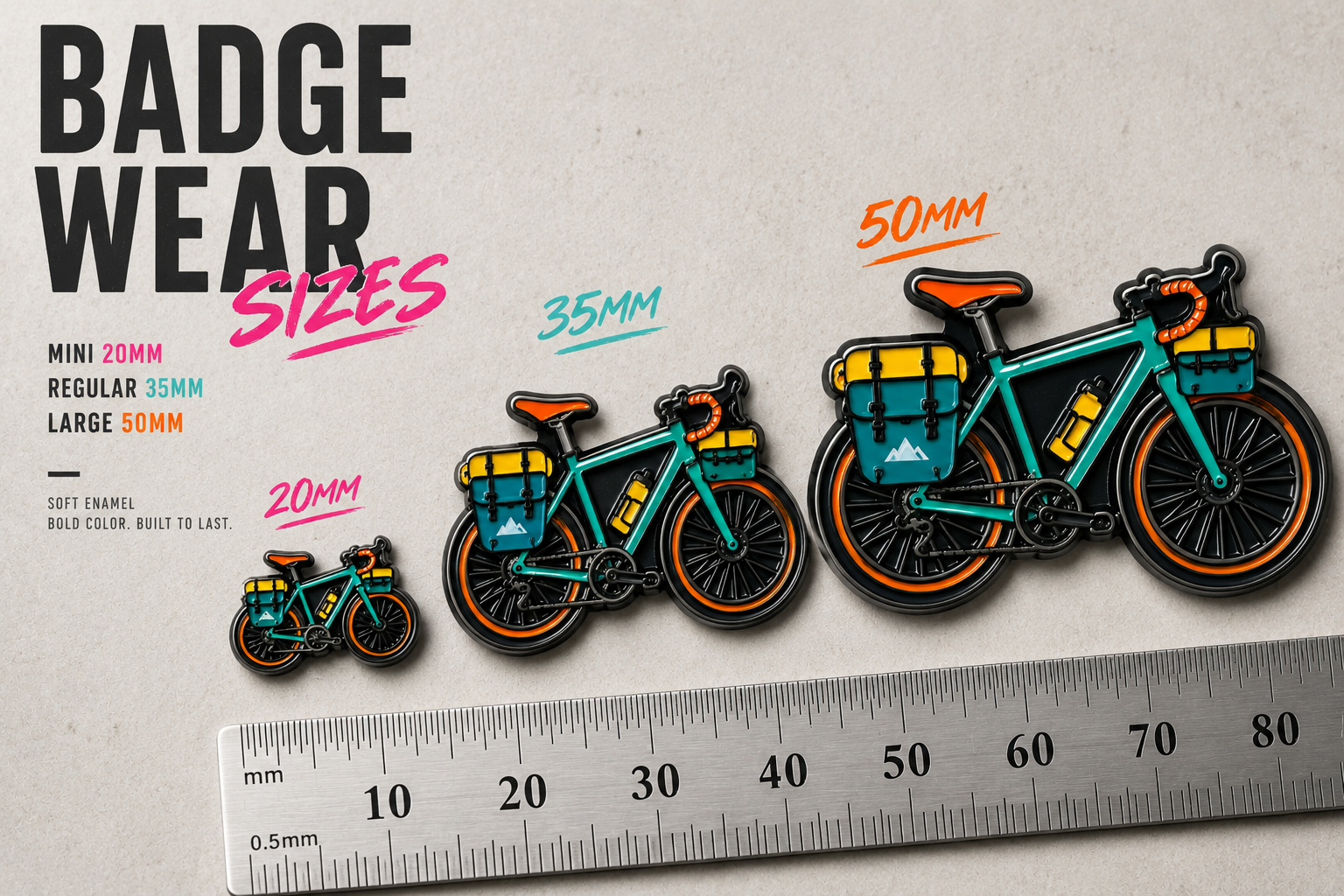
After completing the design, many people face a seemingly simple but surprisingly difficult question — How large should my pin actually be?
For first-time custom pin buyers, including independent designers, brand owners, event organizers, collectors, and individual creators, choosing the right size is often one of the most challenging steps.
The reason is that most people do not have an intuitive understanding of pin sizes. Measurements such as 1 inch, 1.25 inches, or 1.5 inches may look like simple numbers, but it can be difficult to imagine how large the finished pin will look in real life, how it will appear when worn on clothing, bags, or hats, or whether the design will still maintain its details and visual appeal after being reduced in size.
This is why many customers need to compare actual samples, wearing examples, and different size references before they can confidently decide which size works best for their design.
The size of a pin does not only affect its overall proportion; it also directly influences design details, text readability, wearing comfort, and production cost.
Different purposes, design complexities, and manufacturing requirements require different size choices. In this guide, we will compare common pin sizes and real application scenarios to help you find the most suitable size for your project.
I. Why Is Pin Size So Important?
Many customers assume that a design can simply be scaled up or down according to proportion before production. However, size determines much more than the physical dimensions — it determines whether the design can be fully presented in the final product.
When the size is too small, fine lines, small text, and complex patterns may become unclear due to production limitations. On the other hand, an oversized pin may increase material and manufacturing costs while feeling too heavy for everyday wear.
In addition, pin size affects:
- The ability to display design details
- The precision of enamel coloring
- The proportion of metal lines and borders
- Backing options and wearing stability
- Overall production cost
Therefore, before deciding on a size, it is important to consider the purpose of the pin and the complexity of the design.
II. Standard Sizes for Custom Enamel Pins
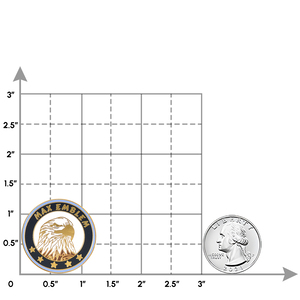
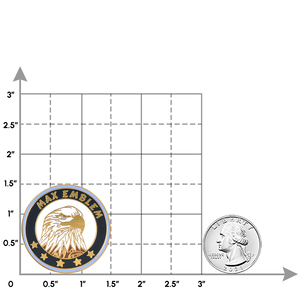
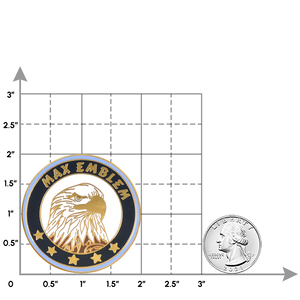
Most custom enamel pins are produced between 0.75 inches and 2 inches. Different sizes are suitable for different applications.
| Size | Common Applications |
|---|---|
| 0.75" (19 mm) | Logos, hat pins, small identification badges |
| 1" (25 mm) | Corporate pins, employee pins, business events |
| 1.25" (32 mm) | Brand merchandise, school pins, commemorative pins |
| 1.5" (38 mm) | Anime merchandise, original artwork, community or club events |
| 2" and above (50 mm+) | Collector series, competition souvenirs, large display pins |
For most customers, 1.25–1.5 inches is usually the ideal range because it balances design details, wearing comfort, and production cost.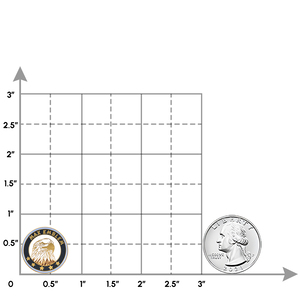
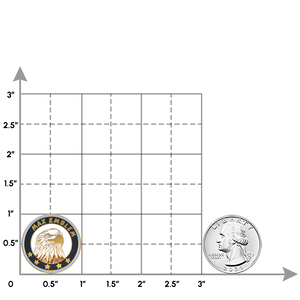
View More Size Options
III. How to Choose the Right Size Based on Usage Scenarios?
1. Corporate Pins and Business Events
For company logos, employee pins, or business conference commemorative pins, a size of 0.75–1 inch is usually recommended.
This size looks professional and understated, making it suitable for suits, shirts, and uniforms while still providing enough space to display a company logo.
If the logo has a horizontal layout, the length can be increased to around 1.25 inches to improve text readability without making the overall design feel too large.
2. Brand Merchandise and Original Designs
For independent designers, lifestyle brands, anime IPs, or creative merchandise, 1.25–1.5 inches is generally recommended.
A larger size allows more design details to be displayed, making character expressions, complex lines, and multiple colors more visible while increasing the collectible value of the pin.
3. Sports Events and Team Trading Pins
Team logos, clubs, and sports event commemorative pins commonly use 1.5–2 inches.
Larger sizes create stronger visual impact and are better suited for displaying team logos, mascots, and event themes. They are also more popular in the trading pin culture.
4. Clubs, Schools & Organizations
For school clubs, student organizations, fraternities and sororities, scouts, and nonprofit organizations, a size of 1–1.5 inches is generally recommended.
This size offers a good balance between visibility and comfort, making it ideal for everyday wear on backpacks, jackets, hats, and uniforms. It also provides enough space for school emblems, club logos, or organization names while remaining lightweight and cost-effective for group orders.

IV. Factors That Affect the Ideal Enamel Pin Size
1. Design Complexity
The more intricate your artwork is, the larger the pin should be. Fine lines, small text, layered details, and multiple color sections require additional space to remain clear after production. Choosing a size that is too small may result in simplified details or reduced readability.
2. Wearing Position
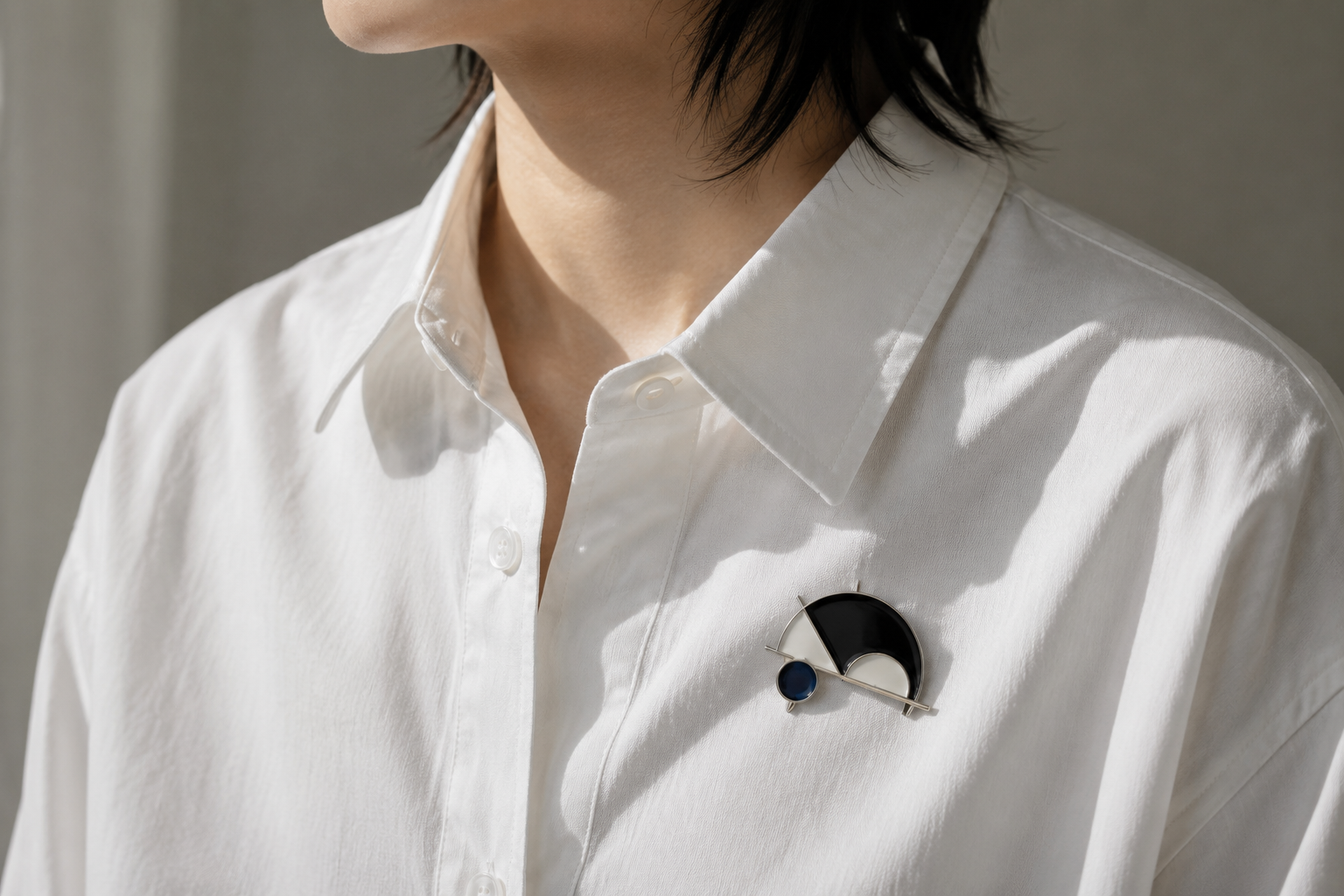
Where the pin will be worn also affects the ideal size. Smaller pins work well on shirt collars, suit lapels, and hats where a subtle appearance is preferred. Larger pins are better suited for backpacks, jackets, tote bags, or display collections, where they can attract more attention without looking oversized.
3. Viewing Distance
Consider how the pin will be seen. If it is designed to be viewed up close, such as a collectible or souvenir, a smaller size may be sufficient. However, pins intended for conferences, sporting events, schools, or promotional activities are often viewed from a distance, making a larger size easier to recognize.
4. Manufacturing Process
Different production techniques can also influence the recommended size. Designs with 3D relief, cut-out areas, spinning elements, or moving parts generally require a larger size to ensure structural strength and maintain the intended visual effect. Simple logo pins, on the other hand, can often be produced successfully at smaller sizes.
V. Do Different Sizes Have Different Prices?
The answer is yes, but size is not the only factor.
Larger pins usually require more metal material, larger molds, and longer production time, which can increase the overall cost.
However, other factors also affect pricing, including:
- Material (brass, iron, zinc alloy)
- Soft enamel or hard enamel process
- Plating finishes
- Special techniques such as cut-outs or 3D relief
- Order quantity
Therefore, it is not recommended to reduce the size simply to lower costs. A better approach is to find the right balance between your budget and the desired design effect.
VI. Two Size Details You Shouldn't Overlook
1. Backing Options Should Match the Pin Size
When a pin is larger than 1.5 inches or relatively heavy, using double posts or magnetic backings is recommended. These options provide better stability and help prevent the pin from rotating or hanging unevenly.
For pins smaller than 1.25 inches, a standard butterfly clutch is usually sufficient for everyday use.
2. Printed Size Is More Accurate Than Screen Display
Digital designs on a screen often lack a real sense of scale.
Before placing an order, it is recommended to print the design at 100% scale, cut it out, and compare it on clothing, bags, or hats. This provides a much clearer idea of whether the size matches your expectations.
VII. Why Do the Same Designs Look Different From Different Manufacturers?
Many customers notice that the same artwork can produce noticeably different results depending on the supplier.
Beyond size, factors such as mold precision, material quality, production control, and manufacturing experience all influence the final result.
Less experienced manufacturers may simplify lines, adjust color proportions, or reduce production standards to improve efficiency, causing the finished product to differ significantly from the original design.
Therefore, the quality of a custom pin is determined not only by the chosen size, but also by whether the manufacturer has the ability to accurately transform your artwork into a finished product.
Conclusion
Choosing the right pin size is essentially about finding the best balance between design presentation, wearing experience, production cost, and manufacturing requirements.
For most projects, 1.25–1.5 inches provides an excellent balance between visual impact and practicality. However, the final choice should still depend on the design details and intended use.
With more than 20 years of manufacturing experience, Maxemblem has served over 100,000 customers worldwide. Our team provides free size recommendations and production evaluations based on your artwork before ordering, helping you select the most suitable size solution and ensuring every creative idea is presented accurately with high-quality craftsmanship.