How to Choose Between Die-Struck Pins and Enamel Pins?
Table of Contents


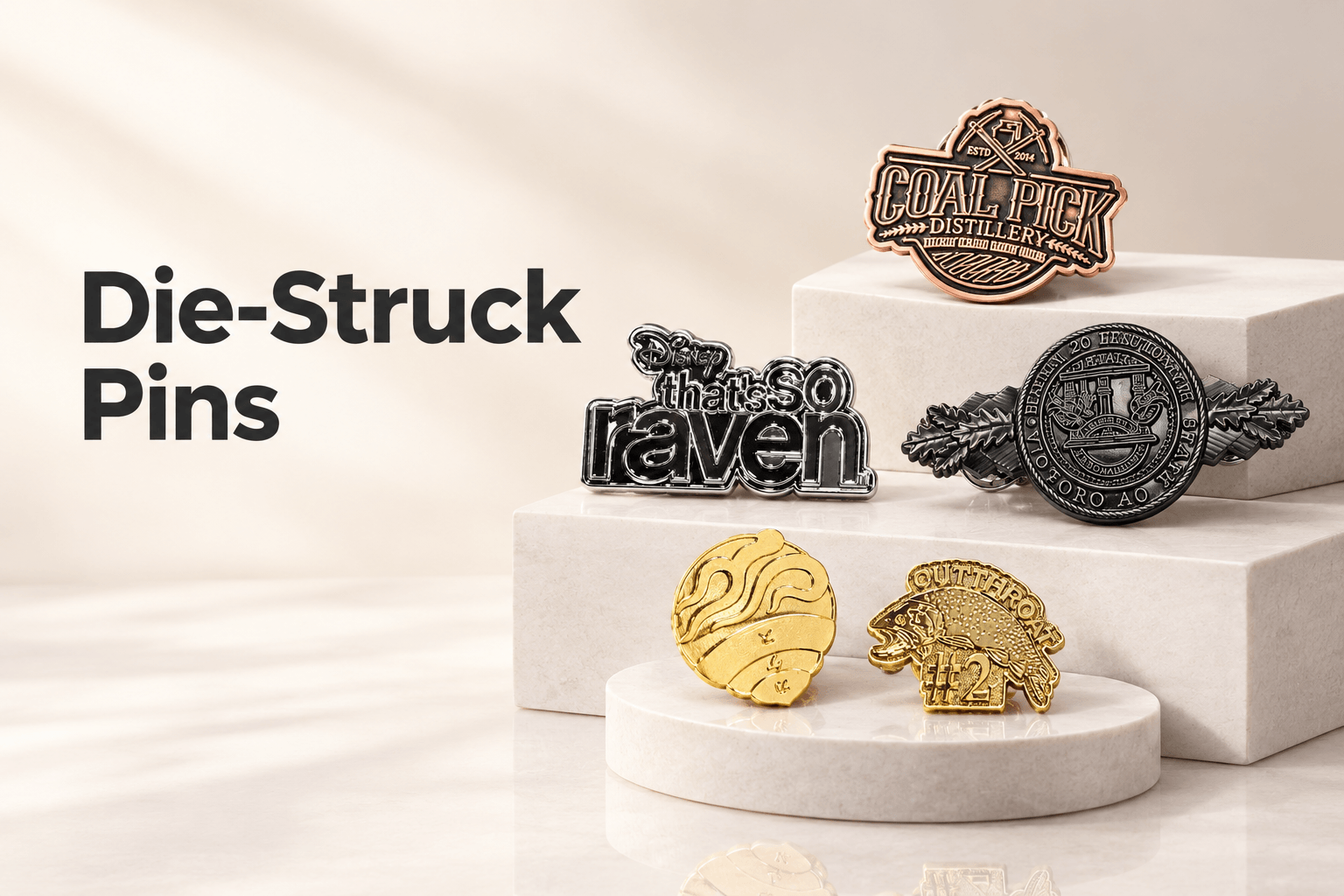
Want to customize a pin with a premium metallic look without bright color fills? Die-struck pins showcase designs through raised and recessed metal details, polishing, and plating.
They are ideal for corporate logos, anniversary pins, and vintage-style keepsakes.
1. What Is a Die-Struck Pin?
die struck pin meaning: A die-struck pin is a metal badge made by using a steel die and a high-pressure press to stamp a design directly onto a metal surface.
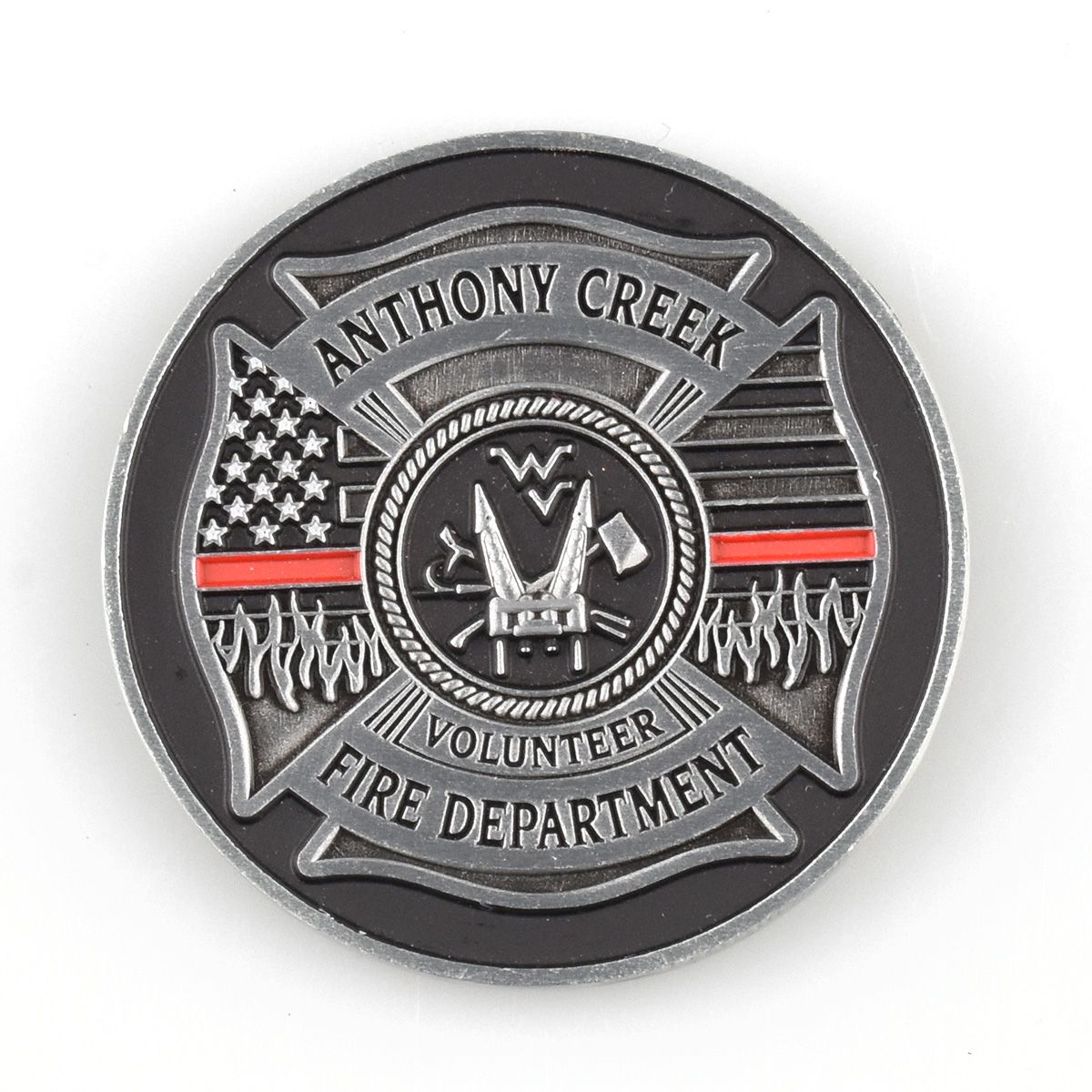
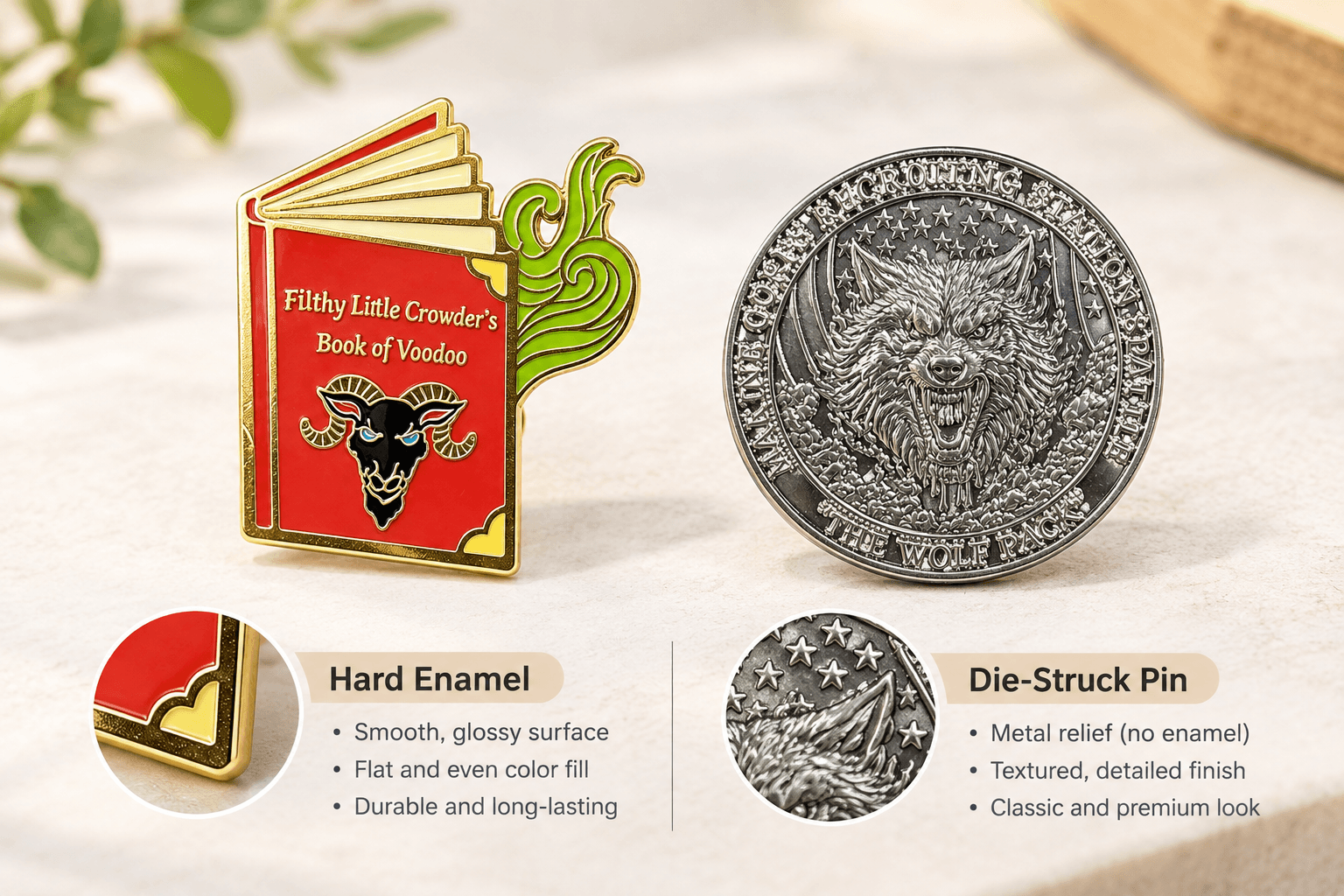
Its defining feature is the use of raised metal relief, polishing, and shadow contrast to highlight details, usually without filling any areas with enamel colors.
These products are also known as die struck pin badges. Their appearance mainly depends on the metal finish and surface treatment. Common options include bright gold, bright silver, antique silver, and antique bronze.
2. What Is the Difference Between Die-Struck Pins and Enamel Pins?
Compare the appearance and applications of these two manufacturing techniques:
| Comparison | Die-Struck Pins | Enamel Pins |
| Color | No color filling; natural metallic finish | Rich colors with soft or hard enamel filling |
| Visual Style | Premium, formal, vintage, and dimensional | Bright, playful, and modern |
| Applications | Corporate gifts, anniversary awards, and vintage keepsakes | Anime merchandise, trendy creative products, and artistic illustrations |
3. What Materials Are Used for Die-Struck Pins?
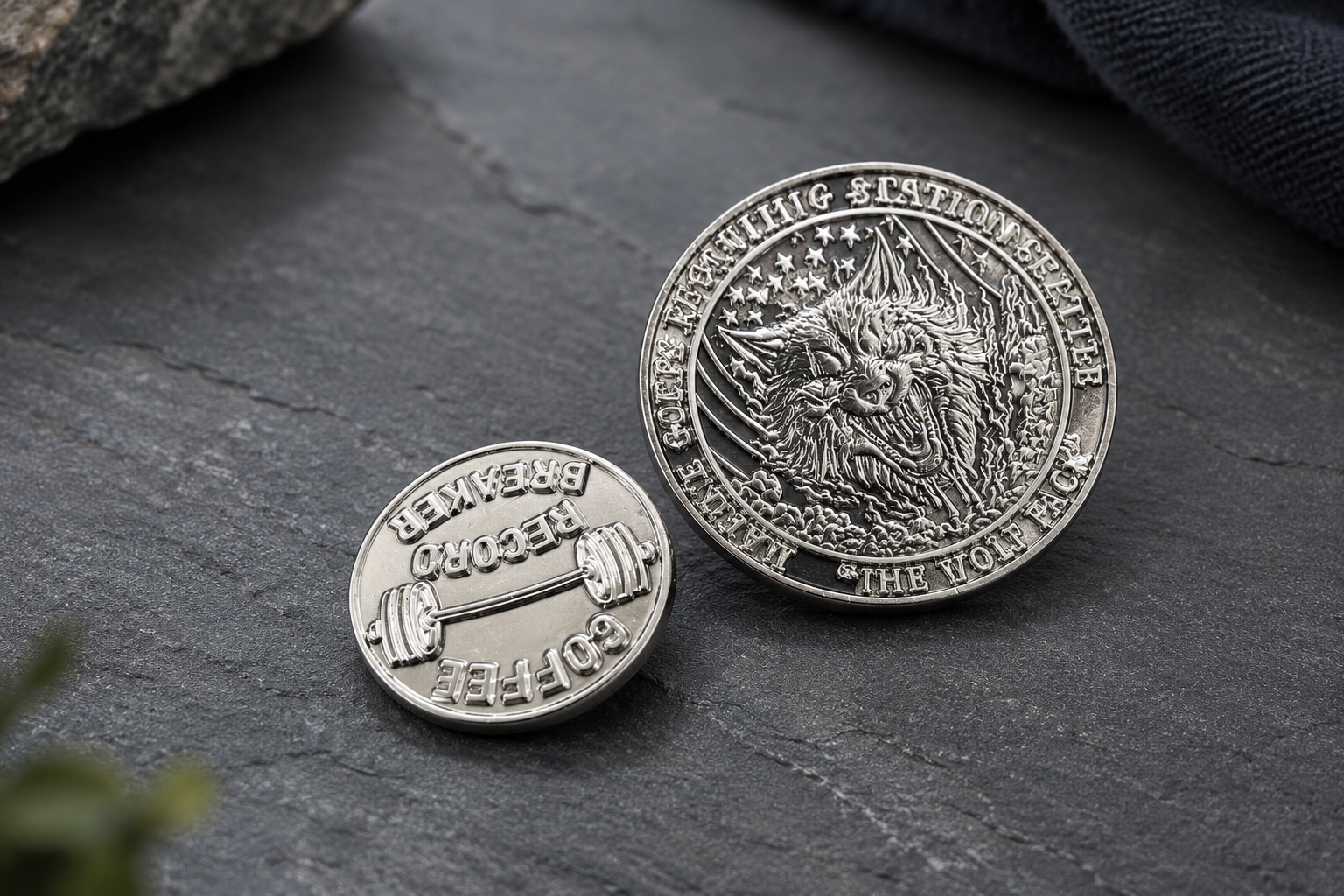
die struck metal pin designs can be made from materials such as iron and copper, depending on design requirements and budget.
Brass / Pure Copper: Excellent malleability makes these materials suitable for fine lines and 3D relief details, ideal for premium corporate badges and high-end custom designs.
Iron: Offers higher hardness at a lower material cost, making it suitable for large-volume orders and budget-conscious projects.
If you are looking for die struck lapel pins made of iron, confirm the base metal before ordering. Iron pins require an appropriate protective plating layer to help resist corrosion and oxidation over time.
4. What Finishes Are Available for Die-Struck Pins?
The appearance of die-struck pins depends largely on plating and surface finishing. Common options include:
Polished Finish: Raised areas are polished to a high shine, while recessed areas can be sandblasted to create a strong contrast for a clean, professional look.
Antique Finish: Antique gold, antique silver, and antique bronze create a vintage appearance with darker recessed details and dimensional shadows.
Dual Plating: Combines two plating colors, such as gold and silver, on the same pin to emphasize key logo elements.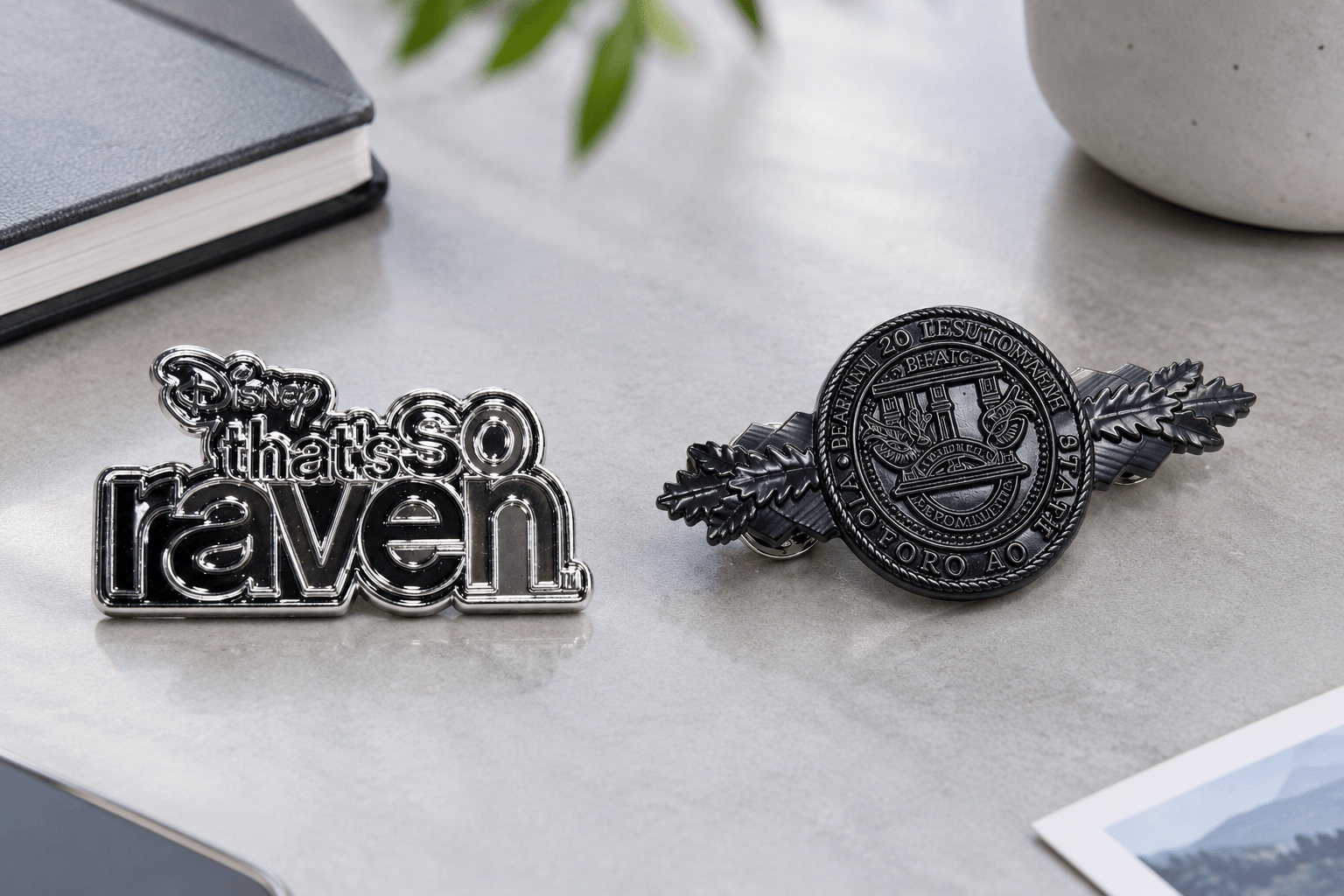
5. How Much Do Custom Die-Struck Pins Cost?
The price of die struck pins custom orders mainly depends on size, material, mold complexity, plating, backing, and order quantity.
Mold Cost: Mold fees are generally a one-time fixed cost. Ordering more pins can reduce the mold cost allocated to each unit.
Production Costs: Although die-struck pins skip the enamel-filling and baking steps, high-quality polishing and complex 3D mold engraving still require additional craftsmanship. Therefore, die-struck pins are not necessarily cheaper than enamel pins.
For a fair comparison, request quotes using the same size, material specifications, and order quantity.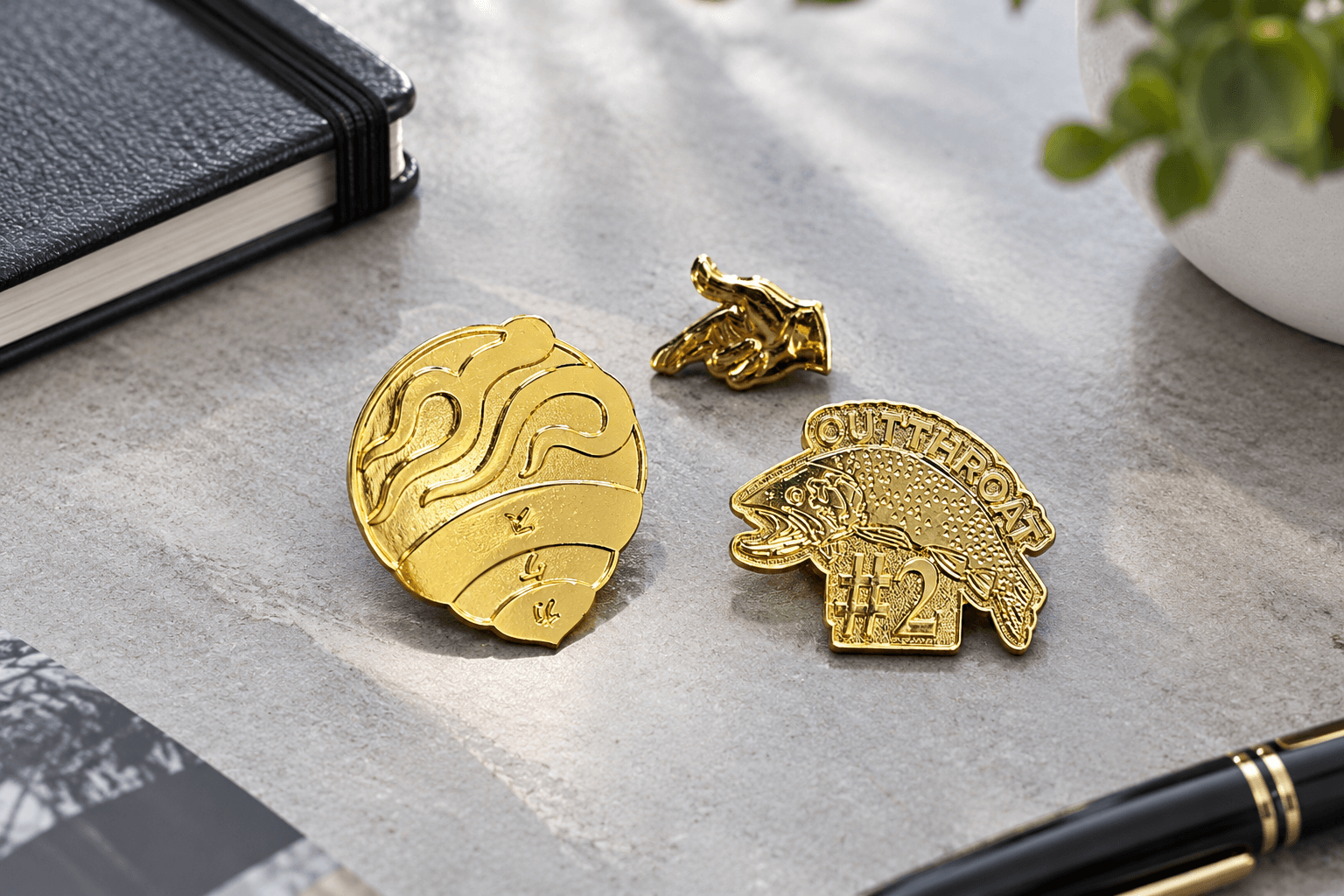
6. What Are the MOQ and Production Lead Times?
When discussing a custom order, it is helpful to understand the following production details:
Minimum Order Quantity (MOQ): Some factories set a minimum order of 50–100 pieces because mold costs are fixed. However, experienced manufacturers may also offer no-MOQ options, such as Maxemblem.
Production Lead Time: After artwork approval, production typically runs 12–15 business days, with around 3 days for delivery.depending on order quantity and plating complexity.
Information Needed for a Quote: Prepare a vector artwork file (AI/CDR/PDF), preferred size (such as 1 inch or 1.25 inches), plating color, and backing preference (such as a butterfly clutch or magnet) to help the manufacturer provide an accurate quote more quickly.