Custom Made Medals Material Guide: How to Choose the Best Metal for Your Project
Table of Contents


For event organizers, schools, and businesses, choosing the right material for custom made medals can be challenging. Different design requirements, order quantities, and budgets all affect the final result. Choosing the wrong material or manufacturing process can lead to higher costs or a finished product that falls short of expectations.
This guide explains how to choose medal materials based on four key factors.
Quick Guide to Choosing the Right Medal Material
Need complex 3D relief, cutouts, or custom shapes? Choose zinc alloy for intricate designs.
Need fine metal lines and a classic finish? Consider brass with a suitable stamping process.
Have a limited budget and a simple design? Compare iron medals to see whether they fit your budget.
Need a large but lightweight medal? Consider aluminum.
Prefer a modern, minimalist metal look? Consider stainless steel.
Planning an eco-themed event? Wood medals offer a natural, non-metal alternative.
1. Common Medal Materials: Which Is Best for Your Project?
Understanding the types of metal used for medals is the first step. Common options include:
Zinc Alloy Medals
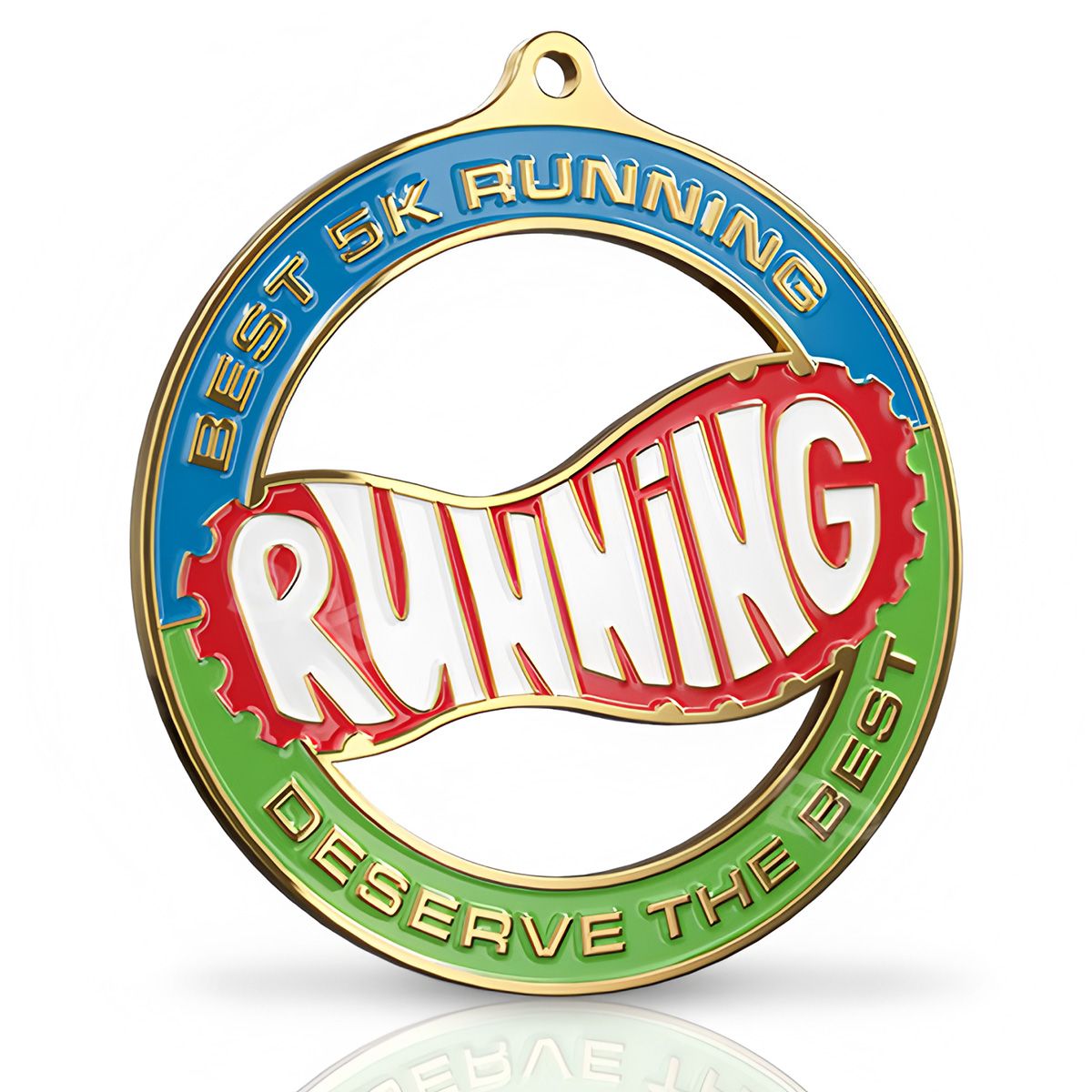
A versatile and widely used option. Zinc alloy is well suited to 3D relief, complex shapes, and cutout designs.
Brass Medals
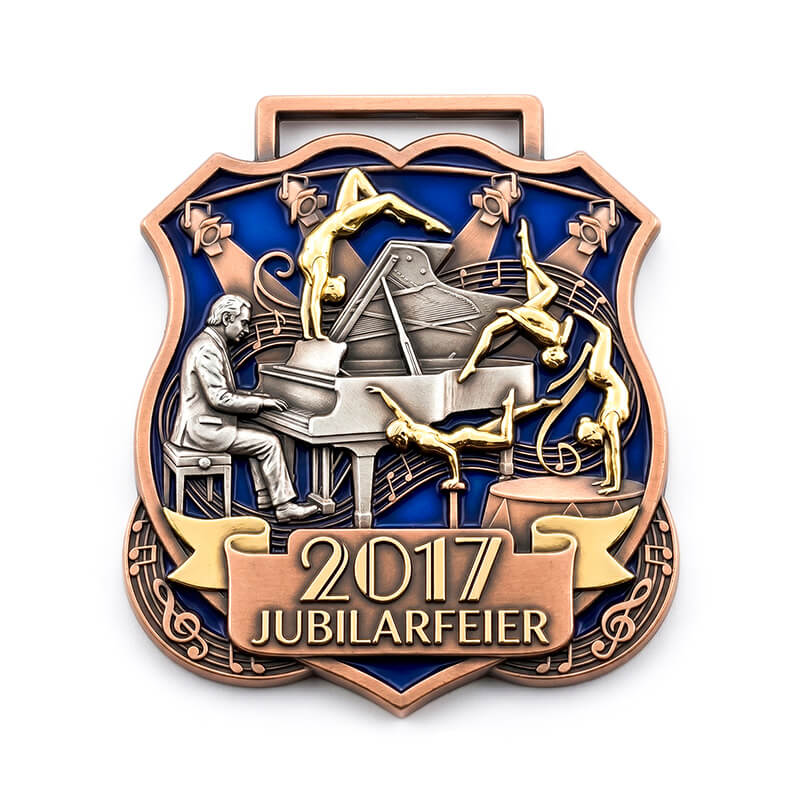
A traditional metal option with a substantial feel and classic appearance. It works well for fine 2D details and refined metal finishes.
Iron Medals
A cost-effective option for simple designs, budget-conscious projects, and larger orders.
Aluminum Medals
Lightweight and suitable for large medals. Aluminum can also be anodized to achieve a range of colors.
Stainless Steel Medals
Durable and corrosion-resistant, stainless steel is suitable for modern, minimalist designs and certain mirror-finish or cutout styles.
Wood Medals
A natural, non-metal option well suited to eco-themed events and trail races.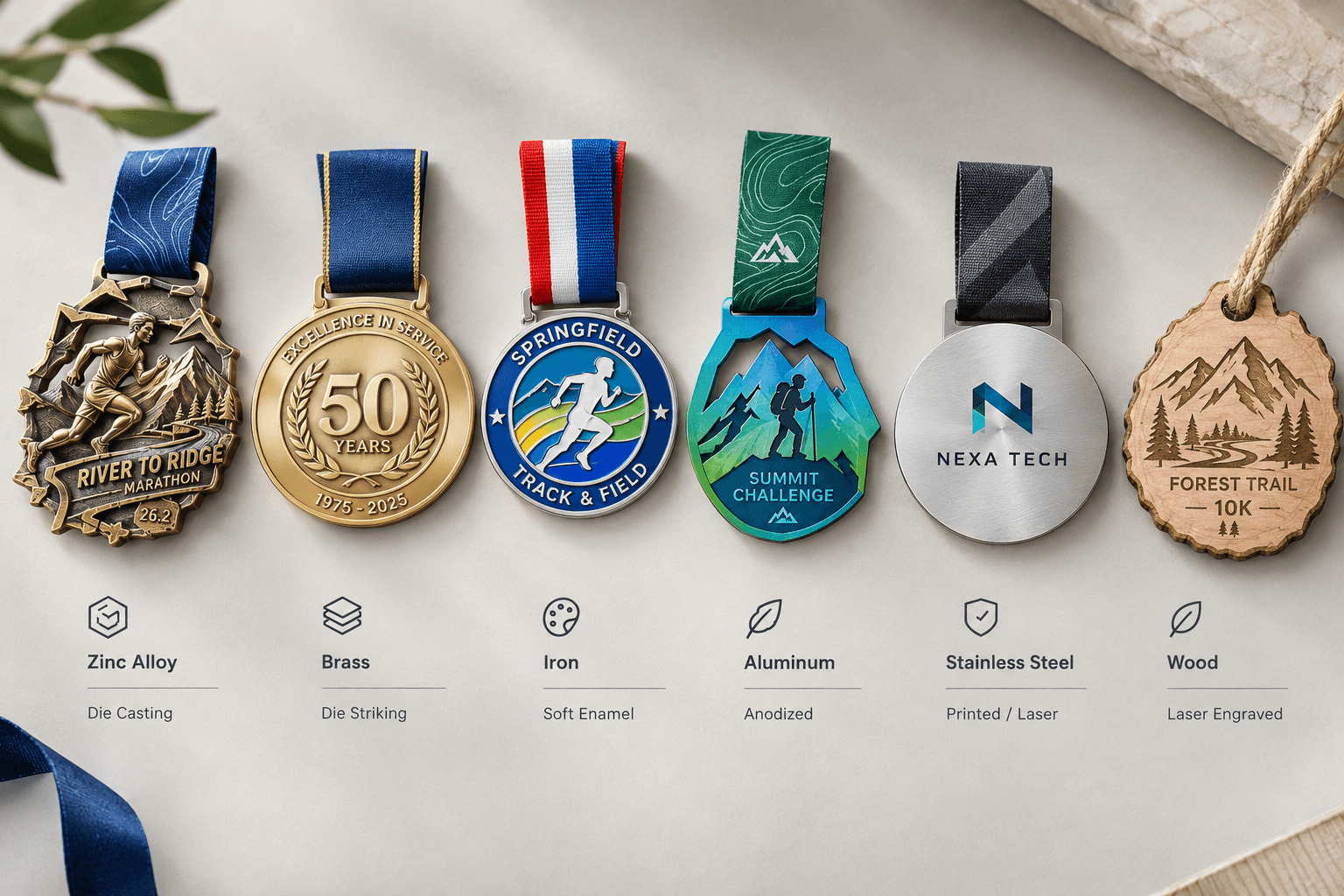
Choose the Right Manufacturing Process for Your Design
Zinc Alloy vs. Brass Medals
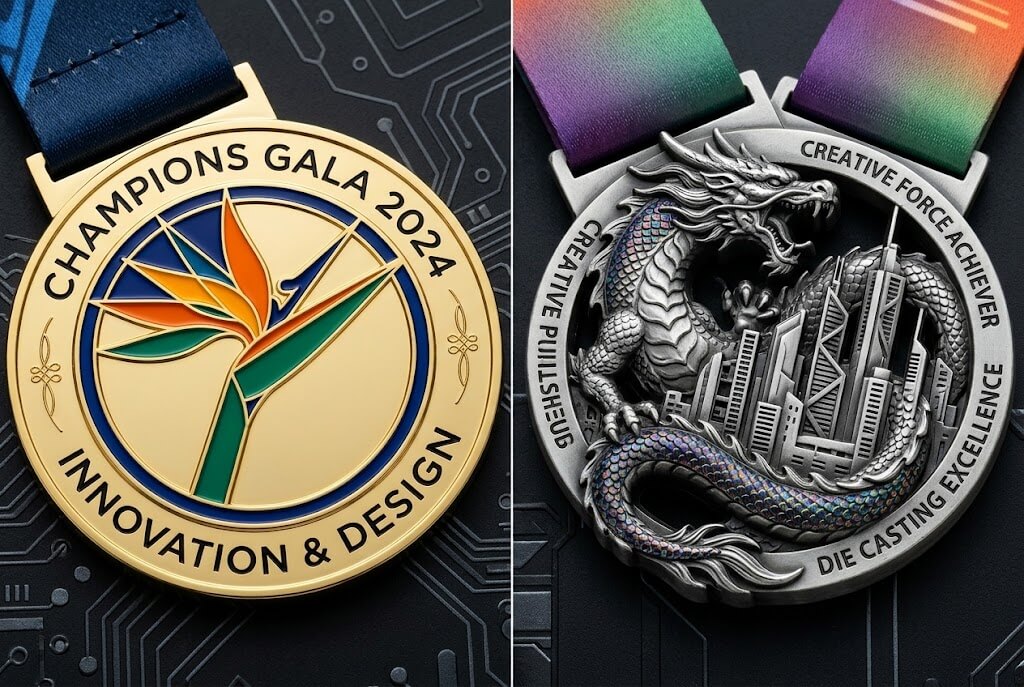
Zinc alloy medals are commonly made using die casting, which is suitable for 3D relief and complex shapes. Brass medals are often made using die striking, which works well for fine details and a classic metal finish.
How to choose: Zinc alloy offers design flexibility and good value for many sports and corporate event medals. Brass is suitable for commemorative medals that emphasize fine details and a classic metal appearance.
| Comparison | Zinc Alloy | Brass |
| Common Manufacturing Process | Die casting | Die striking |
| Design Details | Ideal for 3D relief, complex shapes, and cutout designs | Suitable for fine lines, crisp details, and a classic metal look |
| Design Flexibility | Suitable for intricate designs and irregular shapes | Suitable for detailed patterns and clearly defined lines |
| Cost | Often cost-effective, depending on design and order quantity | Depends on material usage, production process, and order quantity |
| Best For | Marathon medals, sports medals, and corporate event medals | Detailed metal medals, traditional designs, and commemorative medals |
| How to Choose | Consider zinc alloy for complex shapes and raised 3D details | Consider brass for fine details and a classic metal appearance |
Choose Medal Materials Based on Size and Weight
Medal material and dimensions affect the final weight. For large event medals, wearing comfort is also important.
For lightweight medals: Consider aluminum, especially for large race medals.
For a heavier metal feel: Consider zinc alloy or brass. The final weight depends on the medal's size, thickness, and structure.
For large, complex designs: Compare zinc alloy and aluminum based on design, weight, and cost.
Choose Custom Medal Materials Based on Cost
Cost Differences Between Materials
Iron / Aluminum: Raw material costs can be relatively low, making them worth considering for budget-conscious projects and larger orders.
Zinc Alloy: Can offer good overall value for complex 3D relief and cutout designs. Mold costs may be higher than for iron, depending on the design and production requirements.
Brass / Stainless Steel: Brass material costs can be higher, while stainless steel processing costs depend on the manufacturing method. Both can suit award projects that emphasize metal appearance and finish.
If you're unsure which material to choose, use the MaxEmblem custom medal quote form to submit your material preferences and project requirements for an initial estimate. You can also contact the MaxEmblem design team for a detailed quote and material recommendations that fit your budget.
Choose Medal Materials Based on Application
Based on over 20 years of manufacturing experience, the following materials are commonly recommended for different types of events.
Application | Recommended Materials | Why They Work |
|---|---|---|
Sports Events | Zinc Alloy / Aluminum | Zinc alloy suits complex 3D designs and large medals, while aluminum helps reduce weight. |
Schools and Youth Activities | Iron / Zinc Alloy | Iron is suitable for budget-conscious bulk orders, while zinc alloy offers greater design flexibility. |
Corporate and Business Awards | Brass / Stainless Steel | Brass offers a substantial, classic appearance, while stainless steel provides a modern, refined look. |
Eco-Themed and Special Events | Wood | Natural wood grain suits eco-themed events, trail races, and creative projects. |
These are general recommendations. You can choose materials based on your design preferences, budget, and event requirements.
Conclusion
Choosing the right medal material depends on your design, weight requirements, budget, and intended use. Compare these factors to find the material that best suits your project.
Contact MaxEmblem for a custom medal quote tailored to your requirements.