Behind the Production Process: From Design to Finished Enamel Pins
Table of Contents


Have you ever experienced this frustrating gap between expectation and reality? You spent countless hours refining your enamel pin design, carefully adjusting bold color combinations and eye-catching details, only to receive the finished products and find they look completely different from what you imagined — the lines have been changed, the metal edges feel rough, and the vibrant colors you carefully selected appear dull and uneven.
For independent designers, brand owners, artists, and small businesses, one of the biggest concerns is seeing their original ideas lose their value because of poor manufacturing execution.
Custom enamel pins may look simple, but every high-quality pin goes through a detailed and precise manufacturing process. So, how does a creative idea transform from a digital design into a finished collectible piece? In this article, we will take you behind the production process and explore how enamel pins are carefully manufactured step by step.
I. The Complete Manufacturing Process of Custom Enamel Pins
Step 1: Design Optimization and Production File Preparation
The creation of an enamel pin begins with transforming an idea into a production-ready design. The artwork needs to be adjusted according to the pin size, material characteristics, and manufacturing requirements. A professional production file is then created, with careful planning of the metal outlines and enamel color areas to ensure the original design can be accurately reproduced during manufacturing.
Step 2: CNC Precision Engraving and Mold Making
After the design is confirmed, the next step is turning the concept into a production mold. Our engineering team develops the mold based on the approved artwork and uses CNC precision machining technology to create the detailed structures on steel.
The quality of the mold directly affects the final appearance of the enamel pin, including line clarity, shape accuracy, and consistency throughout mass production.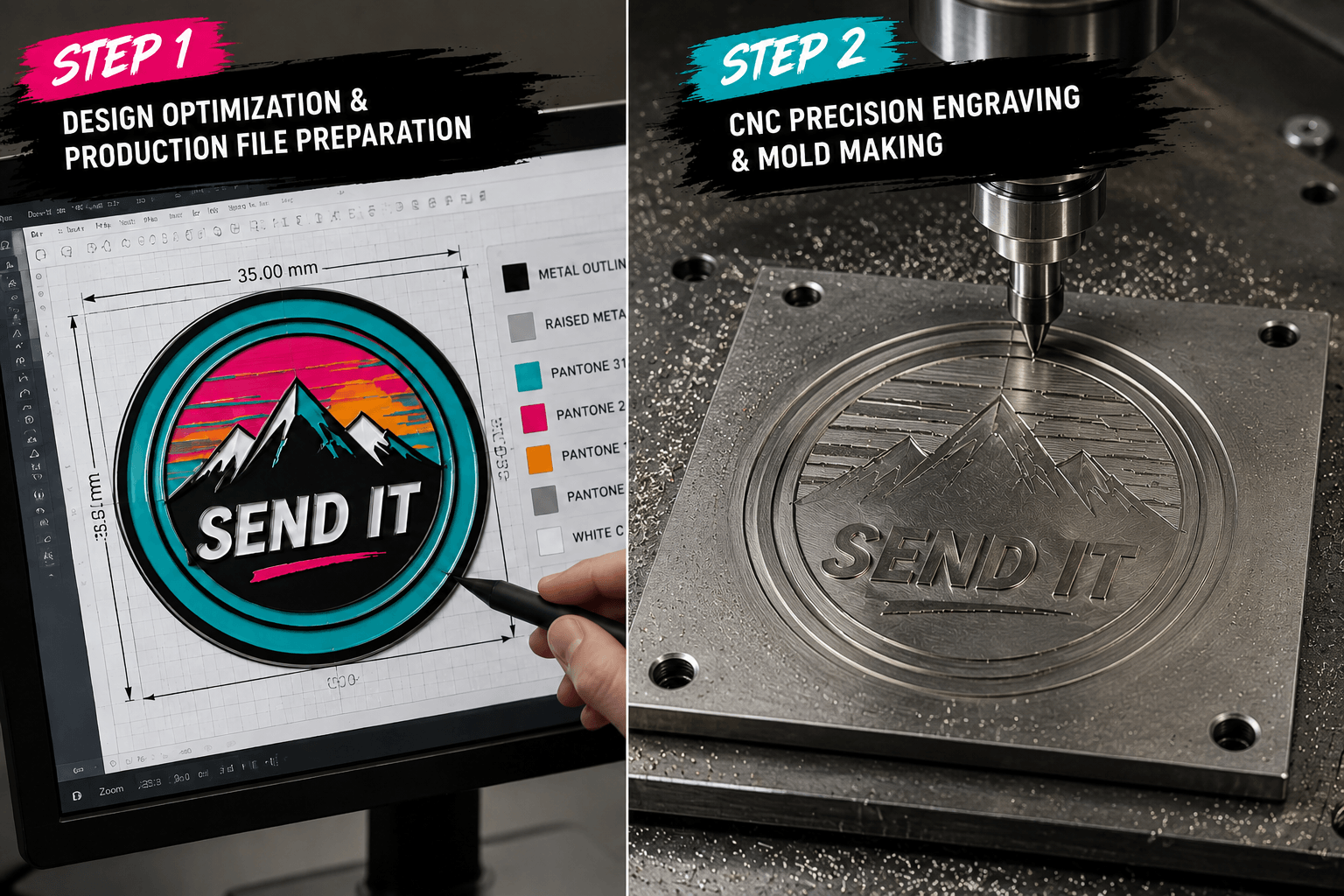
Step 3: Metal Forming and Shape Development
Based on the design complexity and product requirements, suitable metals such as copper, iron, or zinc alloy are selected. Through stamping or die-casting processes, the metal is formed into the main structure of the pin.
After shaping and edge refinement, the pin develops its final outline while maintaining the raised metal lines and recessed areas required for enamel filling.
Step 4: Backing Attachment Installation
Once the pin body is completed, the appropriate backing hardware is installed. Depending on the intended use, options such as butterfly clutches, safety pins, and magnetic backs can be selected.
Professional attachment methods ensure that the backing stays securely connected to the pin, providing reliable performance during everyday wear.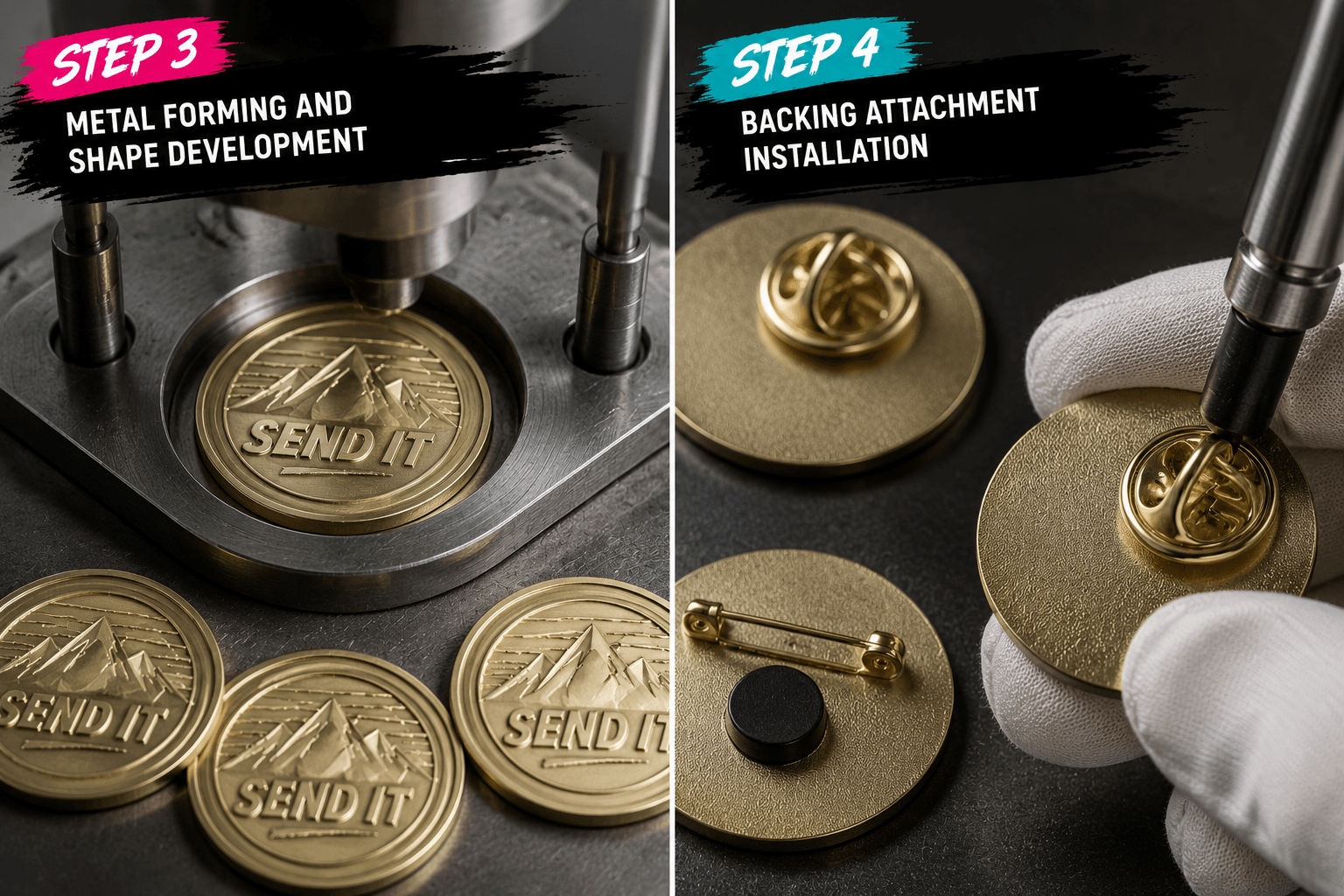
Step 5: Grinding and Surface Finishing
After metal forming, the unfinished pin requires additional surface treatment to improve its overall quality. Grinding processes remove minor imperfections created during production, creating smoother edges and a refined metal surface that provides an ideal foundation for enamel filling and plating.
Step 6: Enamel Filling and High-Temperature Curing
Enamel filling is one of the most important steps in creating the visual appeal of an enamel pin. Skilled technicians carefully apply different enamel colors according to the approved design and use curing processes to ensure the colors become stable and securely bonded to the metal structure.
For designs with multiple colors or complex patterns, precise color separation and filling techniques help ensure the final product closely matches the original artwork.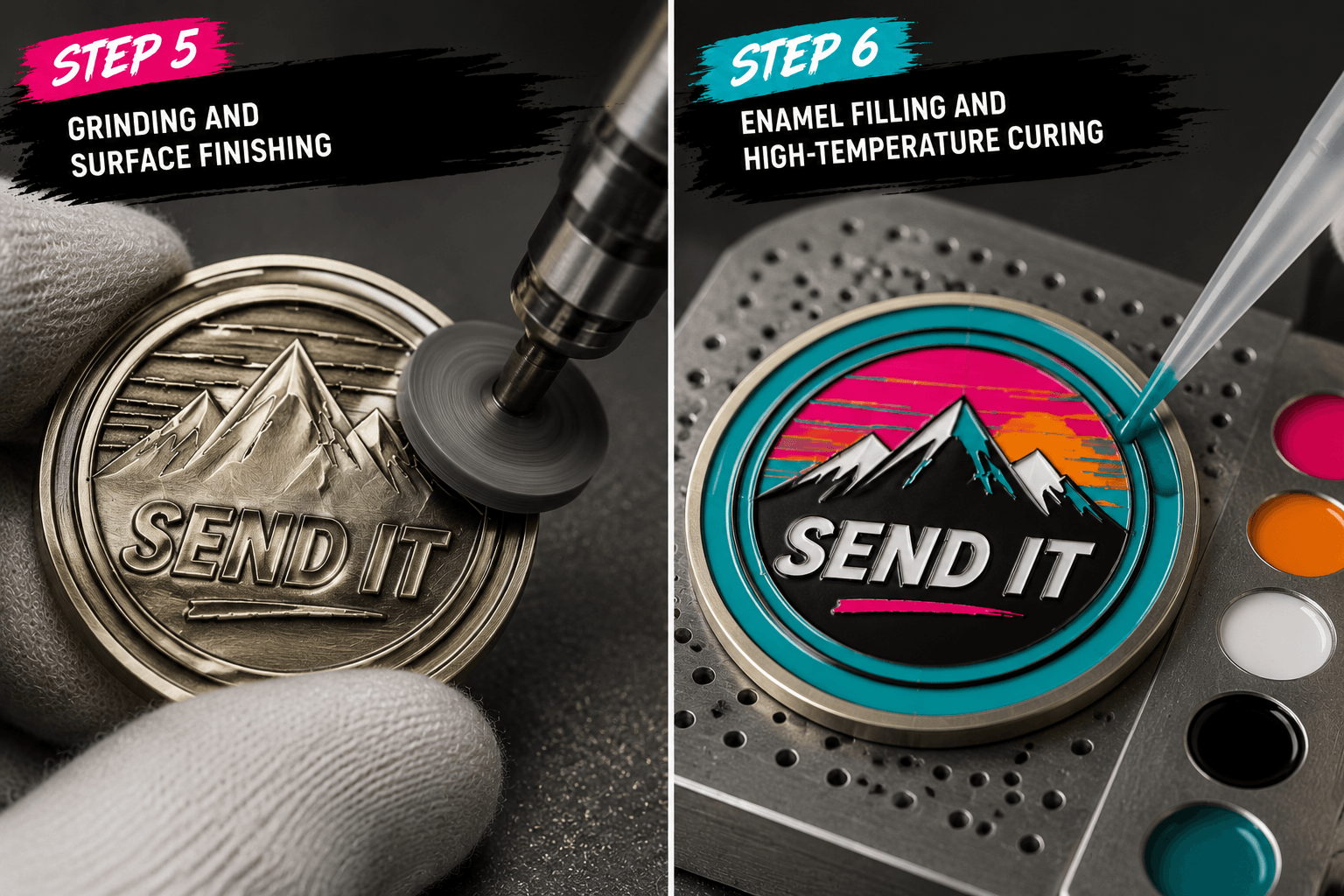
Step 7: Fine Polishing and Soft vs. Hard Enamel Finishing
Polishing plays an important role in determining the final surface texture of enamel pins and is also a key difference between soft enamel and hard enamel processes.
- Soft Enamel
Soft enamel retains a slight height difference after curing, with the metal outlines remaining higher than the colored areas. This creates a noticeable raised texture and dimensional feel, making it ideal for designs that emphasize details, textures, and a tactile appearance.
- Hard Enamel
Hard enamel requires more precise filling and multiple polishing processes to create a completely smooth surface where the enamel and metal lines are level with each other. The final result has a polished, jewelry-like appearance with a premium and refined finish.
If you would like to learn more about the differences between soft enamel and hard enamel in terms of appearance, texture, and applications, please read our detailed guide: “What Is the Difference Between Soft Enamel and Hard Enamel Pins?”
Step 8: Precision Plating and Anti-Oxidation Treatment
Electroplating is a process that uses an electrochemical method to apply a thin layer of metal coating onto the surface, giving enamel pins different finishes and textures such as shiny gold, shiny silver, copper, and black nickel.
After completing all production steps, the pins undergo final cleaning and anti-oxidation treatment to help maintain their appearance and durability.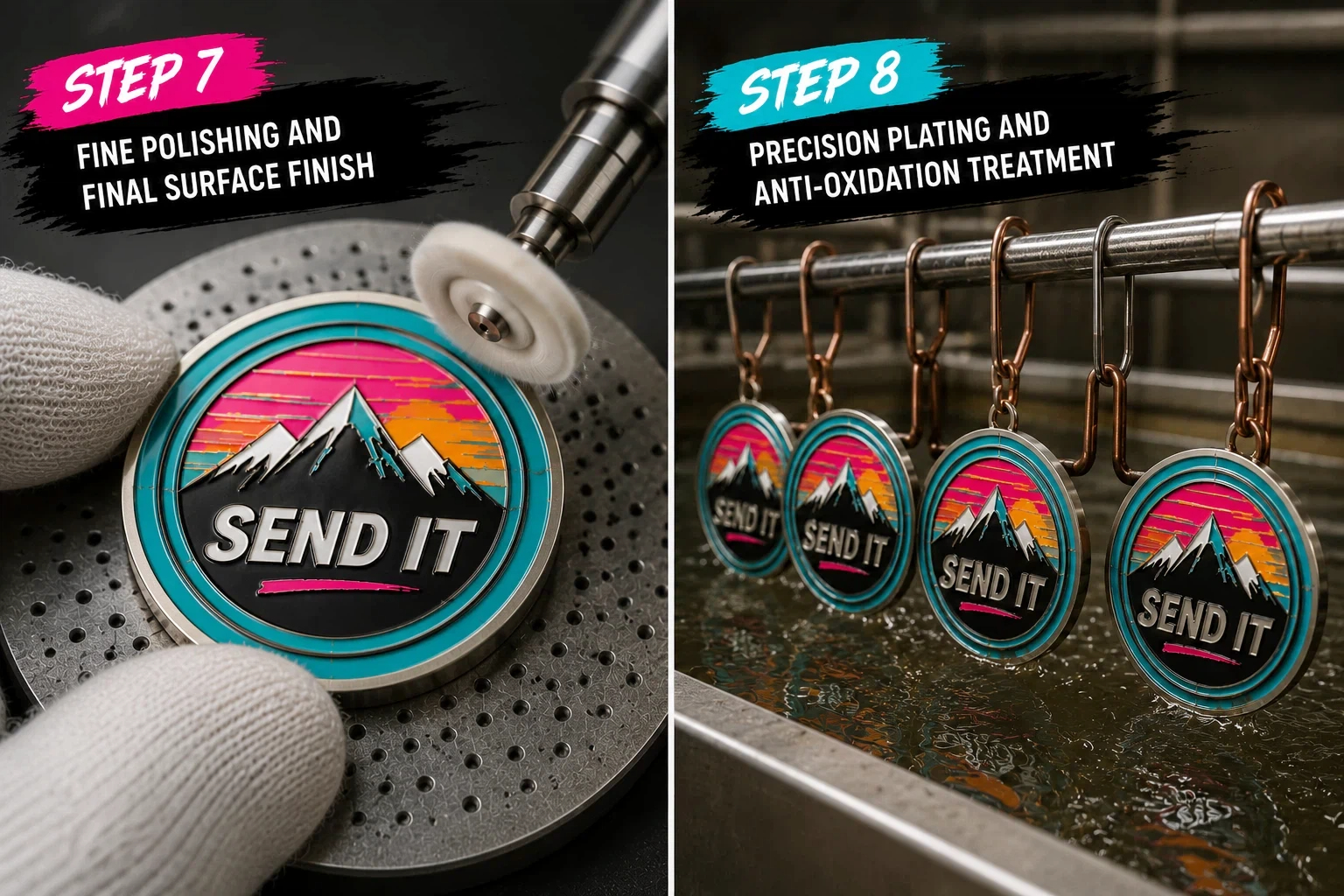
II. The Advanced Aesthetics of Custom Enamel Pins: Exploring Unlimited Shapes and Materials
After understanding the complex manufacturing process, many designers and brands want to know one thing: How far can my creativity go?
In reality, modern enamel pin manufacturing offers far more possibilities than many people expect.
1. Beyond Traditional Designs: What Shapes Can Enamel Pins Be Made Into?
Many first-time customers assume enamel pins can only be made in traditional shapes such as circles, squares, or shields. However, thanks to precision stamping and cutting technology, custom enamel pins can be created in almost any shape.
- Unique Outlines
From character silhouettes and flowing skateboard shapes to handwritten lettering designs, advanced mold-making technology can accurately reproduce complex outlines and creative details.
- Cutout and Layered Designs
With zinc alloy die-casting technology, pins can feature hollow sections, layered structures, or even rotating combination designs that create a more interactive visual experience.
2. The Foundation of Quality: How to Choose the Right Metal Material?
The base material plays an important role in determining the weight, durability, and overall refinement of an enamel pin. The three most common options include:
- Copper: The Preferred Choice for Premium and Collectible Pins
Copper offers excellent flexibility and detail reproduction, allowing extremely fine lines and sophisticated designs to be created.
- Zinc Alloy: Ideal for Complex 3D and Hollow Designs
Zinc alloy is commonly used for die-casting applications. When a design requires strong 3D effects, raised details, or complex hollow structures, zinc alloy can better capture intricate shapes and fine details.
- Iron: A Cost-Effective Choice for Large Quantity Orders
For large-volume projects such as event giveaways, promotional campaigns, or organization merchandise, iron provides an excellent balance between quality and cost.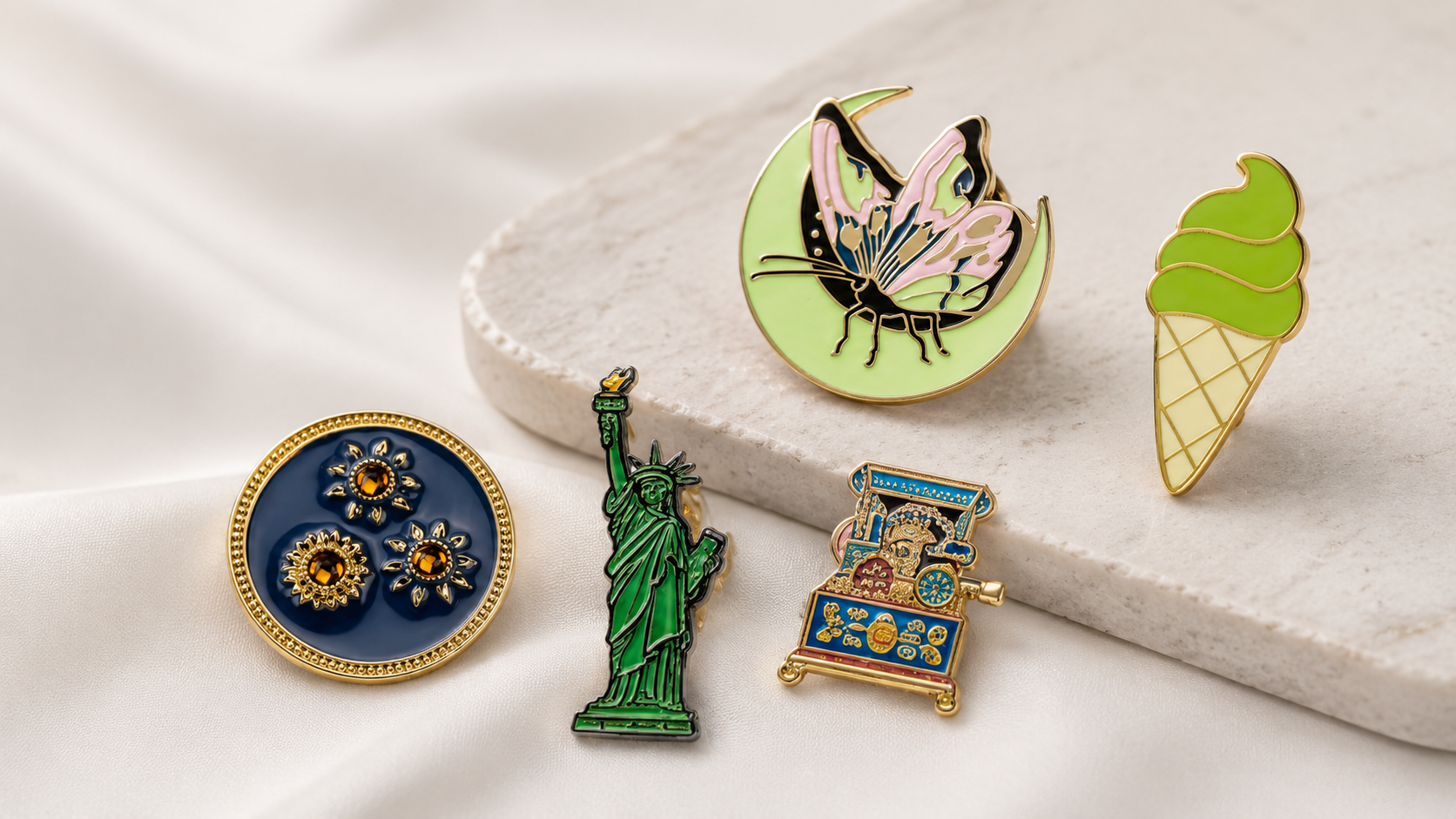
III. Why Do Great Designs Sometimes Fail to Achieve the Expected Results?
Many designers and brands face the same challenge: their artwork has been carefully refined, with the perfect shape, details, and colors, but the final product still does not match their original vision.
The reason is often not the design itself, but the process of turning a design into a physical product. Factors such as pin size, material selection, mold precision, manufacturing techniques, and color application all directly influence the final result.
Without sufficient experience, a manufacturer may misunderstand design requirements or fail to properly control production details, resulting in differences in lines, structure, colors, and overall quality.
Therefore, choosing a manufacturer with professional expertise and extensive production experience is essential for bringing creative ideas to life.
Turning Creative Ideas into High-Quality Enamel Pins with Maxemblem
With a complete production system covering design optimization, mold development, and manufacturing, Maxemblem brings over 20 years of enamel pin manufacturing experience to every project.
We provide professional production recommendations based on each customer's design requirements and use precision manufacturing, strict quality control, and proven processes to help transform concepts into finished products.
Having satisfied more than 100,000 customers worldwide, we are committed to accurately bringing every creative detail to life — whether it involves unique shapes, complex artwork, brand merchandise, or collectible series.
Our goal is to create enamel pins that not only meet production standards but also preserve the original design vision, quality, and value.