the-secret-behind-athletes-biting-their-medals-are-gold-medals-really-made-of-pure-gold
Table of Contents


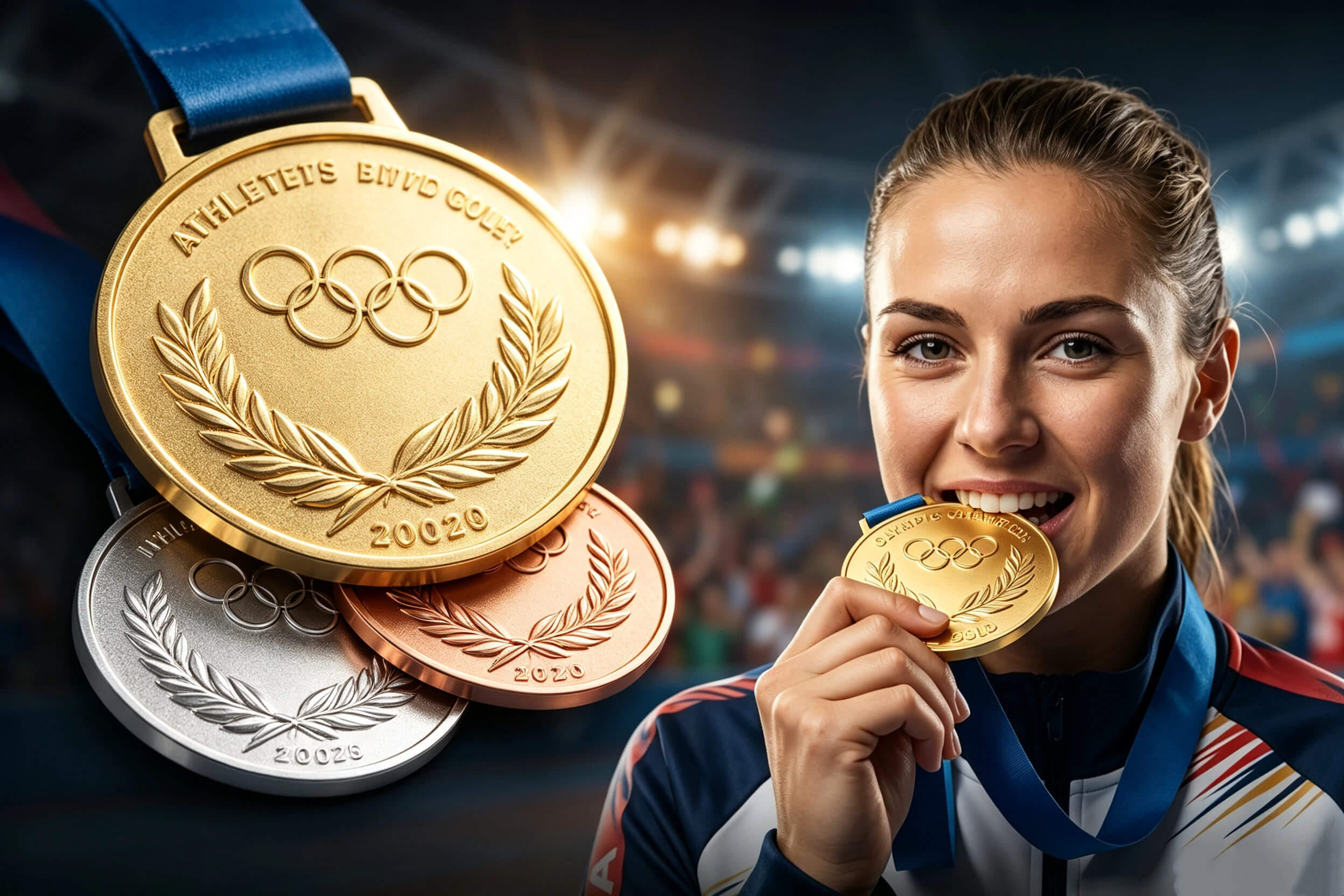
After almost every Olympic medal ceremony, you can spot the same familiar pose: an athlete holds up their medal, faces the cameras, and then bites it.
It naturally raises a question: are athletes actually biting their medals to see if they are made of real gold?
Can Biting a Medal Tell If Gold Is Real?
People once used the bite test to get a rough idea of whether gold was genuine. Gold is a relatively soft metal, and high-purity gold can leave a mark when bitten.
That is also why biting gold has become such a familiar image in movies and sports photography.
But biting gold is only a rough test. It cannot tell you exactly how pure the gold is. And there is another important point: modern Olympic gold medals are not made entirely of pure gold.
So why do athletes still bite them?
The answer starts with the materials used to make Olympic medals today.
What Are Olympic Gold Medals Made Of Today?
According to the International Olympic Committee, an Olympic gold medal must contain at least 92.5% silver and be covered with at least 6 grams of 24-karat gold.
Olympic medals must also be at least 60 millimeters in diameter and 3 millimeters thick.
In other words, “gold medal” refers to the honor of finishing first and the medal’s gold-colored appearance. It does not mean the entire medal is made of gold.
1. There Are Two Main Reasons Pure Gold Is No Longer Used to Make Medals:
High cost: Pure gold is expensive. Making large numbers of medals from solid gold would be extremely costly.
Softness: Pure gold is soft and can be scratched or bent easily, which makes it less practical for a medal that needs to be handled and kept for years.
A silver base with a gold coating offers a better balance. It keeps material costs under control, gives the medal enough strength, and still creates the familiar gold appearance.
What Are Gold, Silver, and Bronze Medals Made Of?
Although Olympic medals are divided into gold, silver, and bronze, the three medals are made from different materials and have different surface finishes.
MedalMain MaterialSurface AppearanceGold MedalSilver base + gold coatingGold-colored finishSilver MedalHigh-purity silverSilvery-white metallic finishBronze MedalMainly bronze alloyBronze or reddish-brown finish
Custom Medals Do Not Have to Use Precious Metals
The materials used for Olympic medals also show an important principle in medal making: the most expensive material is not always the best choice.
The right material and finishing process depend on the purpose of the medal, the budget, and the look you want to achieve.
For companies, sporting events, schools, and other organizations ordering custom medals in bulk, avoiding pure gold can significantly reduce material costs and make large-scale production more practical.
For example, Maxemblem recently made custom medals for VAPA Pickleball. The medals use metal plating and 3D relief to create gold, silver, and antique bronze finishes.
They also feature the VAPA logo, dragon-scale texture, and pickleball elements.
The result keeps production costs under control while giving the medals a distinctive design and solid, high-quality look.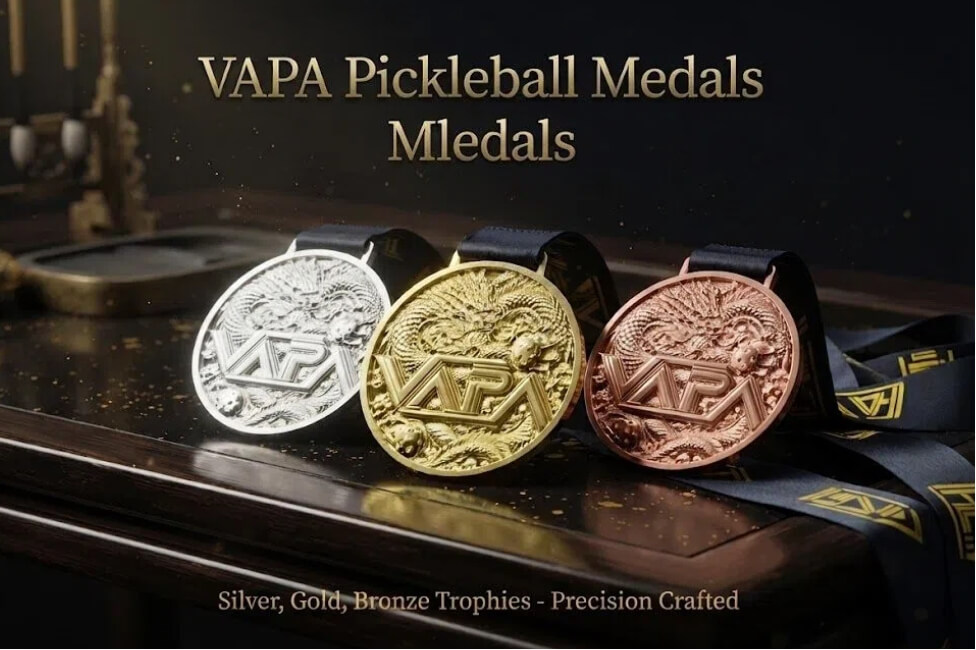
So Why Do Athletes Still Bite Their Medals?
If athletes are not biting their Olympic medals to test the gold content, why does the tradition continue?
H3: Because It Has Become a Classic Victory Pose
After the medal ceremony, athletes often face the photographers and bring their medals up to their mouths. It is a simple pose that makes for an easy shot.
1. It Puts the Medal Front and Center
The medal is the clearest symbol of an athlete’s achievement.
When an athlete brings the medal up to their mouth, it becomes immediately visible in the photo, making the story behind the image clear at a glance.
2. It Creates Interaction Between the Athlete and the Medal
Simply holding up a medal is a common photo pose. Biting it creates a little more interaction between the athlete and the award, making the photo feel more lively.
3. It Has Become a Classic Sports Photography Pose
After generations of athletes have repeated the gesture, biting a medal has become a familiar image in sports photography.
So today, when athletes bite their Olympic medals, the gesture is more about tradition, photography, and celebration than checking whether the medal is made of pure gold.
Conclusion
Athletes biting their medals may have roots in the old practice of testing gold by biting it, but the gesture has since taken on a life of its own.
Kissing, raising, or biting a medal may look like simple poses for the camera, but each gesture is a way for athletes to celebrate their achievement and show how much the honor means to them.