How to Choose the Right Patch Material: Embroidered vs. Woven vs. PVC
Table of Contents


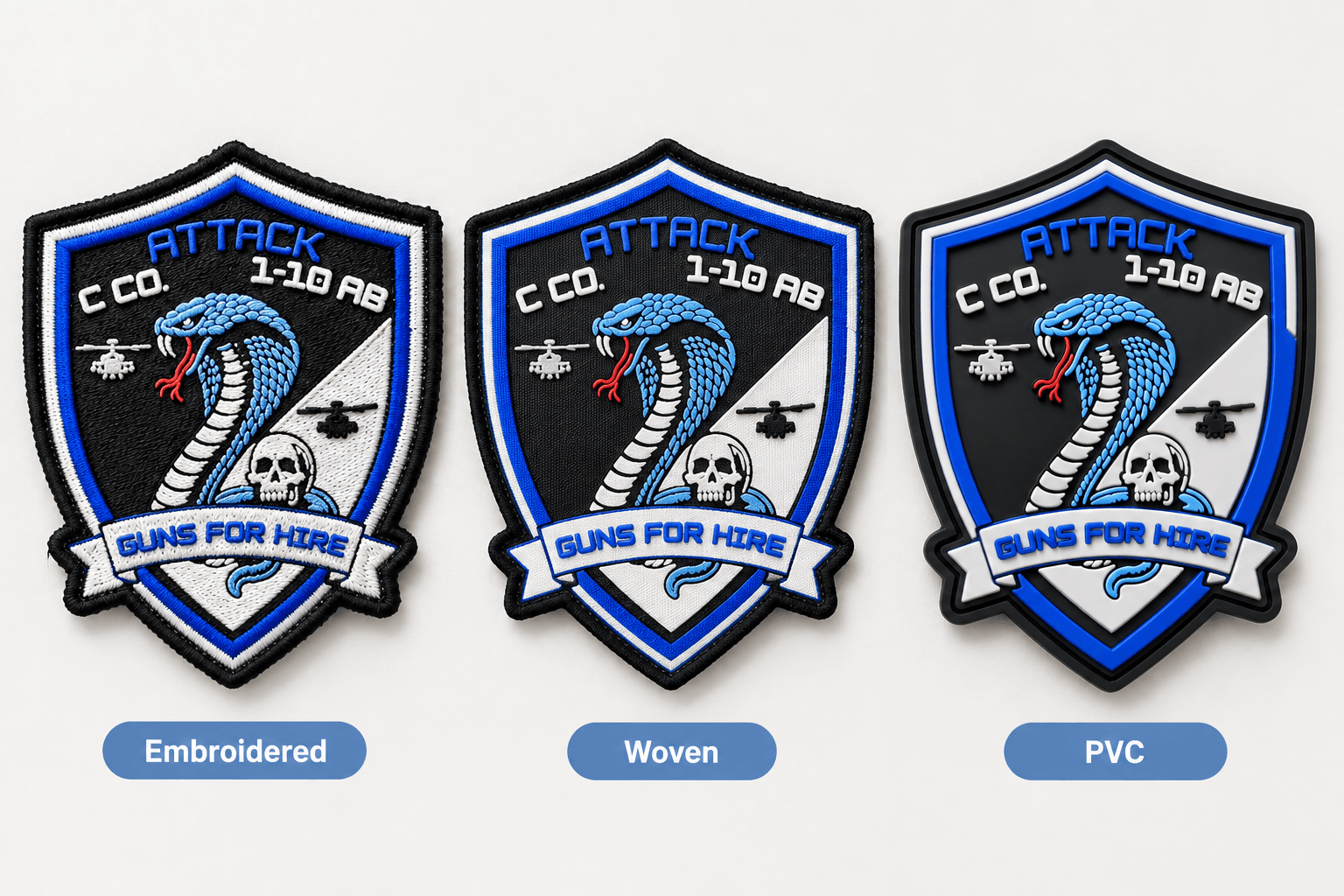
Choosing the wrong patch material can lead to blurry details, poor durability, or the wrong finish.
This guide compares embroidered, woven, and PVC patches to help you choose the best patch material for your design and use.
I. How to Choose the Best Patch Material for Your Design
1. Quick Selection Guide

II. Embroidered vs. Woven vs. PVC Patches
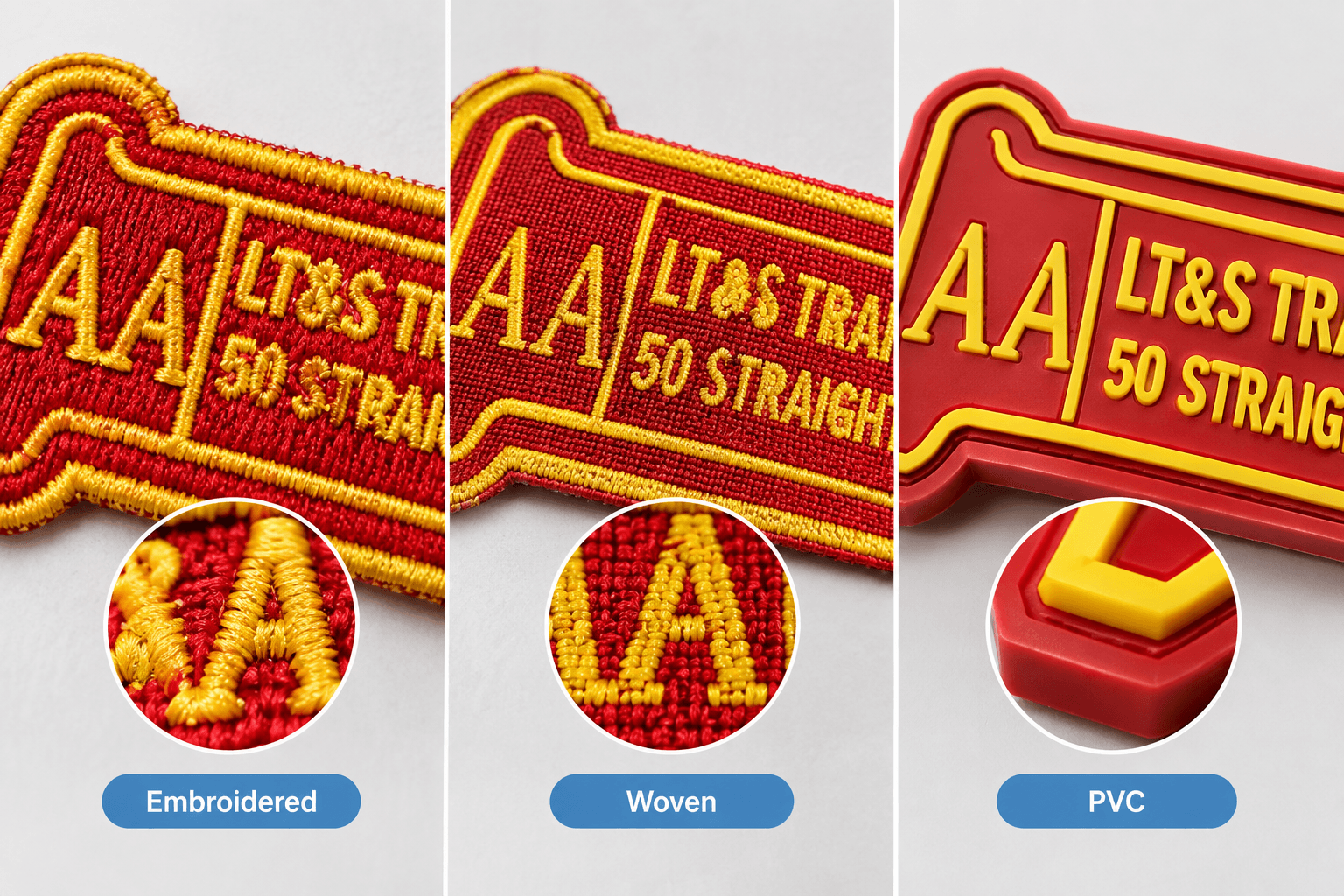
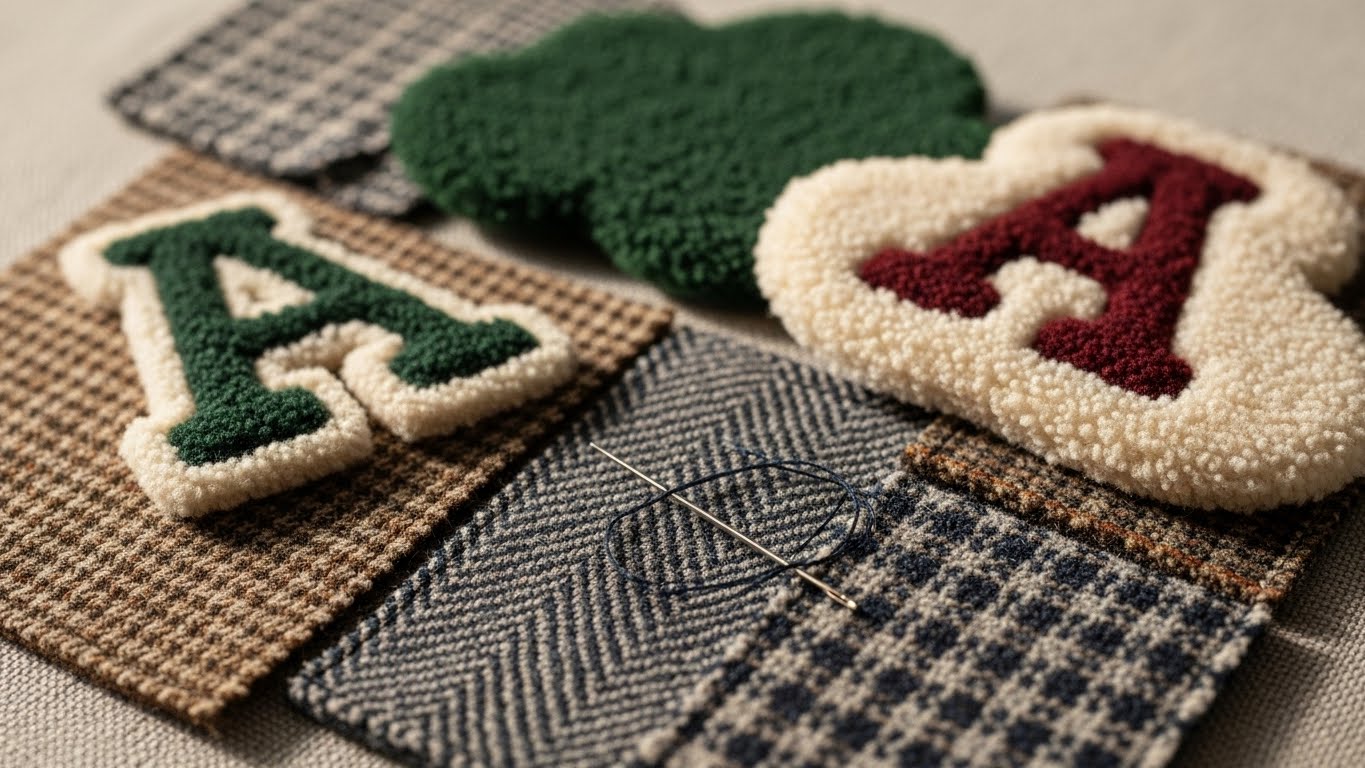
Custom patches are available in embroidered, woven, and PVC options, each suited to different designs and applications.
1. Custom Embroidered Patches: Classic Texture & Heritage Appeal
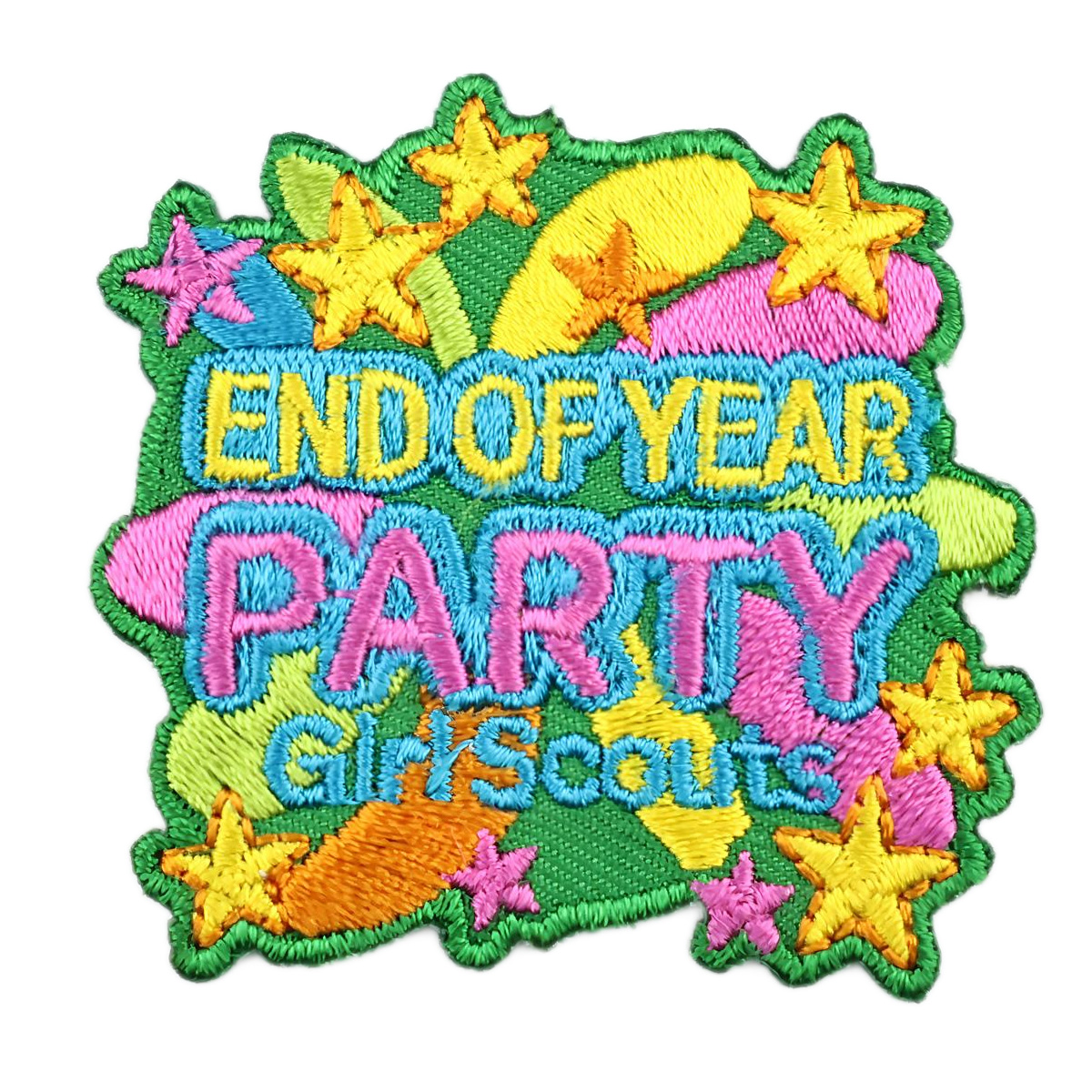
How It's Made: Designs are stitched directly onto a base fabric using high-density embroidery thread.
Key Advantages: Distinctive raised texture, strong tactile appeal, and a traditional, timeless look.
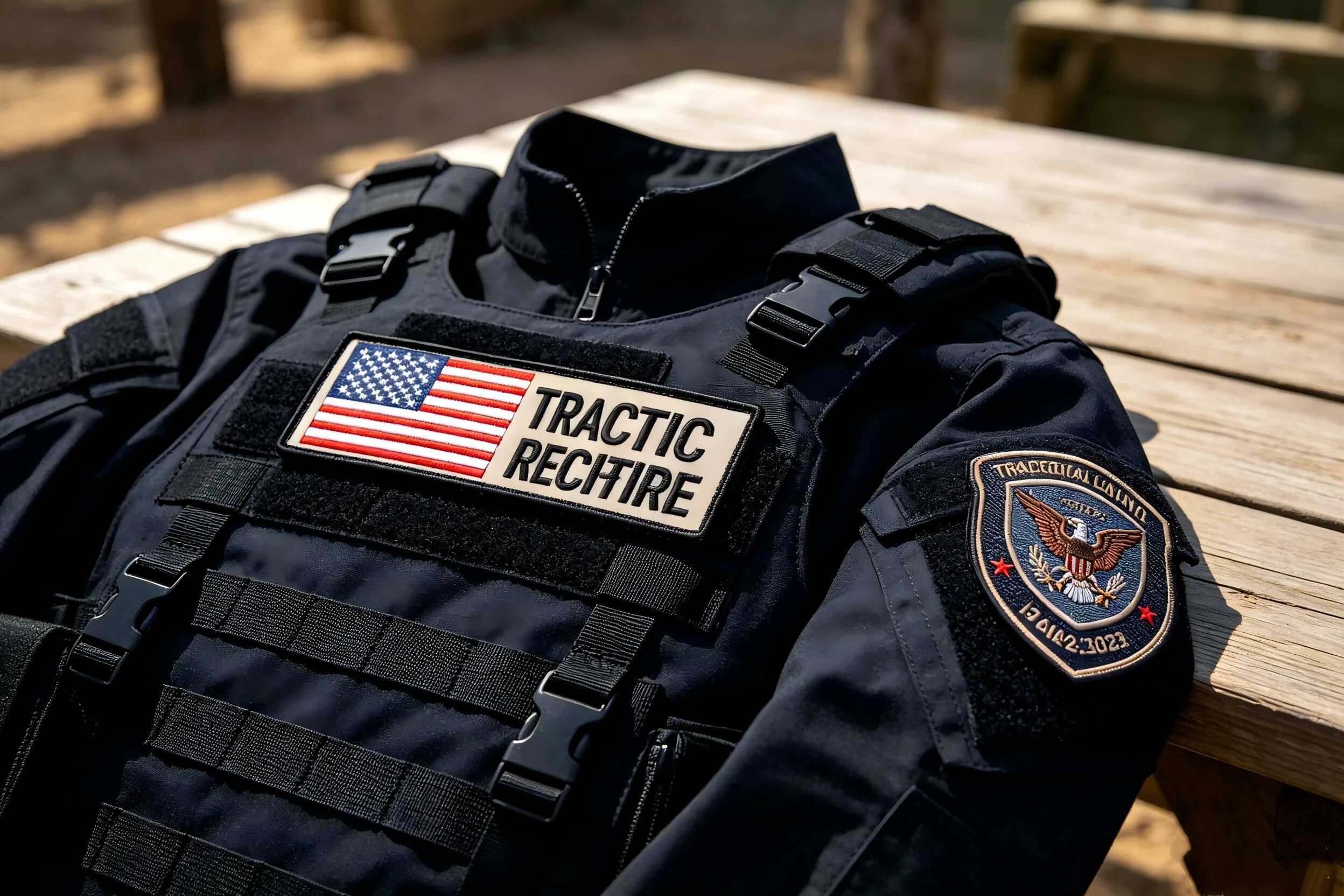
Best Used For: Law enforcement, fire, and military uniforms; traditional clubs; school crests; headwear.
Limitations:
Text Size Constraints: Letters or characters under 4–5 mm in height tend to blur as stitches overlap.
Not Water-Friendly: Absorbs moisture and gets heavy; coarse outdoor environments can cause fraying over time.
2. Custom Woven Patches: Best for Small Text and Fine Details
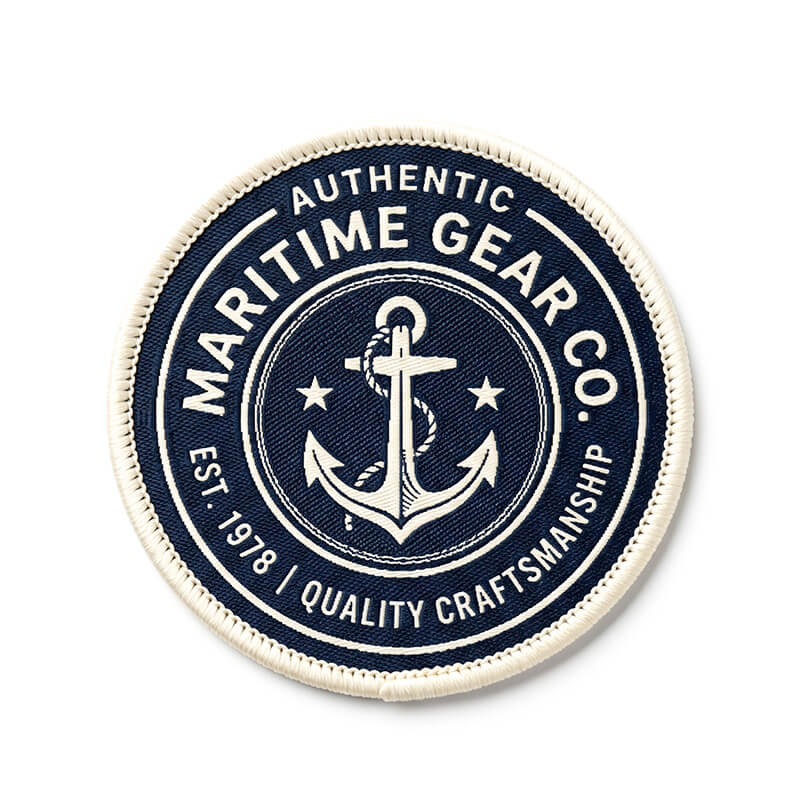
How It's Made: Produced similarly to cloth weaving, using ultra-fine threads woven together to form the image.
Key Advantages: Flat profile, lightweight feel, and exceptional crispness—even for micro-text on smaller patches.
Woven patches for small text and fine details are especially useful for logos, lettering, and other designs that need to stay clear at a smaller size.
Best Used For: Brand logos featuring URLs, phone numbers, or fine lettering; detailed illustrations; brand clothing labels.
Limitations:
Thinner profile that lacks the thick, dimensional stitching of traditional embroidery.
Still a fabric material—lacks the extreme water and abrasion resistance of PVC.
3. Custom PVC Patches: Best for Tactical Gear and Waterproof Use
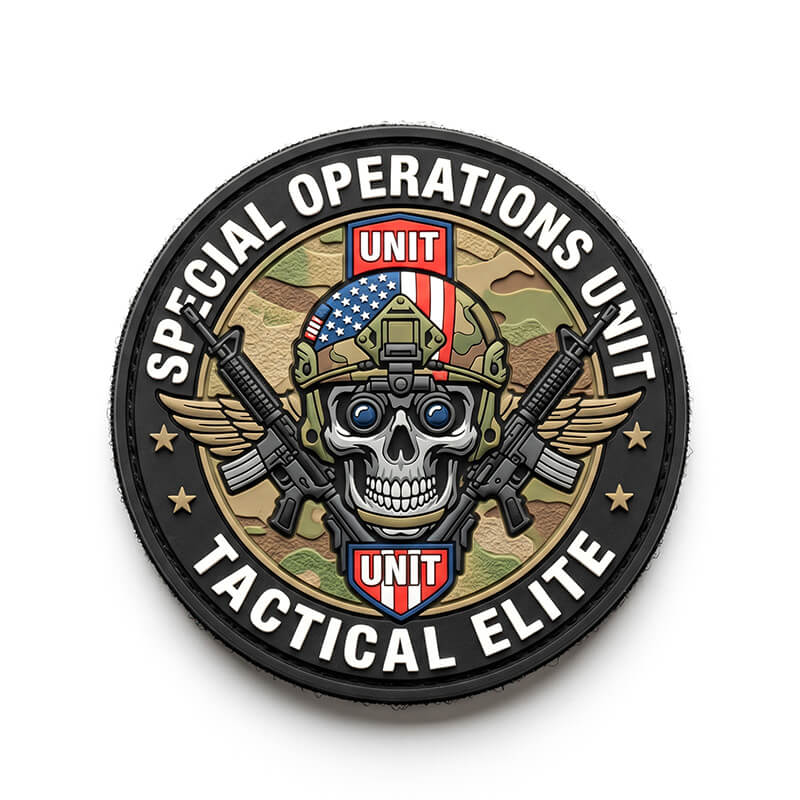
How It's Made: PVC rubber patches are made by pouring liquid PVC material into custom molds and heat-curing it into shape.
Key Advantages: Waterproof, dirt-resistant, easy to clean, and suitable for raised or multi-layered 3D designs.
Best Used For: Tactical vests, outdoor backpacks, marine equipment, security patrol outerwear.
Limitations:
Modern, utility-focused aesthetic that may not fit formal or vintage-style uniforms.
Requires a custom mold fee, which increases initial setup costs on small orders.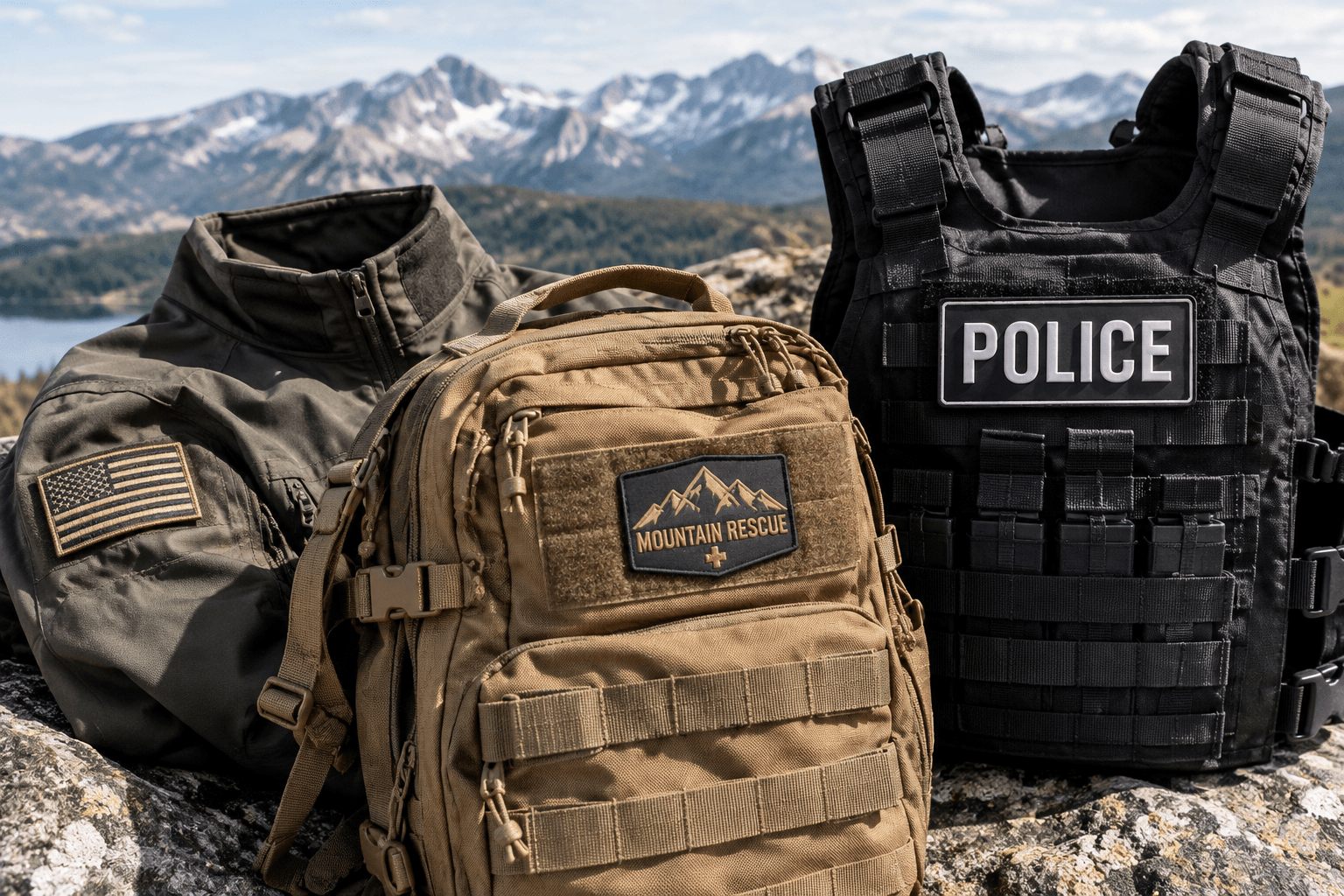
III. How to Choose the Right Patch Material
To bridge the gap between digital mockups and final production, verify these details prior to placing your order:
1. Check Small Text and Fine Details
For designs with text under 4 mm or lines thinner than 0.5 mm, woven or PVC patches may provide clearer results than embroidery.
2. Consider Durability, Water, and Outdoor Use
Gear subjected to mud, water, or heavy friction performs best with PVC.
Standard apparel handles both embroidery and woven well, though woven patches resist pilling better over repeated washing.
3. Choose the Right Patch Backing
Hook and Loop (Velcro): Ideal for PVC and embroidery on tactical and outdoor gear.
Iron-On (Heat Seal): Best for permanent application to garments via heat press (Note: PVC cannot be ironed on).
Sew-On: Supported by all patch types depending on garment construction.
4. Check Your Design at Actual Patch Size
Vector art expanded on a monitor looks crisp, but fine details can disappear when scaled down to a 5–8 cm patch.
Always review an artwork proof or order a production sample before full manufacturing.
Need help evaluating your design? Maxemblem offers free vector optimization and patch recommendation services.
Send us your artwork, dimensions, target environment, and order quantity, and our technical team will recommend the optimal setup.
IV. Simple 4-Step Customization Process
Once you've selected your patch type, ordering is straightforward:
- Submit Artwork & Specs: Send your vector files (AI, PDF, PNG, etc.) alongside your desired size, order quantity, patch style (Embroidered / Woven / PVC), and backing preference.
- Free Layout & Quote: Our technical team evaluates detail feasibility at scale and provides a 1:1 artwork proof along with a final quote.
- Sample Approval (Optional): For peace of mind, request a physical pre-production sample to verify color matching, stitch density, or PVC mold depth.
- Production & Delivery: Upon sample approval, we initiate full-scale production, run quality control checks, and ship directly to your door.
V. Ready to Start Your Custom Patch Order?
If you are still unsure which option fits your design, you can contact Maxemblem 。
In addition to manufacturing premium embroidered, woven, and PVC patches, we provide free artwork adjustments and expert technical consultation.
Get a Quote: Share your design files and dimensions with us to receive expert guidance and pricing within 1 hour.